



Rohde & Schwarz Launches Precision SMUs for Battery and Semiconductor Testing
Rohde & Schwarz has entered the source measurement unit (SMU) market with the new NGU series, delivering industry‑leading precision for battery life assessment in IoT devices and comprehensive semiconductor characterization.
The NGU line debuted with two models: the R&S NGU201, a two‑quadrant SMU optimized for battery testing, and the R&S NGU401, a four‑quadrant SMU designed for semiconductor and high‑voltage applications.
Philipp Weigell, director of product management for power products at Rohde & Schwarz, explains, “A true SMU delivers precise sourcing, loading, and measurement in a single instrument. The NGU401, with its full four‑quadrant capability, meets this definition and is ideal for semiconductor testing, while the NGU201 targets the growing need for accurate battery performance analysis in wireless devices.”
What Exactly Is an SMU?
An SMU combines signal generation and measurement on the same pin or connector, enabling simultaneous voltage or current sourcing and precise measurement. It essentially merges the functions of a power supply, waveform generator, digital multimeter, current source, and electronic load into one device.
These instruments are integral to test systems, offering rapid, accurate I‑V sweeps with graphical interfaces and versatile connectivity via GPIB, Ethernet, and USB.
SMUs excel in semiconductor characterization—measuring I‑V curves, photovoltaic cell performance, LED parameters, and more—requiring nano‑ to micro‑amp sensitivity, high accuracy, and four‑quadrant operation that traditional power supplies cannot provide.
Key Features of the New NGU Units
The NGU family supports six current ranges from 10 µA (100‑pA resolution) up to 10 A (10‑µA resolution), all with accuracy better than 0.025%. Voltage measurement reaches 10 µV resolution in a 20‑V span and 1 µV in a 6‑V span. A variable capacitance mode allows adjustment from 1 µF to 470 µF, enabling accurate current display as if measured directly on the DUT. The instruments handle up to 20 V, 8 A, and 60 W.
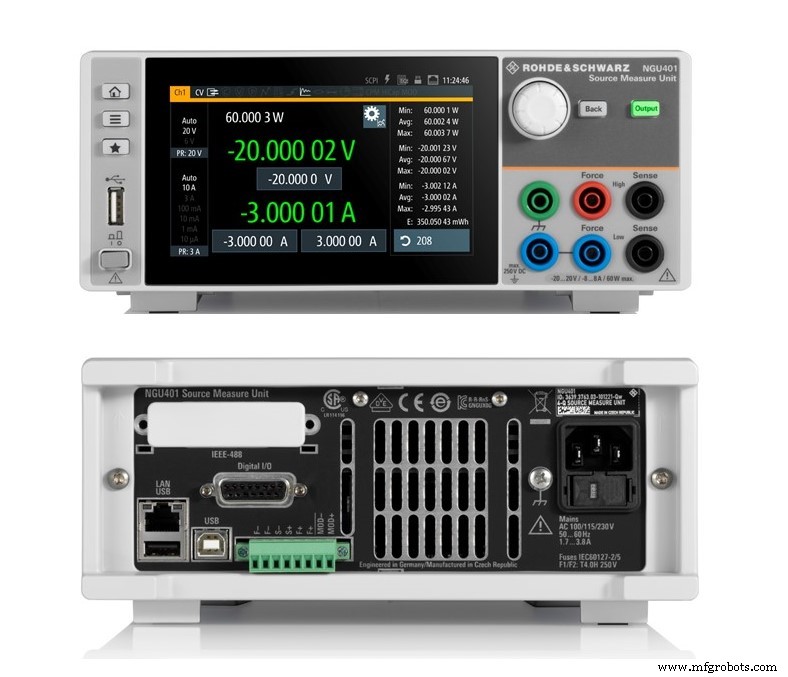
• NGU401 (four‑quadrant) – voltage range –20 V to +20 V, fast‑current adjustment to protect sensitive devices, dedicated AC output for glitch simulation, ideal for semiconductor testing. • NGU201 (two‑quadrant) – optimized for IoT battery performance analysis, maximum current 8 A supports fast‑charging scenarios, and precise simulation of real‑world battery characteristics.
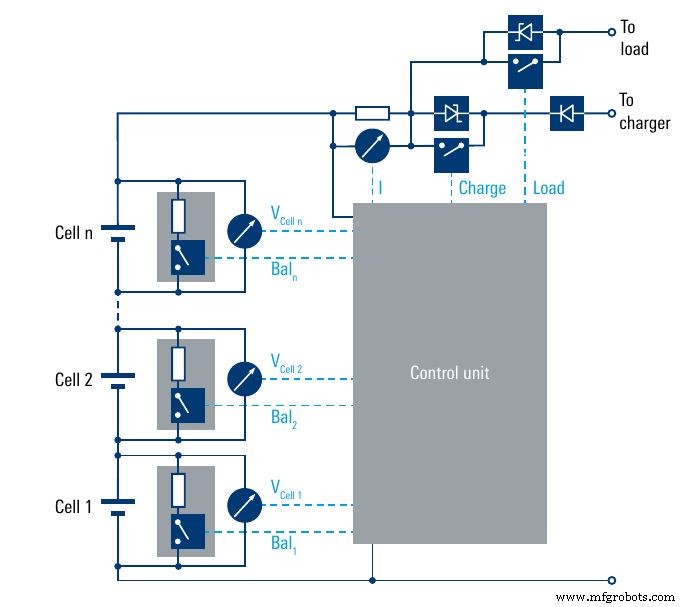
Weigell emphasizes the critical role of accurate battery simulation: “Testing rechargeable batteries under realistic charging, discharging, and thermal conditions is essential for reliable portable devices. Overcharging and intense discharge can reduce life and cause overheating. Our NGU instruments let you model battery behavior precisely, control state of charge, and validate battery management systems.”
With an acquisition rate of up to 500 ksamples/s, the NGU delivers voltage and current data every 2 µs, powered by current‑feedback amplifier technology for unmatched accuracy.
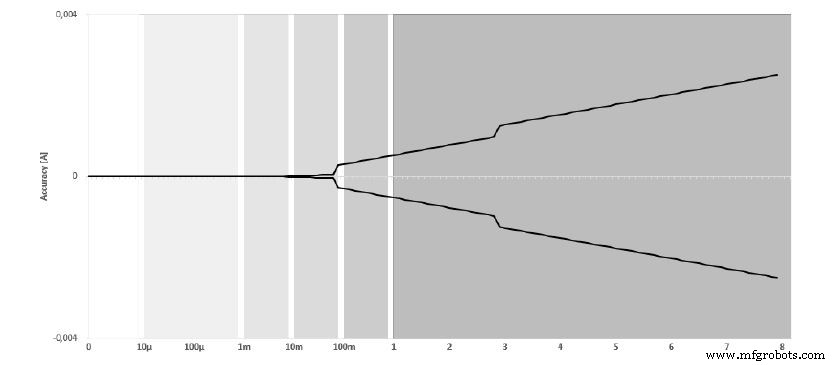
Battery longevity is a key competitive advantage for portable electronics. The NGU’s wide dynamic range, rapid state switching, and comprehensive battery simulation capabilities make it indispensable for designing devices that last longer.
“A conventional power supply that regulates voltage can inadvertently increase current, damaging LEDs. What you need is a supply that prioritizes current regulation—that’s exactly what SMUs provide.”
As the push for energy‑efficient, eco‑friendly products grows, SMUs will play a pivotal role in the power semiconductor sector, automotive and mobile markets, and the broader drive toward sustainable technology.
Embedded
- Understanding Voltage and Current: The Foundations of Electrical Flow
- Voltage and Current in a Practical Circuit: Understanding Their Relationship
- Capacitors & Calculus: How Voltage Change Drives Current
- Calculating Voltage and Current in Reactive DC Circuits
- Advanced Analysis of DC Reactive Circuits with Non‑Zero Initial Conditions
- Understanding Mutual Inductance and Transformer Fundamentals
- Congatec Unveils 20 Intel‑Powered Computer Modules for Advanced IoT Gateways and Edge Computing
- Silicon Labs’ EFR32BG22: Bluetooth 5.2 SoC Delivers Ultra‑Low Power, Robust Security, and Sub‑Meter Positioning for High‑Volume IoT
- Why Battery Life Matters for Real‑World IoT Applications
- 5G & IoT: Driving Next-Gen Supply Chain Resilience