



How to Choose the Right Low Power Wide Area Network Technology

Priyanka Purbe of Volansys
The Internet of Things is reshaping every industry, creating new markets and enabling transformative change. As the ecosystem evolves, selecting the right low‑power wide‑area network (LPWAN) becomes a critical decision.
In this article, Priyanka Purbe, Senior Engineer at Volansys, evaluates the leading LPWAN options—LoRa, Sigfox, and LTE‑M—against key criteria that matter to real‑world deployments.
When evaluating an LPWAN, consider these seven criteria:
- Industry application requirements
- Availability of compatible hardware and ecosystem support
- Operating RF band
- Required data rate
- Security and compliance needs
- Vendor and community support
- Power consumption and battery life
LoRa
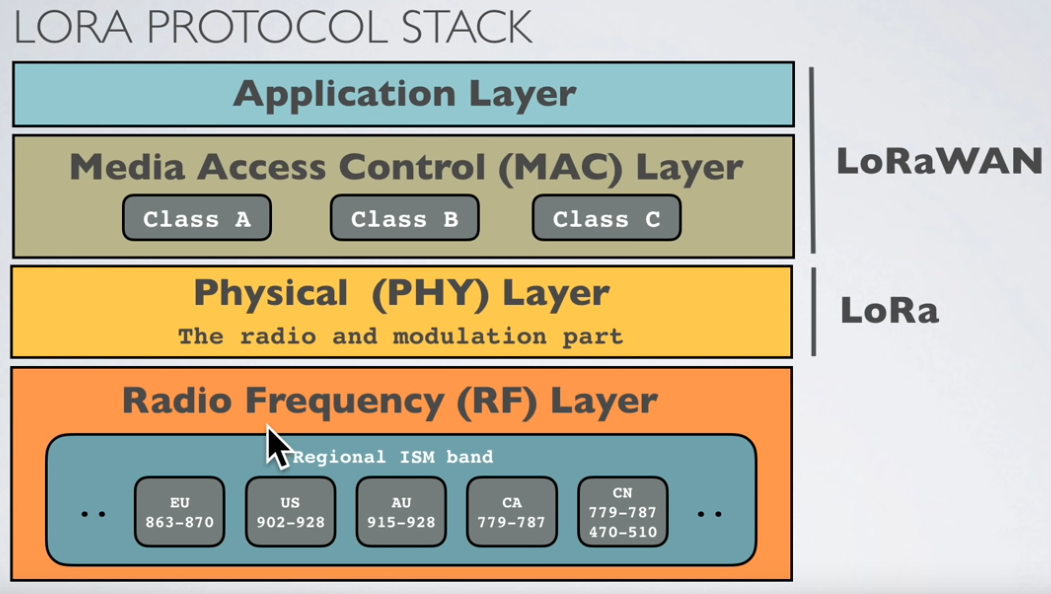
LoRa, short for Long‑Range Radio, is a proprietary, low‑power protocol engineered by Semtech for long‑range, low‑data‑rate IoT applications. It enables shared, multi‑tenant networks—public, private, or hybrid—by allowing numerous devices to coexist on the same frequency spectrum.
The LoRa Alliance, a non‑profit consortium that includes industry leaders such as Cisco, Actility, Microchip, IBM, STMicro, Semtech, and Orange Mobile, drives open standards and interoperability across national networks.
Key strengths of LoRa:
- Extensive range—often 10 km in rural settings and 2–5 km in urban environments.
- Ultra‑low power consumption, ideal for battery‑operated sensors.
- Built‑in encryption and secure key management.
- Flexible network topologies that can scale from a few dozen to millions of nodes.
Typical use cases include smart metering, inventory tracking, vending‑machine telemetry, automotive telematics, and public‑utility monitoring. Because LoRa modules are available for popular microcontrollers such as Arduino, rapid prototyping and large‑scale deployment are both straightforward.
Technical reference for LoRa:

Sigfox
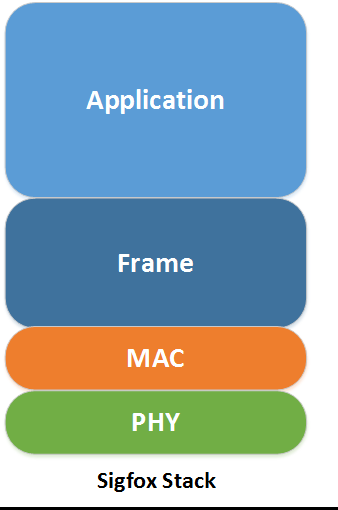
Sigfox, a global network operator based in France, operates in 19 countries and spans 1.2 million km². It uses the 868 MHz (EU) or 915 MHz (US) ISM bands and transmits data at a modest 300 b/s using binary phase‑shift keying (BPSK).
Sigfox is engineered for “tiny‑data” scenarios where devices send short, infrequent messages—alarm triggers, location pings, or simple metering. The network is built on fixed antennas mounted on existing cell‑tower infrastructure, and the service is fully managed by Sigfox.
Strengths and limitations:
- Long‑range coverage with minimal hardware cost.
- One‑way, best‑effort delivery—no guarantee of acknowledgment.
- Limited bandwidth restricts high‑frequency or bursty traffic.
- Battery life can be short for high‑frequency use cases.
Technical reference for Sigfox:

LTE‑M

LTE‑M (Cat M1), defined by 3GPP Release 13, is a narrow‑band IoT technology that leverages existing cellular infrastructure. With uplink and downlink speeds up to 375 kb/s in half‑duplex mode, it balances bandwidth with energy efficiency.
Key attributes:
- 1.4 MHz bandwidth—significantly narrower than standard LTE’s 20 MHz, yielding greater range.
- Built‑in mobility and seamless handover between cells.
- Millisecond‑level latency, supporting real‑time applications.
- Battery life up to 10 years on a single charge.
Ideal for smart‑building automation, smart‑city infrastructure, connected vehicles, healthcare monitoring, and advanced metering.
Technical reference for LTE‑M:

Choosing the appropriate LPWAN technology requires balancing your application’s specific constraints against the strengths of each protocol. The framework above should guide you toward the most suitable solution.
The author is Priyanka Purbe, Senior Engineer, Volansys.
About the author
Priyanka Purbe brings over five years of firmware‑development experience and is a senior engineer at Volansys, specializing in embedded firmware and IoT solutions.
Internet of Things Technology
- Low Power Wide Area Networks (LPWAN): Choosing the Right Technology for IoT
- Understanding Low‑Power Wireless Sensor Networks: Driving Efficient IoT Solutions
- u‑blox Launches SARA‑R5 LTE‑M/NB‑IoT Modules: 5G‑Ready, Ultra‑Secure, Low‑Power for Long‑Term IoT Deployments
- Essential Guide to Choosing the Right DC Power Connector
- How to Choose the Ideal Conveyor Belt for Your Industry
- Choosing the Right 3D Printing Technology: Expert Tips from Fast Radius
- Expert Guide: Selecting the Right Hose Reinforcement for Optimal Performance
- Choosing the Ideal Sample Preconditioning Module for Accurate Analysis
- How to Choose the Perfect Grinding Wheel for Optimal Performance
- Selecting the Perfect Scroll Compressor: A Practical Guide