



Essential Guide to Choosing the Right DC Power Connector
This guide demystifies DC power connector selection by covering common types, critical specifications, and industry-standard terminology, with a look at audio and USB options for power delivery.
Choosing a DC power connector is a vital but often overlooked step in any engineering design. While the component itself is simple, selecting the right one requires a clear understanding of its specifications to guarantee reliable power delivery.
The Role of DC Power Connectors
Also called barrel connectors, these components feature two conductors: an exposed center pin and a recessed outer sleeve. This design prevents accidental shorts and ensures safe power delivery. Manufacturers specify current and voltage ratings to guarantee performance in end‑use applications.
Common DC Power Connector Nomenclature
Industry terminology distinguishes three key parts: jacks (receivers on a PCB or chassis), receptacles (mating ends of power cords), and plugs (suppliers from a power supply). Figure 1 illustrates these relationships.
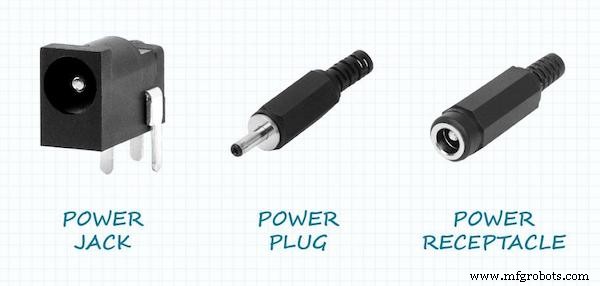
Figure 1. Typical DC power connector configurations.
Gender Definitions of DC Power Connectors
Unlike standardized RF connectors, DC barrel connectors often follow the convention that a center pin is male and the mating sleeve is female. Figure 2 clarifies this with visual examples.
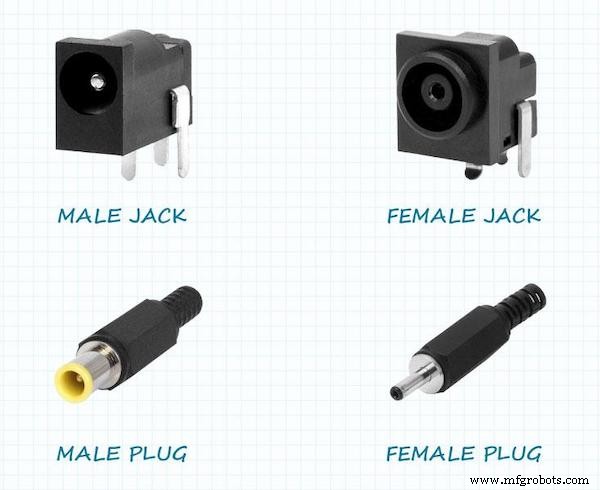
Figure 2. Examples of male and female plugs and jacks.
Barrel Connector Dimensions
Key dimensions include the inner pin diameter, outer sleeve diameter, and insertion depth. The most common sizes are listed in Figure 3. A small clearance on the sleeve is sufficient; the sleeve’s flat spring contact ensures a secure fit.
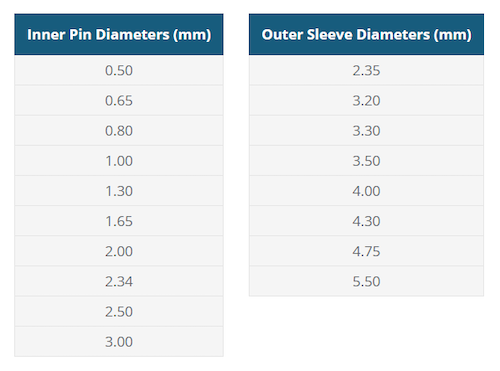
Figure 3. Common inner pin and outer sleeve diameters.
Insertion depth must account for chassis wall thickness. If the plug barrel is too short, mating will fail; if it is excessively long, it may protrude beyond the enclosure.
DC Power Connector Conductors
Standard configurations pair the center pin with power and the outer sleeve with ground, though this can be reversed. Some jacks include a third conductor—a switch contact on the sleeve—to detect plug insertion or select between power sources.
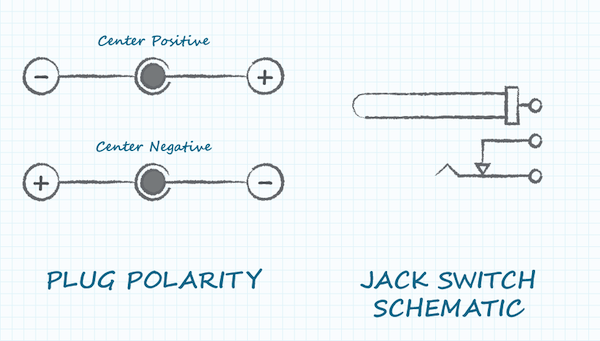
Figure 4. Barrel connector conductor configurations.
Mounting Options
DC power jacks can be mounted in several ways:
- Panel mount – convenient for chassis integration but requires wiring to the PCB.
- PCB mount – available in surface‑mount (SMT) or through‑hole, horizontal or vertical.
- Mid‑mount SMT – low‑profile option that sits in a routed opening.
- Stabilization pins – non‑conductive or conductive pins/tabs that secure the jack.
Audio Connectors Used for Power Delivery
Standard audio jacks lack guaranteed voltage and current ratings, making them unsuitable for power delivery. They also pose a risk of accidental shorting or damage when used with incompatible devices.
USB Connectors Used for Power Delivery
USB connectors, especially USB‑Type‑C, support up to 5 A at 20 V (100 W) thanks to four power and four ground contacts. While this makes USB‑C ideal for power‑only applications, the presence of data pins can add cost. Dedicated power‑only USB‑C connectors are now available to reduce expenses.
Selecting DC Power Connectors
With the essential parameters in mind—inner pin diameter, outer sleeve diameter, and insertion depth—selecting a compatible jack and plug becomes straightforward. CUI Devices offers a comprehensive range of DC power jacks, plugs, and receptacles with various mounting styles. Their product pages include a mating guide that simplifies the selection process.
Industry Articles are a form of content that allows industry partners to share useful news, messages, and technology with All About Circuits readers in a way editorial content is not well suited to. All Industry Articles are subject to strict editorial guidelines with the intention of offering readers useful news, technical expertise, or stories. The viewpoints and opinions expressed in Industry Articles are those of the partner and not necessarily those of All About Circuits or its writers.
Industrial equipment
- Tungsten: The Backbone of Modern Aerospace Technology
- How to Choose the Right Low Power Wide Area Network Technology
- Electrical Control Panels: Design Essentials for Safety & ROI
- How to Choose the Ideal Conveyor Belt for Your Industry
- Expert Guide: Selecting the Right Hose Reinforcement for Optimal Performance
- Choosing the Ideal Sample Preconditioning Module for Accurate Analysis
- Step-by-Step Guide to Charging Capacitors Safely and Efficiently
- How to Choose the Perfect Grinding Wheel for Optimal Performance
- Heat Sinks Explained: How They Safeguard Your Devices from Overheating
- Selecting the Perfect Scroll Compressor: A Practical Guide