



COVID‑19 Accelerates AR Adoption in the UK’s New Working Normal
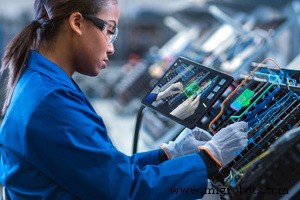
The pandemic has become a catalyst for UK companies to embrace Augmented Reality (AR) and Internet‑of‑Things (IoT) solutions as they navigate the new working normal.
Jim Heppelmann, CEO of industrial‑innovation specialist PTC, observes that frontline workers’ seamless use of AR during COVID‑19 has proven its value, sparking wider adoption and revealing significant cost savings and productivity gains.
While Zoom and Microsoft Teams dominate virtual office collaboration, physical specialists have turned to digital transformation to build ventilators, train apprentices, and eliminate production bottlenecks on automotive lines. They achieve this by enabling remote experts to view the physical world in real time and annotate objects over video, using smartphones, tablets, or wearables such as the Microsoft HoloLens.
AR captures every step of a process, building, or assembly and turns it into an interactive, step‑by‑step guide that can be shared with teams in factories thousands of miles away or at sister sites.
“Traditionally, engineers would travel to the plant, but COVID‑19 made that impossible,” says Heppelmann. “We had to find a way for a seasoned technician to explain a lab process to a new colleague without in‑person mentoring. Social distancing made job shadowing difficult, so AR became the solution.”
“The pandemic forced industry to accelerate adoption faster than it would have under normal conditions. Now that businesses have experienced the operational and financial benefits, I expect a substantial rise in AR use,” he adds.
He notes that AR can also preserve institutional knowledge by capturing the expertise of an ageing workforce for future generations. “I genuinely believe Augmented Reality will become the ‘Zoom of the physical world,’” he says.

Smiths Medical, a participant in the Ventilator Challenge UK, leveraged PTC’s Vuforia Expert Capture and Microsoft HoloLens to document the critical assembly steps for its Rapidly Manufactured Ventilator Systems (RMVS). The captured content was edited into a virtual assembly guide and shared with consortium partners’ factories—many of which had never produced ventilators before—via wearables or smart devices.
AR was instrumental in protecting all involved, virtually placing a ventilator expert inside partner factories and significantly reducing virus‑spread risk. Heppelmann stresses that successful AR implementation hinges on three key factors.
First, prioritize AR use cases that deliver the greatest operational and financial return—whether in sales, shopfloor operations, or field support. Second, design solutions with the intended device type—head‑mounted or hand‑held—in mind to ensure a smooth user experience, and avoid chasing the latest tech for its own sake. Third, remember that AR’s effectiveness depends on high‑quality content and reliable data.
PTC employs 163 professionals across the UK and Ireland, offering a suite of technology solutions that combine Augmented Reality, Industrial IoT, Process Lifecycle Management, and CAD to help industrial companies create lasting value.
For further information, click here.
The author is Jim Heppelmann, CEO of industrial innovation, PTC.
Internet of Things Technology
- Augmented Reality: The Future of HR and Workplace Innovation
- Augmented Reality’s Transformative Effect on Real Estate: What to Expect
- Augmented Reality: Revolutionizing Manufacturing for Efficiency & Innovation
- How Cobots Can Safeguard Your Business in the New Normal: 5 Key Benefits
- Augmented Reality: The IoT Solution That Empowers People
- Augmented Reality: The New UI for Industrial IoT Operations
- How Augmented Reality is Transforming Manufacturing: 7 Key Innovations
- The Benefits of Augmented Reality in Industry 4.0
- Virtual Reality vs. Augmented Reality: Key Differences Explained
- Enhancing Aerospace Manufacturing: PLM & Augmented Reality Drive Precision & Efficiency