



The Five Core Challenges of IoT: A Deep Dive into the 5 Cs – Part 1

By Sook Hua Wong, Industry Segment Manager at Keysight Technologies, Inc.
IoT adoption is accelerating at an unprecedented pace. IoT Analytics projects that the global count of connected devices will exceed 9.5 billion in 2019—14 % above initial forecasts—driven by the explosive rise of consumer gadgets, far‑reaching cellular IoT/M2M links, and a surge in China thanks to government‑backed initiatives.
That momentum is set to continue, with projections of 28 billion connected devices by 2025. Today’s wearables and smart apparel are just the beginning; each person on Earth will own, on average, 26 smart objects, and 75 % of new vehicles will ship with internet‑connected hardware. The healthcare sector alone is expected to generate over $135 billion (€119 billion) in IoT revenues by 2025.
While consumer applications such as smart homes and wearables dominate early growth, the next wave is mission‑critical deployments in public safety, emergency response, industrial automation, autonomous vehicles, and the Internet of Medical Things (IoMT). These use cases leverage IoT’s low cost, long battery life, and widespread infrastructure to enable real‑time monitoring and control across complex systems.
However, as IoT devices become more integral to critical operations, they must be engineered for robustness, reliability, and resilience in the real world.
Great Potential, Greater Challenges
IoT offers immense value to consumers and unlocks new commercial opportunities, but success hinges on stable, dependable hardware and infrastructure.
Emergency Response Systems: Imagine a wireless sensor monitoring a remote gas pipe that fails after a power outage. Without timely data, the pipe could rupture, endangering lives.
Digital Health: Remote patient monitoring devices must perform flawlessly, even in challenging environments like packed stadiums or deep underground warehouses, where signal attenuation and interference are significant.
Smart Meters: Thousands of tiny meters deployed across remote locations must transmit accurate utility data. A single failure can lead to billing errors, revenue loss, and reputational damage for utilities.
Connected Cars: While a connected car offers convenience and new services, security gaps in its wireless systems can enable hackers to locate or hijack vehicles undetected.

Figure 1: A connected car equipped with an interactive dashboard that communicates with the internet and other devices.
Engineers and designers tackling mission‑critical systems face intense technical challenges that require thoughtful design, testing, and trade‑offs from early concept to final production.
Addressing Technical Challenges Through the 5 Cs of IoT
A holistic strategy is essential to tackle the diverse technical hurdles that IoT devices and systems face throughout their lifecycle. As illustrated in Figure 2, the key design considerations align with the 5 Cs of IoT.
| Connectivity | Ensures seamless data flow between devices, the cloud, and the wider world. |
| Continuity | Guarantees extended battery life so devices perform their role reliably. |
| Compliance | Mandates adherence to global regulations and standards. |
| Coexistence | Promotes harmonious operation among devices in dense IoT environments. |
| Cybersecurity | Protects data from cyber threats and unauthorized access. |
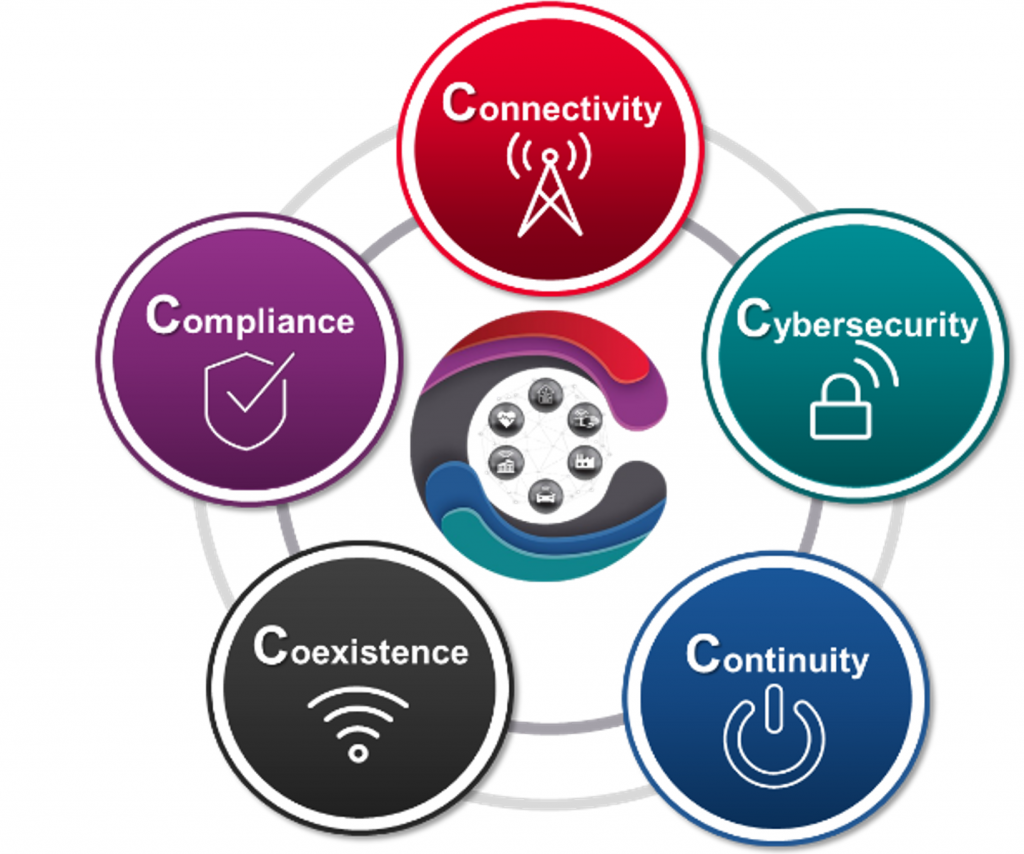
Figure 2: Key design considerations for the 5 Cs of IoT.
- Connectivity
Connectivity focuses on enabling uninterrupted information exchange between the device, infrastructure, cloud, and applications. Engineers often face the most complex challenge here because wireless systems are highly sophisticated, and dense deployments add operational intricacies.
Mission‑critical IoT devices must operate flawlessly in harsh environments. Rapidly evolving wireless standards compound the challenge, requiring continuous adaptation to maintain seamless ecosystem integration.
Effective solutions demand flexible, configurable, and upgradeable design and test tools that support multiple radio formats, real‑world performance assessment, and over‑the‑air testing without chipset‑specific drivers. Ideally, these tools should be simple, cost‑effective, and usable throughout R&D and manufacturing to minimize measurement correlation issues across development phases.
With IoT device demand projected to rise sharply, manufacturers need scalable, reliable, and economical testing systems capable of handling increasing volumes while upholding quality.
Author: Sook Hua Wong, Industry Segment Manager, General Electronics Measurement Solutions, Keysight Technologies, Inc.
About the Author
Sook Hua is an Industry Segment Manager at Keysight Technologies, based in Penang, Malaysia. She leads the strategic planning and marketing of Keysight’s IoT solution portfolio within the general electronics segment, driving growth and innovation.
Previously, she served as a product planner for RF/Microwave power meters and sensors. She earned a Bachelor’s degree in Electrical Engineering from the University of Technology Malaysia (1999) and an MSc in Electronic System Design Engineering from the University of Science Malaysia (2003). With 20 years at Keysight, she has spent the last 15 years in the General Electronics Measurement Solution (GEMS) team, contributing across manufacturing, product development, sales support, and marketing.
Part 2 continues tomorrow…
Internet of Things Technology
- Leveraging Blockchain for Trusted Industrial IoT Data: Case Study & Design Guidance (Part 2)
- Blockchain in Industrial IoT: Foundations and Applications – Part 1
- Overcoming 4 Key IoT Challenges: Power, Connectivity, Hardware, and Integration
- Securing Home Workers: Tackling the IoT Threat Landscape
- Top 3 Challenges in Preparing IoT Data for Industrial Success
- 5G’s Top Five Challenges: Navigating Spectrum, Cost, Coverage, Devices, and Security
- 5 Key Challenges Facing the Internet of Things Today
- Overcoming IoT’s Top Five Challenges: Continuity, Compliance, Coexistence & Cybersecurity – Part 2
- Software Testing for IoT Devices: Key Challenges & Solutions
- Top 5 IoT Development Challenges & How to Overcome Them