



How IoT Revolutionized Healthcare During the Covid‑19 Pandemic
The healthcare sector has been rapidly modernising, leveraging cutting‑edge technology to enhance diagnostic precision and patient outcomes. The Covid‑19 pandemic accelerated this trend, pushing providers to adopt innovative solutions that reduce in‑person contact while maintaining high standards of care.
“With the spread of this pandemic still at its peak,” says Yash Mehta, IoT and Big Data Science specialist, “medical professionals are embracing new methods of patient care that minimise physical encounters unless absolutely necessary.”
IoT devices have become indispensable in this shift. Companies like Ioterra, a marketplace that connects businesses with vetted IoT service providers, have expanded their offerings to supply medical devices and support the global fight against Covid‑19.
Monitoring a patient’s temperature is the first line of defence, and wearable IoT gadgets—such as smartwatches—provide continuous data on heart rate, blood sugar, blood oxygen, and more—all without human intervention. These sensors, coupled with cloud‑based analytics, empower clinicians to monitor patients remotely and intervene promptly.
IoT’s integration of smart sensors, algorithms, and cloud connectivity has delivered a suite of services that have proven critical during the pandemic, including telemedicine, contact tracing, robotic sanitisation, and robust data protection.
Telemedicine
Telemedicine enables clinicians to gather patient information remotely, eliminating the need for in‑hospital visits. With social distancing and lockdowns in place, it has become the safest and most cost‑effective way to provide care, cutting travel expenses and boosting patient engagement.
Wearable devices can capture vital signs such as heart rate, blood pressure, and temperature. The aggregated data is transmitted securely to healthcare providers, who can monitor patients in real time while safeguarding personal health information (PHI) and personally identifiable information (PII). A recent post‑Covid study on IoT product development highlights the following benefits:
- Patient monitoring – Continuous tracking of blood pressure, glucose levels, and temperature.
- Heart‑rate monitoring – Accurate measurement without restricting mobility.
- Mood monitoring – Insight into patients’ mental health status.
Beyond wearables, non‑wearable IoT devices such as ingestible sensors, connected respirators, and smart contact lenses are now available, broadening the scope of remote monitoring.
Contact Tracing
The incubation period for Covid‑19 ranges from 1 to 14 days, and asymptomatic individuals can still transmit the virus. Identifying those who have been exposed is therefore critical. IoT technologies have been instrumental in this effort.

Smartwatches and thermometers detect fevers—often the first symptom—while AI and Big Data analyze the aggregated data to pinpoint high‑risk areas. Real‑time location systems, such as RFID bracelets, allow clinicians to track patients during quarantine and recovery, providing comprehensive care and generating valuable research data.
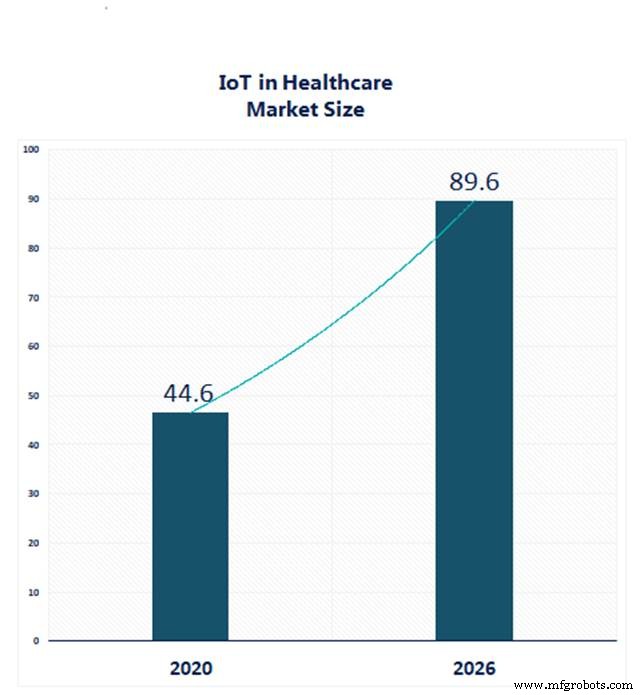
Healthcare‑related IoT revenues are projected to exceed $135 billion (€111.13 billion) by 2025, with 75 billion actively connected devices worldwide.
Robotic Sanitisation of Hospitals
Robotics has garnered attention for its precision in complex procedures, but its role in maintaining hygiene has become even more vital during a pandemic. Autonomous robots can disinfect patient rooms using UV‑light—an approach far more thorough than traditional surface cleaning—and signal staff when a space is safe to re‑enter.
Robotic disinfection methods have shown high efficacy, and the global robotics market is expected to reach $12.70 billion (€10.45 billion) by 2025, growing at a CAGR of 16.5% from 2020 to 2025.
Data Privacy and Protection
Healthcare data is highly sensitive and a prime target for cyberattacks. Protecting patient confidentiality during cloud‑based data exchange is paramount. Robust encryption, access controls, and compliance with regulations such as GDPR and HIPAA are essential safeguards.
While IoT began in hospital settings for tasks like IV monitoring and temperature tracking, its reach now extends to community‑based care, enhancing both patient and clinician experience. The pandemic has accelerated IoT adoption, setting new standards for remote monitoring and data security in medicine.
The author of this blog is Yash Mehta, an IoT and Big Data Science specialist.
Internet of Things Technology
- 5 Key Wireless Standards Powering IoT Connectivity
- Why Wi‑Fi‑Enabled IoT Devices Pose a Growing Security Threat
- How IoT Is Slashing Healthcare Costs and Boosting Outcomes
- IoT Adoption Stalls: Why the Hype Misses the Mark
- How Narrowband Technologies Power the IoT Revolution
- How COVID‑19 Shaped Healthcare IoT Cybersecurity: Lessons from the First Wave
- How AI is Transforming the Internet of Things Landscape
- Closing the IoT Blind Spot in a Post‑Pandemic World
- Software Testing for IoT Devices: Key Challenges & Solutions
- IoT Devices: Unveiling the Hidden Threats of Modern Connectivity