



Harnessing IoT Data for Manufacturing Excellence
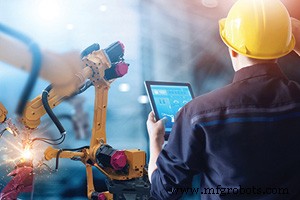
As cloud‑based sensing and actuation grow, a shared understanding of data becomes critical. Mis‑aligned terminology, vague semantics, and unclear expectations can all derail productivity and quality on the factory floor. This article distills how IoT, AI, and clear metrics can help you deliver more parts, faster, without compromising quality.
Common Manufacturing Metrics vs. IoT Data
In machine tools we routinely use terms like RPM (revolutions per minute), SPM (strokes per minute), IPM (inches per minute), and PPM (parts per minute). While the first four describe machine speed, only PPM reflects the outcome that matters to production managers: the number of finished parts per unit time.
When a supervisor asks to "speed up" a machine, the goal is to increase PPM, not just the speed of the spindle or the feed rate. However, pushing the motor or strokes faster can introduce quality defects—material tearing in stamping, heat buildup in machining, or excessive spring‑back in press brakes.
Optimizing Through Continuous Operation
Consider a press that traditionally runs in automatic single‑stroke mode: the machine stops at the top of the stroke to allow a part to be transferred before the next cycle begins. Surprisingly, operating in a continuous mode—running the machine without stopping at the top—can yield higher throughput. By eliminating idle time, you produce more parts in the same interval, a principle echoed in the Theory of Constraints and Lean manufacturing.
Stroke Length Adjustment: A Simple Time Saver
In hydraulic and servo machines, the time per stroke is a major determinant of cycle time. For example, at 60 SPM a full stroke takes one second. If the stroke length is 4 inches, the return time is also one second, meaning 50% of the cycle is wasted. Reducing the stroke to 3 inches cuts the return time by 0.25 seconds, enabling roughly 15 more parts per minute—an impressive gain from a small mechanical tweak.
Smart Sensors: From Data Points to Actionable Insight
Simply detecting that a part has left the machine is insufficient; you also need to know if the part is good. Modern IoT systems can differentiate between acceptable and defective parts in real time, triggering diverters or ejectors before the part moves downstream. This reduces scrap and downstream rework, saving both time and cost.
The Role of AI and Contextual Data
AI can analyze key performance indicators (KPIs) to suggest optimal operating parameters, but the system must be fed contextual information—what quality metrics are critical, what tolerances are acceptable, and what the end‑user demand looks like. Without context, even the best AI produces “garbage in, garbage out” recommendations.
Clear Messaging for Operators
Operators need real‑time, intuitive visual cues rather than cryptic numeric codes. Clear signage and audible alerts help them act immediately, reducing reliance on supervisors and maintenance staff and accelerating response times.
Future Outlook
Manufacturing is evolving from reactive to predictive. While today’s IoT platforms are like voice assistants—executing commands based on keywords—future systems will understand intent, anticipate failures, and autonomously adjust processes. These smarter, context‑aware solutions will bring us closer to the ultimate goal: data‑driven, high‑quality production.
Author: Joseph Zulick, Manager at MRO Electric and Supply
Internet of Things Technology
- MQTT vs. DDS: Choosing the Right M2M Protocol for IoT
- Hyperconverged Secondary Storage: Driving Unified Data Management for Enterprise IoT
- IoT Fuels Data Analytics: A Practical Guide for Business Success
- Is Your Manufacturing Facility Ready for IoT? A Practical Guide
- Turning IoT Data into Business Value: A Practical Guide
- Harnessing Data Visualization for IoT and AI Insights
- IoT and AI: Transforming Everyday Life and Industry
- Bringing IoT to Life with IBM & Tech Data – Part 2
- Turning IoT Into Reality: Tech Data & IBM Insights – Part 1
- Unlock IoT Success with Edge Intelligence