



How IoT and Embedded Analytics Reveal Climate Change’s Impact on Belgian Gardens
As global temperatures rise, we are witnessing a surge in severe weather events—prolonged heatwaves and droughts that ripple through ecosystems, from tropical forests to farmlands and even our backyard gardens. According to Karel Callens, CEO and co‑founder of Cumul.io, these changes are reshaping local environments in ways we’re only beginning to understand.
While headlines and images document worldwide climate shifts, few of us grasp how these patterns influence the green spaces we cherish—especially during the pandemic‑era lockdowns that intensified our bond with home gardens.
In April 2021, the University of Antwerp launched a groundbreaking, citizen‑led study to quantify climate change’s effects on Flanders’ back gardens and parks. Over six months, 5,000 participants installed IoT sensors in their gardens, logged data, and shared insights through embedded analytics dashboards.
The initiative, dubbed CurieuzeNeuzen in de Tuin (English: Curious Noses in the Garden), is a collaborative effort between the university, the Flemish government, De Standaard, Rabobank.be, Orange, VITO, the Flemish Environmental Society, Bio‑Planet, iFLUX, DPD, Aquafin, and Cumul.io.
Data‑driven gardening
“Fine‑grained local data is essential to understand how heatwaves and droughts affect communities,” explains Jonas Lembrechts, postdoctoral fellow in mountain ecology and plant invasions at the University of Antwerp and scientific lead for CurieuzeNeuzen.
Lembrechts adds that the project “examines how changing weather conditions impact local environments by capturing variations across different areas, enabling us to monitor the region comprehensively and take preventative action.” To do so, the team relied on the community’s help to access private green spaces that would otherwise remain unmonitored.
IoT garden daggers
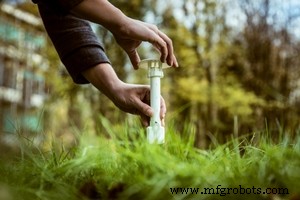
The deployment of thousands of “Garden Daggers”—IoT sensors based on the TMS‑4 model from TOMST, a Czech company renowned for its robust micro‑climate sensors—enabled the capture of soil temperature, humidity, surface and air temperatures, and lawn conditions across every participant’s garden.
Unlike earlier TMS‑4 deployments that required manual data retrieval via cable, the CurieuzeNeuzen daggers connect to a dedicated Orange 4G narrow‑band IoT network. This real‑time connectivity ensures that scientists receive continuous data streams without the logistical burden of manual reading.
Battery management posed another challenge: the sensors were shipped from the Czech Republic in an unactivated state to preserve battery life. Participants received step‑by‑step instructions for activation, and an automatic emergency activation was scheduled two to three weeks post‑installation in case of failure.
According to Gert Pauwels, head of IoT, M2M, big data, and innovation at Orange Belgium, the 4G narrow‑band network “strips away unnecessary overhead, delivering a clean, energy‑friendly data pipeline that aligns with our environmental and energy transition priorities.”
Interactive dashboards for citizen scientists
Transforming raw sensor data into actionable insights required a user‑friendly interface. The team turned to Cumul.io’s embedded analytics platform, which allows rapid creation of interactive dashboards that translate complex metrics into intuitive visualizations.
All 5,000 citizen scientists now access personalized dashboards that display key statistics—such as peak and trough soil temperatures, air temperatures, and moisture levels. Participants can compare their own garden data against regional averages and share findings on social media, fostering a vibrant community of data‑savvy gardeners.
Technical hurdles did arise: firmware updates could only be performed via a PC with dedicated software, limiting remote management. The team is now developing firmware that supports over‑the‑air updates and configurable measurement settings, adding flexibility for future deployments.
Unexpected insights and broader impact
Initial hypotheses predicted that inner‑city gardens would suffer most from heat stress due to urban heat island effects. However, early results indicate that many inner‑city gardens—often smaller and shaded—remain cooler on sunny days, mitigating heat impact. This counterintuitive finding equips residents with actionable knowledge to adapt their gardening practices.
The project’s success hinges on participant engagement: users actively explore interactive maps of Flanders, share dashboards, and discuss insights online. This network effect has amplified the reach of CurieuzeNeuzen, bringing climate data into the public sphere and inspiring a generation of curious, data‑informed gardeners.
CurieuzeNeuzen exemplifies how IoT and embedded analytics can democratize data science, proving that you don’t need a PhD to interpret climate impacts. By making real‑time, locally relevant data accessible, the project empowers citizens to monitor, respond to, and ultimately mitigate the effects of climate change right at their own backyards.
The author is Karel Callens, CEO & co‑founder, Cumul.io.
Internet of Things Technology
- MQTT vs. DDS: Choosing the Right M2M Protocol for IoT
- How IoT Drives Climate Action: Turning Connectivity into Carbon Savings
- IoT Workforce 2024: Bridging the Skills Gap with AI, ML, and Data Science
- Safeguarding IoT Adoption: Proven Cybersecurity and Privacy Strategies for Enterprises
- IoT Fuels Data Analytics: A Practical Guide for Business Success
- Harnessing IoT Data for Manufacturing Excellence
- IoT and AI: Transforming Everyday Life and Industry
- Leading Cloud‑Based IoT Analytics Platforms for 2026
- Harnessing Edge Computing for IoT, AI, and Emerging Technologies
- Harnessing IoT to Revolutionize Transportation: From Data to Smart, Sustainable Mobility