



Urgent Data Integration: Insights from the Father of the Internet of Things
MuleSoft founder Ross Mason opened the EMEA Summit in London’s ExCeL centre, welcoming 2,500 attendees for a deep dive into IoT’s future.
Kevin Ashton, MIT’s executive director and the visionary who coined “Internet of Things,” took the stage to share his extensive research experience and practical insights.
Ashton began by illustrating the rapid pace of technological change. A pixelated image of Pluto, composed of only 15 black‑and‑white pixels, was shown evolving over 85 years into a richly detailed, colorized portrait of the dwarf planet (reclassified in 2006).
He playfully critiqued products marketed as “smart” yet lacking genuine connectivity, citing a smartphone app that merely alerts users if they are drunk. “If a bottle and app can tell you you’re intoxicated, you’re already intoxicated,” he quipped.
Drawing a parallel between IoT and the human body, Ashton emphasized that sensors are only valuable when networked. “Data is everywhere,” he said. “In the 20th century spreadsheets processed it; today, AI and machine learning turn raw data into actionable insight.”
Life‑Changing IoT Applications
Ashton highlighted two groundbreaking use cases:
- In Kenya, patients blow into a smartphone microphone, transmitting breath data to a hospital spirometer. Remote analysis achieves 95 % accuracy, enabling affordable lung disease diagnostics in underserved regions.
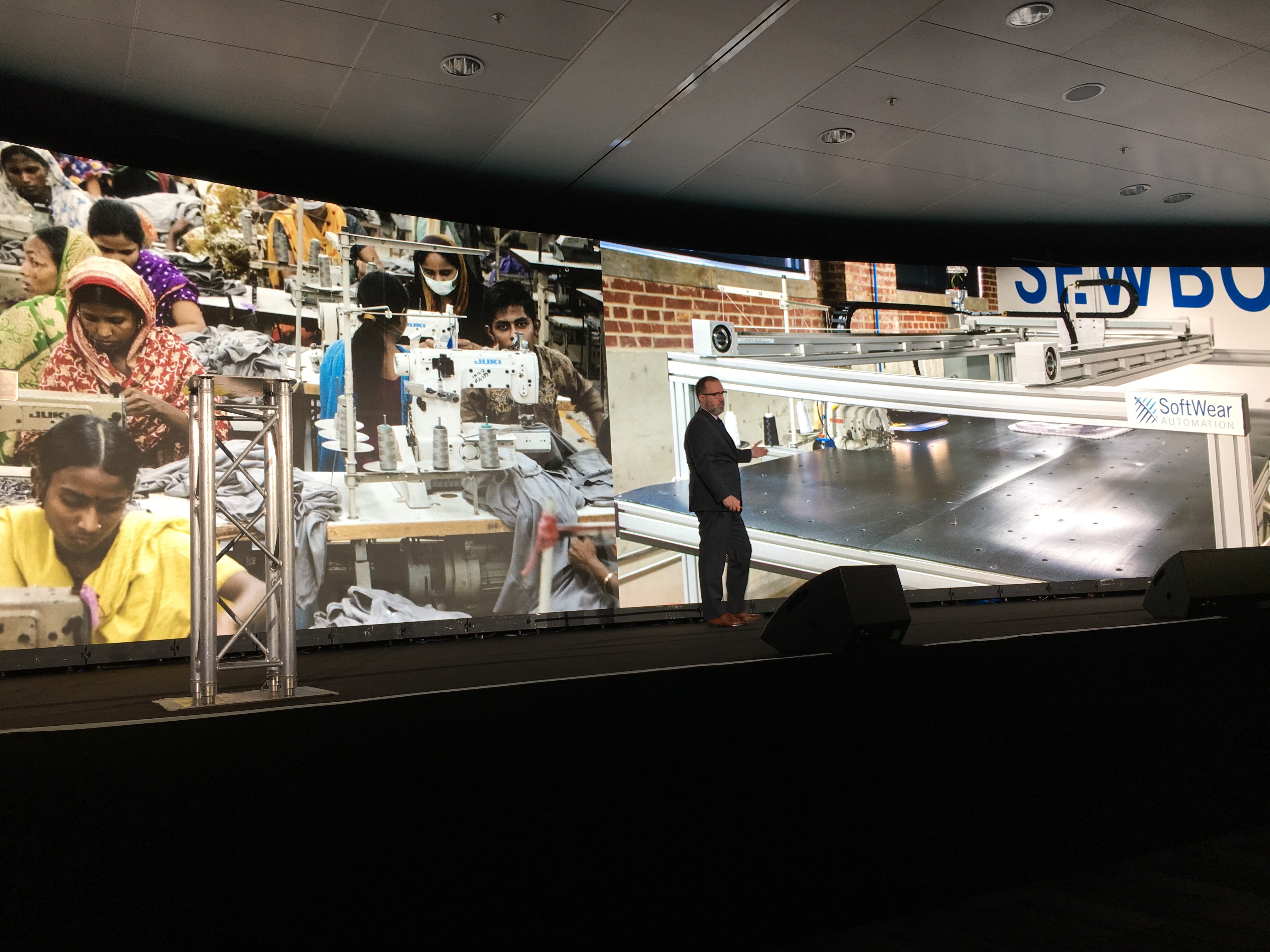
- In apparel manufacturing, a robotised sewing machine—dubbed the Sewbot—produces one million U.S. T‑shirts annually at $0.33 (€0.29) each, compared to $7.47 (€6.61) for U.S.‑made shirts. This dramatically cuts production and shipping costs, though it raises broader questions about global labor impacts.
He cautioned that disparate data streams risk creating a “disintegrated mind.” Solutions like MuleSoft’s Applications Network, partnering with companies such as Mars, Airbus, and Air Malta, leverage APIs to unify siloed data and restore coherent decision‑making.
Can APIs Solve Data Integration?
MuleSoft’s founder, Ross Mason, emphasized that digital transformation is no longer about large firms absorbing smaller ones but about speed and agility. He described the current IT landscape as a “ball of mud,” with continuous layers of new applications piling on top. “APIs break apart that monolith,” he explained, citing Uber’s success in integrating maps, payments, and connectivity without building everything in‑house.
Mason underscored that APIs alone are insufficient; they must be embedded within an application network governed by robust security, standardisation, and organisational structure. The three desired outcomes he identified are:
- Secure by Design
- Speed & Agility through reuse
- Built for Change, delivering sustainable results repeatedly
He concluded that visibility into connected assets and rapid change capability are essential for an enterprise to thrive in a volatile environment. Application Networks, he said, will usher in a new IT operating model—enhancing agility, fortifying security, fostering self‑service, and enabling continuous innovation.
The author is Jeremy Cowan, editorial director and publisher of IoT Now.
Internet of Things Technology
- Connext DDS in Industrial IoT: 5 Key Insights for Reliability, Security, and Scalability
- How 5G Fuels IoT: Current State, Opportunities, and Key Challenges
- Ensuring Data Compliance in the Internet of Things
- Simplifying IoT: Interoperability & Security for Enterprise Success
- From Edge to Cloud: Mastering IoT Data Pipelines
- Industries Poised to Lead the IoT Revolution – Why They’re Winning
- How IoT and Cloud Computing Shape the Future of Enterprise Data
- Democratizing the Internet of Things: Next‑Gen Satellite IoT Brings Universal, Affordable Connectivity
- Unlocking the Value of IoT Data: Secure, Insight‑Driven Strategies
- Overcome IoT Data ETL Challenges to Boost ROI