



Microsoft and PTC Showcase Industrial Applications of HoloLens 2 in Augmented Reality
“When you change the way you see the world, you change the world you see.” —Microsoft CEO Satya Nadella at MWC
Mixed reality and augmented reality promise transformative experiences, yet real‑world demos have been scarce. Gartner noted last year that hardware improvements and compelling use cases are essential for progress in AR.
Revolutionizing Industrial AR with HoloLens 2
The HoloLens 2, unveiled at MWC, is a significant leap over its predecessor. Designed for enterprise, medical, and industrial markets, the headset carries a $3,500 price point that Microsoft argues is justified by its advanced instructional capabilities and refined hardware.
Key enhancements include a substantially larger field of view, improved ergonomics, high‑resolution visual display, and the ability to track hands, eyes, and even perform retinal authentication. These features enable more natural interaction with digital content in three dimensions.
Strategic Partnership with PTC
Microsoft has teamed with industrial IoT firm PTC, which offers the Vuforia platform to accelerate AR and mixed‑reality application development. PTC’s CEO James E. Heppelmann emphasizes the synergy between IoT and AR: IoT feeds data into the digital realm, while AR delivers that data back to the physical world in an intuitive, 3D format.
Real‑World Application: Howden’s Wastewater Aeration Solution
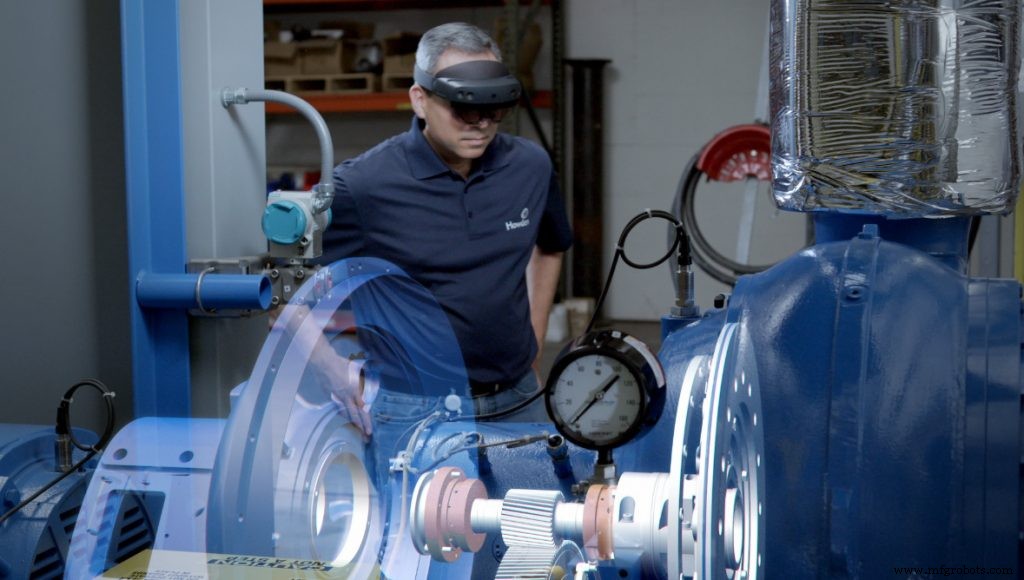
During the HoloLens 2 launch, Dr. Maria Wilson of engineering firm Howden demonstrated an industrial use case. Howden streams sensor data from aeration equipment to Azure IoT Hub, which then feeds PTC’s ThingWorx platform. Using existing 3D CAD models, the team creates a step‑by‑step mixed‑reality service that provides operators with real‑time insights—bearing pressure, oil temperature, gear vibrations, and air temperature.
Operators can view holographic models to troubleshoot blower equipment before physically engaging with it, while new staff receive hands‑on training in a safe virtual environment. Heppelmann noted that users can access these holograms via HoloLens or tablet, allowing simultaneous multi‑device interaction.
Expert Insight: The IoT‑AR Interface
Heppelmann described AR as a “modem” that converts digital data into analog signals for sight, hearing, and touch. By enabling interaction with digital representations of physical objects, AR turns connected products into optimizable, monitorable systems—effectively making people the new “smart” component.
Internet of Things Technology
- How Connected Sensors and Smart Processors Power Industry 4.0
- Digital Twins + AI: Driving Efficiency, Safety, and Sustainability in Industrial Operations
- GE and Microsoft Deepen Strategic Alliance to Accelerate Industrial Internet Adoption
- Industrial AR Moves from Buzz to Business Value, PTC Report Shows
- Predictive Maintenance: A Catalyst for the Next Industrial Revolution
- 5 Key Reasons IoT Projects Fail—and Proven Strategies to Succeed
- 5 Key Distinctions Between Industrial IoT and Consumer IoT
- Industrial Brakes Explained: Purpose, Applications, and Maintenance
- Professional Machinery & Industrial Equipment Dismantling Services
- Professional Facility & Industrial Maintenance Services