



How Connected Sensors and Smart Processors Power Industry 4.0
Since its debut at the 2011 Hannover Fair, Industry 4.0 has evolved from a buzzword into a tangible manufacturing revolution. The real drivers are the explosion of the Internet of Things (IoT) and the integration of artificial intelligence (AI) into industrial workflows.
In 2012, General Electric introduced the term “industrial internet,” describing a network of intelligent devices that monitor, collect, exchange, analyze, and deliver actionable insights. This concept, together with Industry 4.0, eventually coalesced into the Industrial IoT (IIoT).
Regardless of the label, the goal remains the same: to usher in the fourth industrial revolution, building on the steam engine, conveyor belt, and IT foundations. Smart factories now interlace sensors, actuators, and control systems across IP‑based networks, creating a connected ecosystem that enhances automation and decision‑making.

Figure 1: Industry 4.0 marks the next level of digital transformation. (Image: Texas Instruments)
AI applications such as fault detection, predictive maintenance, and robotic process automation further accelerate this shift. Machine‑learning algorithms process sensor data in real time, enabling engineers to make faster, data‑driven decisions and achieve significant cost and labor savings.
At General Electric’s Schenectady, New York facility—where sodium‑nickel batteries are produced—more than 10,000 sensors span 180,000 sq ft of production floor. All sensors connect via high‑speed Ethernet, forming a dense data fabric that informs every stage of manufacturing.
At the core of any Industry 4.0 system are connected sensors.
Internet of Sensors
Whether wired or wireless, sensors form the backbone of IIoT architectures. The data they stream to the cloud can optimize production, predict equipment failures, schedule maintenance, and even trigger automated inventory replenishment.
Modern sensors now merge precise localization with robust communication, enabling real‑time indoor tracking of tools and assets. This capability enhances efficiency, safety, security, and quality control on assembly lines.
For example, Bosch’s “Smart Cab”—developed with the CAB Concept Cluster (CCC)—combines cameras and drones to create a connected control center for agricultural vehicles. The system captures high‑resolution imagery of crops, processes it in the cloud, and performs object recognition to alert farmers about wildlife or obstacles.
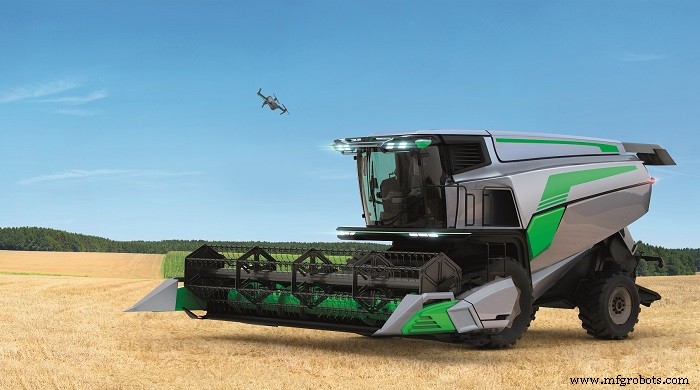
Figure 2: Industry 4.0 extends beyond manufacturing into connected farming. (Image: CAB Concept Cluster)
In its German plant in Blaichach, Bosch has increased productivity in ABS/ESP brake production by tracking cylinder movements, gripper cycle times, and process temperatures via RFID tags. The data feeds into large databases that map internal goods flow in real time.
Industry 4.0 Chips
Semiconductors—edge processors, memory, data converters, and connectivity chips—are essential to IIoT deployments. They enable on‑premise data processing, reduce latency, and secure communications.
Texas Instruments’ Sitara AM6x processor family exemplifies this trend. It delivers gigabit industrial connectivity for factory automation, motor drives, and grid infrastructure, unifying Ethernet with real‑time traffic on a single network. The processors support multiple industrial protocols, including TSN, EtherCAT, Ethernet/IP, and PROFINET.
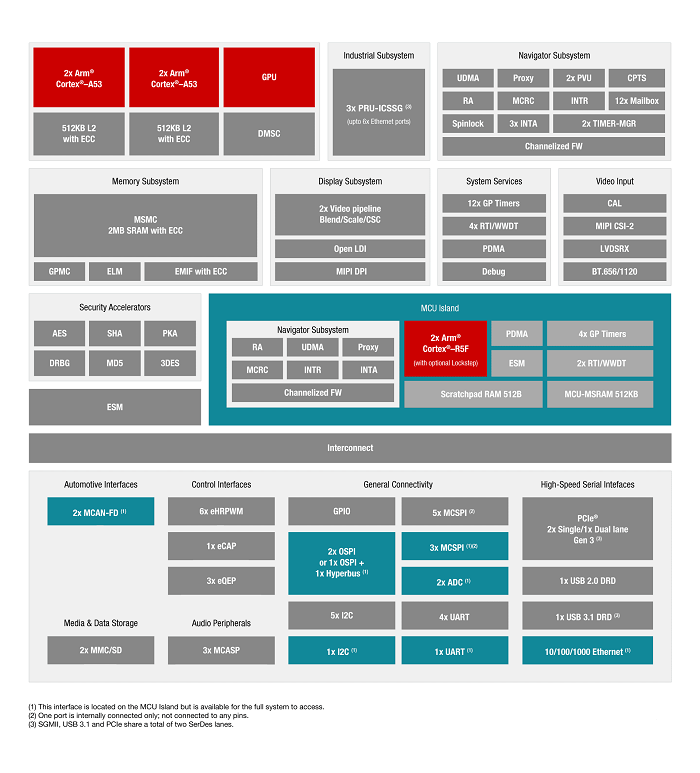
Figure 3: Sitara AM6548—a multi‑protocol processor offering gigabit throughput for TSN and other industrial standards. (Image: Texas Instruments)
The TSN‑enabled processor incorporates a dual‑core Arm Cortex‑R5F microcontroller that can run in lockstep mode and includes ECC protection for on‑chip and DDR memory. These features enhance reliability and simplify security for PLCs and multi‑axis motor drives.
Modern PLCs demand high performance, secure connectivity, and flexible I/O. They must support emerging protocols such as IO‑Link and shrink in form factor while expanding I/O channels—both analog and digital—to accommodate growing automation needs.
Advances in system‑on‑chip (SoC) technology also enable digital twins, virtual replicas of physical processes that link real‑world data with digital models. These cyber‑physical systems make monitoring and optimization more cost‑effective and efficient.
Factory of the Future
Industry 4.0 heralds a renaissance on the factory floor, offering end‑to‑end sensor ecosystems and data services that empower smarter decisions. The result is higher operational efficiency, improved yields, accelerated engineering productivity, and stronger business performance.
Gartner’s 2018 report highlighted that the industrial sector housed over 6 billion IoT devices—a figure projected to surpass 20 billion by 2022. This rapid growth underscores the tangible shift toward fully connected factories.
The factory of the future is emerging steadily, powered by more capable processing nodes, increased automation, and advanced analytics that can ingest and interpret massive data streams in near real time. It’s no longer a vision—it’s becoming reality, one sensor solution at a time.
>> This article was originally published on our sister site, Electronic Products: “IoT sensors bring Industry 4.0 into commercial focus.”
Internet of Things Technology
- Digitalisation in Food & Beverage: Enhancing Safety, Traceability, and Efficiency
- Industrial IoT: Key Building Blocks Driving Industry 4.0
- Data Lake vs. Big Data: Choosing the Right Approach for Industrial Applications
- Unlocking Blockchain’s Potential in Industrial Automation: Opportunities and Obstacles
- Variable Speed Drives: Keeping Food, Medicine & More Cool in Industrial Refrigeration
- Industrial AIoT: Merging AI and IoT to Drive Industry 4.0 Innovation
- How IoT and Emerging Tech Are Revolutionizing Healthcare: Key Benefits & Applications
- Industrial DataOps: Driving Competitive Edge with Advanced Analytics in Industry 4.0
- Industrial Brakes Explained: Purpose, Applications, and Maintenance
- Smart Sensors in Industrial Machinery: Benefits, Drawbacks, and Workforce Impact