



Upgrading and Configuring IoT Devices with AWS Jobs: A Practical Guide
Amazon Web Services (AWS) stands among the leading cloud platforms for the Internet of Things (IoT), rivaled only by Microsoft Azure and Google Cloud IoT. Smart devices connect to AWS over the Internet, typically using the MQTT protocol, and interact with a rich set of cloud services. Beyond device communication, AWS offers robust data storage, analytics (including AI), access control, and many other capabilities that empower end‑to‑end IoT solutions.
For data persistence, AWS supplies the Simple Storage Service (S3), a scalable, hierarchical file system. Each object in S3 can be addressed with a unique URL that, with the proper permissions, is publicly accessible via a web browser. When an object contains an HTML page, the embedded JavaScript can invoke AWS APIs, enabling interactive dashboards and direct device control from the browser.
Lambda Functions
Lambda lets you run code without provisioning servers. You can write functions in Python, Java, C#, or Node.js, store them in the cloud, and trigger them by HTTP requests, other Lambda calls, or MQTT messages from devices. Lambda acts as middleware, translating device data into database operations, or rendering responses to user interfaces (see Figure 1).
click for larger image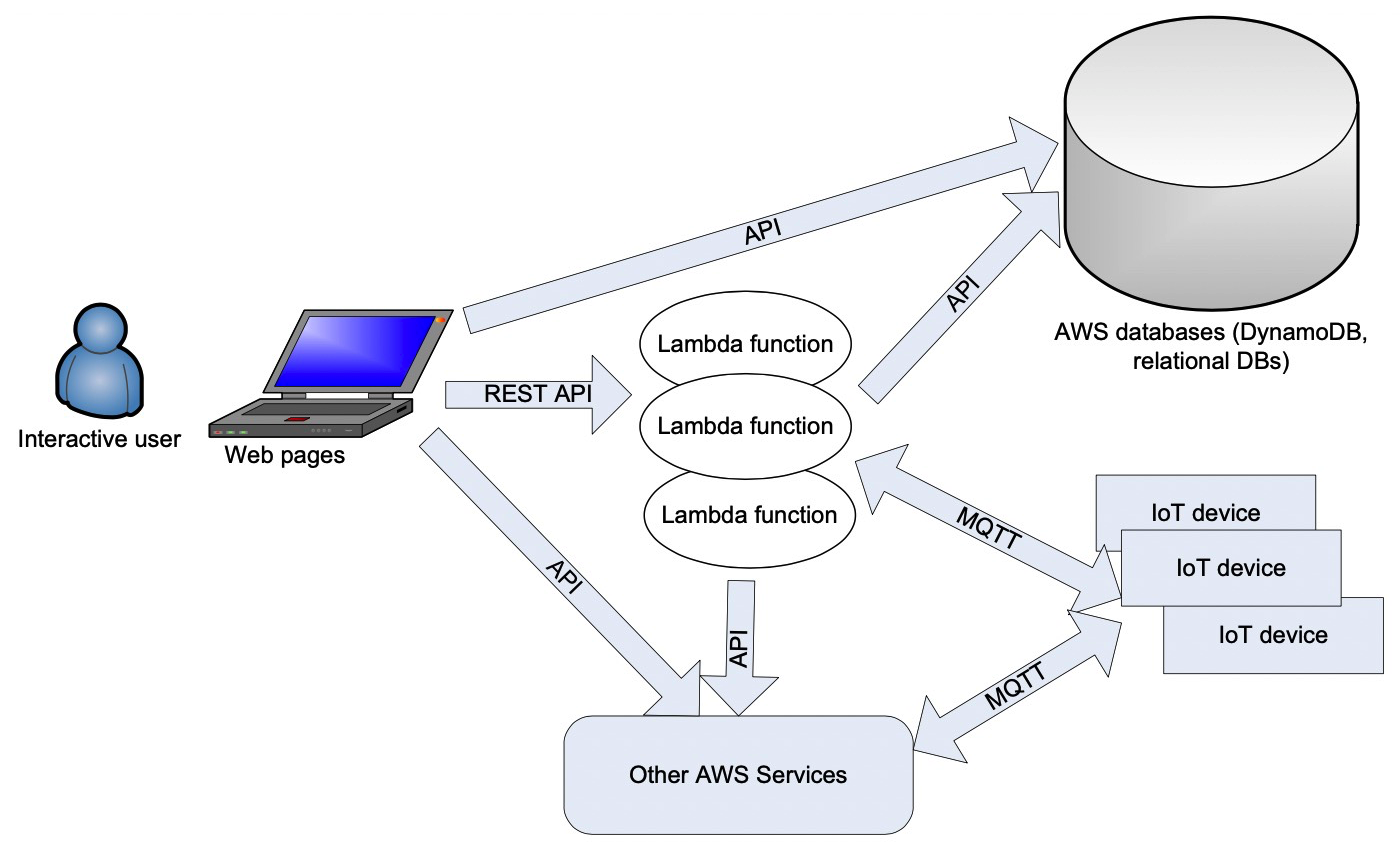
Figure 1. Architecture of AWS component interaction (Source: Auriga)
AWS imposes limits on Lambda: maximum execution time per request, memory usage, and package size. If a function exceeds any limit, the execution is terminated, and the limits can be configured during deployment but never surpass the hard caps set by AWS.
IoT devices typically establish a TCP connection to the AWS IoT Core endpoint. TCP guarantees data integrity and buffering, ensuring that messages are sent even over intermittent links. AWS builds on TCP with its own reconnection logic, so the device automatically reconnects after a network outage.
Because MQTT is unidirectional for commands, connectivity hiccups rarely impact Lambda invocations. A Lambda can publish an MQTT command to a device and return immediately; any response is handled by a separate Lambda that subscribes to the device’s topic.
AWS Jobs
AWS Jobs is a service designed to schedule, launch, and monitor long‑running tasks on one or many IoT devices. Though newer than many AWS services, it integrates seamlessly with the console and SDKs.
Device‑side operations are exposed over MQTT. Functions such as GetPendingJobExecutions, StartNextPendingJobExecution, UpdateJobExecution, and DescribeJobExecution allow a device to poll for pending jobs, acknowledge progress, and report completion.
Administrative operations use HTTPS and are intended for web clients, Lambda code, or interactive use. These include CreateJob, DeleteJob, DescribeJob, ListJobs, and ListJobExecutionsForThing.
Each job is defined by a JSON job document that is transmitted to the target device. The document typically contains an operation name and one or more URLs pointing to job parameters. These URLs can be pre‑signed by an AWS user, granting the device temporary, scoped access to objects it would otherwise be unable to retrieve. Pre‑signed URLs expire automatically, enhancing security.
A job document may be created dynamically when the job is defined or stored as an S3 object, referenced during job creation.
Job attributes
- Target: a single device or a group. If a group is specified, the job runs on all current members.
- Job type: Snapshot jobs complete after running on the selected devices. Continuous jobs remain active and will automatically run on any device added to the group later.
While executing, a job follows a finite state machine. Valid states include QUEUED, IN_PROGRESS, FAILED, SUCCESS, CANCELED, REJECTED, and REMOVED. The device updates the state via UpdateJobExecution, or an administrator can change it using API calls such as CancelJob. Typically, a job transitions to IN_PROGRESS during execution, then to SUCCESS or FAILED upon completion.
click for larger image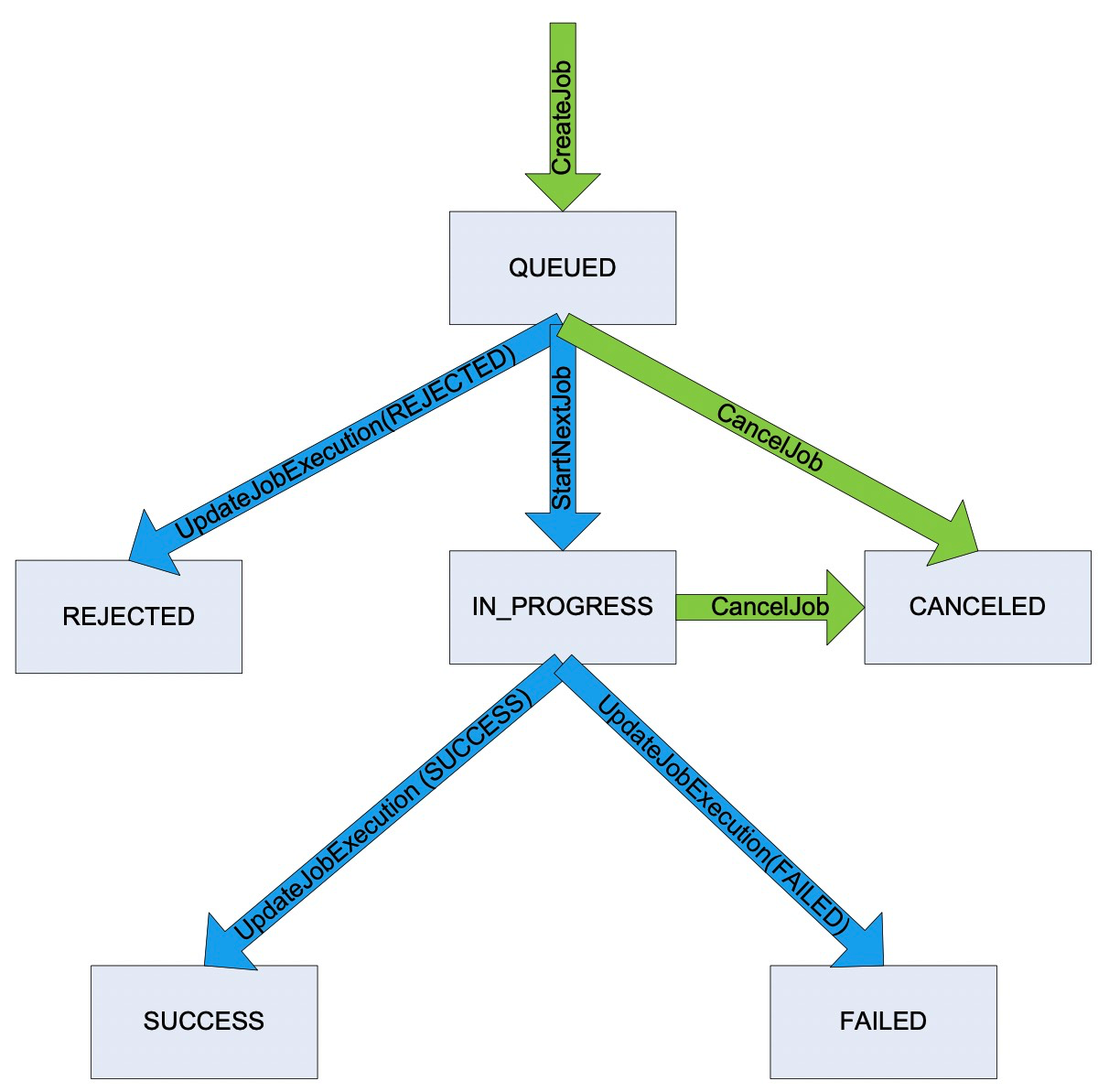
Figure 2. Diagram of states during AWS Jobs execution (Source: Auriga)
Internet of Things Technology
- Alif Semiconductor Unveils Ensemble and Crescendo Fusion Processors for Secure, AI‑Enabled IoT
- Processors Power the Seamless Integration of IoT and AI
- Safeguarding IoT Adoption: Proven Cybersecurity and Privacy Strategies for Enterprises
- Enterprise IoT Adoption Surges — Why Security Risks Are Growing
- Mitigating the Cyber Risks of IoT: Strategies and Insurance Solutions
- IoT Devices Set to Surge 200% by 2021, Juniper Research Forecasts Rapid Expansion
- Building an IoT Device with ESP8266‑01 and Arduino Nano: A Complete Guide
- Optimize Spare Parts Inventory with Low-Code and IoT Solutions
- Industrial IoT Security: Overcoming Challenges and Implementing Robust Solutions
- IoT in Manufacturing: Key Concepts, Applications, and Real-World Examples