



Powering High‑Demand IoT Devices with USB and PoE
Wired data links such as USB and Ethernet not only deliver data but also provide reliable power to today's most demanding IoT endpoints.
While many IoT devices are engineered as low‑power, compact units that run on coin cells or batteries, the spectrum now includes smart sensors, data loggers, building controllers, security cameras, and a host of enterprise and infrastructure applications.
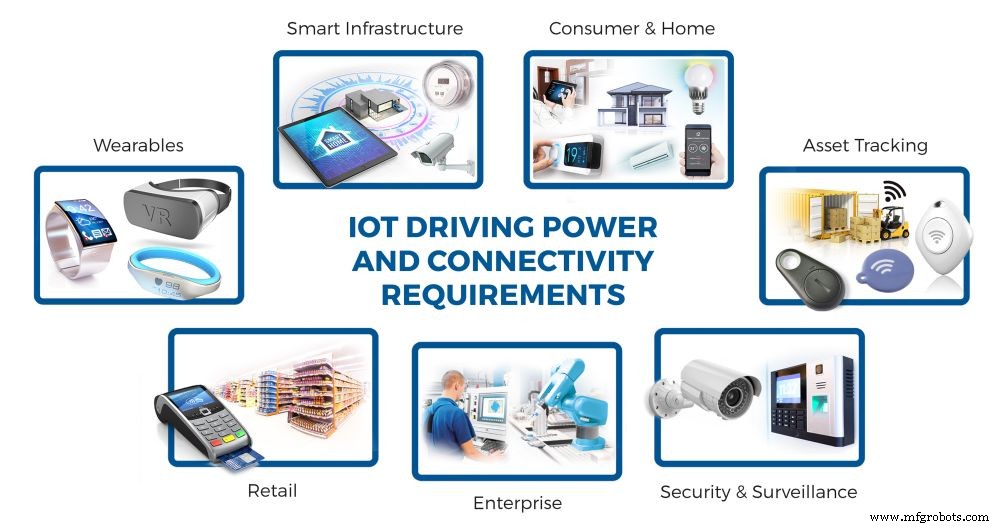
Figure 1. IoT applications are expanding to encompass devices that require more than smaller batteries can deliver. [Source: Diodes Incorporated]
These newer endpoints often feature powerful embedded processors, local data handling, or mechanical subsystems such as PTZ cameras that can draw several watts, exceeding the capacity of small batteries. A battery alone would either fail to meet peak power demand or necessitate frequent replacements, compromising reliability and cost.
Deploying a larger battery increases size, weight, and bill of materials. Drawing power from a nearby AC line removes the battery but adds an extra cable, AC‑DC conversion, and additional complexity—unless an external power adapter is used, which still raises cost.
Incorporating a wired USB or Ethernet interface lets designers leverage built‑in power delivery features. Both Power over Ethernet (PoE) and USB Power Delivery (USB‑PD) use the same cable for data and power, eliminating the drawbacks of batteries and AC wiring while maintaining low‑voltage safety.
USB Power Specifications
An ordinary USB 2.0 port supplies up to 500 mA at 5 V, sufficient for 2.5 W or less. USB 3.0 raises this to 900 mA, and the latest USB Type‑C can deliver 1.5 A or 3.0 A at 5 V, up to 15 W. USB‑PD negotiates higher voltages—9 V, 15 V (3 A), or 20 V (5 A)—providing up to 100 W of power.
Power over Ethernet Types
Existing Ethernet infrastructure can support an IoT endpoint anywhere on the network as a PoE‑powered device (PD), requiring minimal new wiring. The power sourcing equipment (PSE) can be a PoE switch or hub that injects power via one or more data pairs. While the standard 100‑meter data limit applies, PoE extenders extend this reach.
PoE injectors add power to cables from non‑PoE switches, and PoE splitters extract power for non‑PoE endpoints.
Several generations of PoE exist, summarized in Table 1. Type‑1 (IEEE 802.3af) supports up to 15.4 W, Type‑2 (802.3at) up to 30 W, Type‑3 (802.3bt) up to 60 W, and Type‑4 (802.3bt) up to 100 W. While 802.3af/at use two pairs in Cat 5/5e, 802.3bt requires Cat 6 and all four pairs, reducing cable losses and enabling higher power delivery.
| IEEE standard | PoE Type | Power to port | Maximum current |
|---|---|---|---|
| 802.3af | Type 1 | 15.4 W | 350 mA |
| 802.3at | Type 2 | 30 W | 600 mA |
| 802.3bt | Type 3 | 60 W | 600 mA |
| 802.3bt | Type 4 | 100 W | 960 mA |
Table 1: PoE standards.
A conventional USB 2.0, USB 3.2, or USB Type‑C port offers a stable 5 V DC supply that can be taken directly from dedicated power lines in the connector. A DC‑DC converter, such as Diodes Incorporated’s AP61100 5 V, 1 A buck converter, stabilizes this power for IoT endpoints.
In a PoE‑powered system, each cable pair requires a transformer, a bridge rectifier, a PD controller, and a DC‑DC converter to power the load. Suitable DC‑DC converters include Diodes’ AP62200 (18 V/2 A) and AP63200 (32 V/2 A) synchronous buck converters, offering wide input ranges and low on‑resistance MOSFETs for maximum efficiency. The AP62200 series uses Constant On‑Time control, while the AP63200 series employs peak‑current mode control with an integrated compensation loop for reduced external components.
Essential Protection
USB’s sophisticated negotiation protocols and power profiles allow each device to draw only what it needs, optimizing power usage. However, unlike PoE, USB provides no handshake before power is applied, exposing the device to potential faults such as over‑current or short‑circuit conditions.
Designers can mitigate these risks with robust protection devices. Diodes’ AP22811, AP22804, and AP22814 offer over‑current, short‑circuit, and over‑temperature protection with auto‑recovery, reverse‑current/voltage protection, a 3 A maximum current rating, and a 50 mΩ on‑resistance. The AP22652/53 adjust the current limit up to 2.1 A, while the AP22615 (Figure 2) and AP22815 provide over‑voltage protection up to 28 V with fixed or adjustable current limits.
click for larger image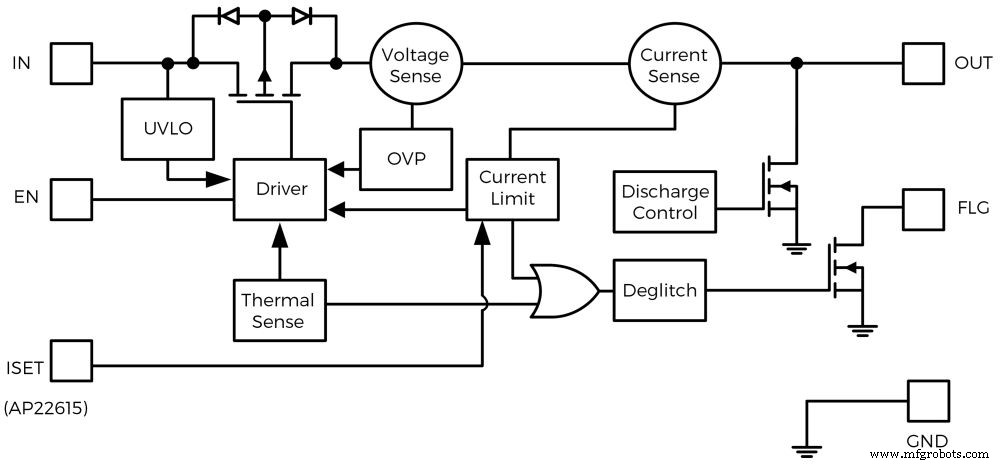
Figure 2. The AP22615 provides integrated protection for USB‑powered devices. [Source: Diodes Incorporated]
The USB switches also feature a soft‑start function that controls output voltage rise time, safeguarding both source and load, and additional safety measures that shield against current surges.
Higher‑Power PoE
Applications such as access control or high‑resolution video demand substantial power while operating in confined spaces. Selecting efficient components at every stage of the power chain and leveraging high‑density integration are essential for optimal performance and cost.
Diodes’ ZXTR2000 family of linear regulators (Figure 3) is tailored for 48 V DC PoE systems. By integrating a transistor, Zener diode, and resistor into a single package, these regulators reduce component count and board real estate.
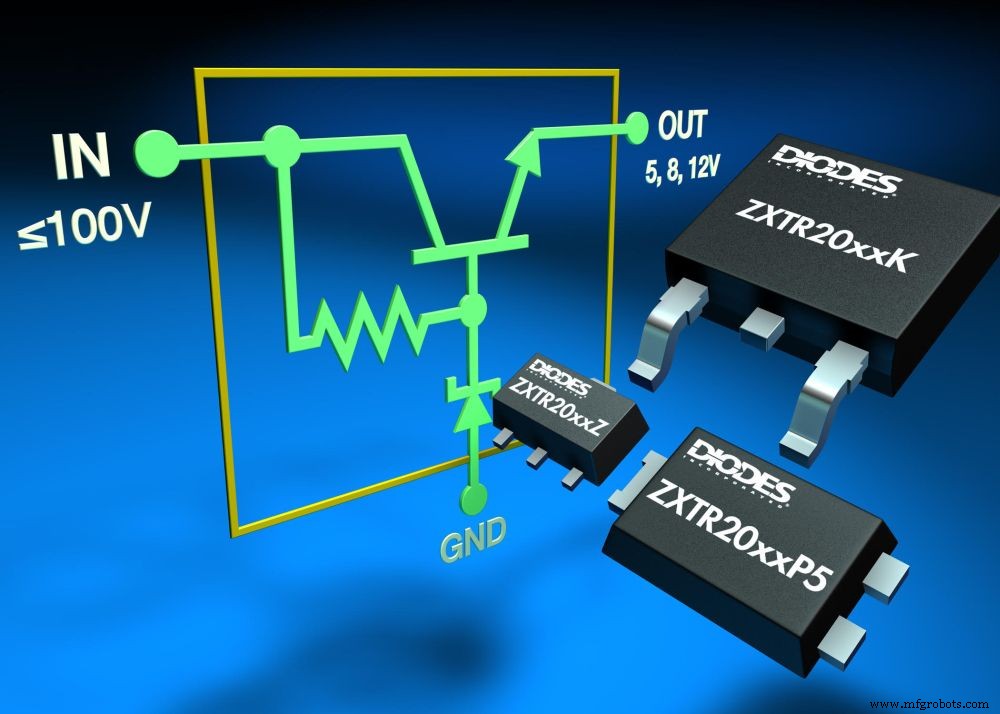
Figure 3. The XTR200 family delivers an integrated solution for high‑power PoE applications. [Source: Diodes Incorporated]
Conclusion
IoT designers now have powerful alternatives to battery‑based or wireless power solutions. By leveraging standardized wired protocols—USB and PoE—alongside proven DC‑DC converters, regulators, and protection ICs, they can meet the energy demands of high‑performance endpoints while maintaining safety, reliability, and cost efficiency.
>> This article was originally published on our sister site, Power Electronics News.
Embedded
- Synchronizing Device Payloads with Eclipse Vorto: A Practical Guide
- Battery‑Free UHF RFID: Unlocking Lean Industrial IoT
- How Next‑Gen PoE Powers IoT: 90 W Delivery for 5G and Beyond
- Harnessing Energy Harvesting for Reliable Edge IoT Devices
- Preparing Your Manufacturing Operations for AI with IoT
- Safeguarding IoT Adoption: Proven Cybersecurity and Privacy Strategies for Enterprises
- Harnessing Industrial IoT for Growth: Beyond Cost Savings
- Unlocking Real-Time Value: Why Your Business Must Embrace IoT
- Seamless PLC‑to‑Cloud Integration: Harnessing IoT for Real‑Time Data Retrieval
- Eliminate IoT Issues with Seamless IT Automation