



Virtual Sensors: How They Work and Key Applications
In modern industrial and consumer devices, a growing array of physical sensors—microphones, cameras, proximity and inertial units—provide raw data that, when combined, delivers far more reliable insights. By fusing these signals, engineers create virtual sensors that translate complex measurements into the exact variables designers need to monitor.
What is a Virtual Sensor?
A virtual sensor is a software construct that estimates unmeasured process variables or product characteristics. Using mathematical models and the outputs of existing physical sensors, it predicts the desired quantity with high accuracy.
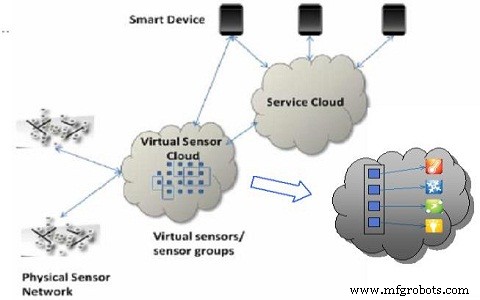
The security of virtual sensors is paramount. Because data is generated, processed, and transmitted across networks, it becomes a target for cyber‑attacks. Robust encryption and authentication protocols are therefore essential to protect the integrity of the digital supply chain.
How Virtual Sensors Work
At its core, a virtual sensor is a piece of software that learns the relationships among multiple sensor inputs. By running a calibrated simulation model and feeding it real‑world data, the system can infer the behavior of a component that would otherwise require a dedicated, expensive sensor.
Virtual Sensors on Android and Windows 8
Both mobile platforms expose a set of built‑in virtual sensors that combine accelerometer, gyroscope and magnetometer readings to provide orientation and motion metrics.
Android’s four primary virtual sensors are:
- TYPE_GRAVITY
- TYPE_ORIENTATION
- TYPE_LINEAR_ACCELERATION
- TYPE_ROTATION_VECTOR
Windows 8 offers:
- Orientation sensor
- Tilt‑Compensated Compass
- Inclinometer
- Shake
These fused sensors enable developers to build context‑aware applications that react to device motion, orientation, and user intent.
Applications of Virtual Sensors
Virtual sensors are invaluable when:
- Direct measurement is impossible or impractical.
- A physical sensor is too slow, costly, or unavailable.
- The operating environment is hostile to hardware sensors.
- Maintenance costs or sensor reliability are prohibitive.
For example, in miniature aircraft flight control, a virtual acceleration sensor—derived from a realistic MATLAB simulation—provides real‑time data when only two physical sensors are present. It can also detect sensor faults before they compromise safety.
By integrating virtual sensors, engineers can achieve higher system reliability, reduce hardware footprints, and accelerate time‑to‑market.
Sensor
- Voltage Sensors: How They Work & Key Applications in Modern Power Systems
- Lambda (Oxygen) Sensor: Function, Operation, and Key Automotive Applications
- Occupancy Sensors Explained: How They Work and Why They’re Essential for Energy Savings
- Door Sensors: How They Work and Their Role in Home Security
- Image Sensors: Types, Operation, and Practical Applications
- IoT Sensors: Functionality, Types, and Real‑World Applications
- Gyroscope Sensors: How They Work and Their Key Applications
- MEMS Sensors: How They Work and Their Key Applications
- How Parking Sensors Work & Their Key Applications
- Magnetic Sensors: Principles, Types, and Applications