



Gyroscope Sensors: How They Work and Their Key Applications
What Is a Gyroscope Sensor?
A gyroscope sensor is an electromechanical device that measures an object’s angular velocity and orientation. Unlike accelerometers, which capture linear acceleration, gyroscopes detect rotational motion—essential for systems that must track tilt, heading, and angular changes.
How Gyroscope Sensors Operate
Gyroscopes convert rotational motion into an electrical signal through the Coriolis effect. The most common consumer design is the vibrating‑structure gyroscope, which uses a double‑T or tuning‑fork crystal element. When the sensor rotates, the Coriolis force induces secondary vibrations that are sensed as a change in electrical charge, allowing precise calculation of angular velocity in degrees per second.
Key Components of a Vibrating‑Structure Gyroscope
- Drive Arms: Generate lateral vibrations when energized.
- Sensing Arm: Detects secondary vibrations caused by Coriolis forces.
- Stationary Center: Provides a reference point for the motion.
Types of Gyroscope Sensors
Gyroscopes range from large, high‑precision instruments to compact MEMS chips. The hierarchy from largest to smallest is:
- Ring‑laser gyroscopes (used in aircraft and space shuttles)
- Fiber‑optic gyroscopes (found in high‑performance racing cars and boats)
- Fluid gyroscopes
- Vibrating‑structure (MEMS) gyroscopes
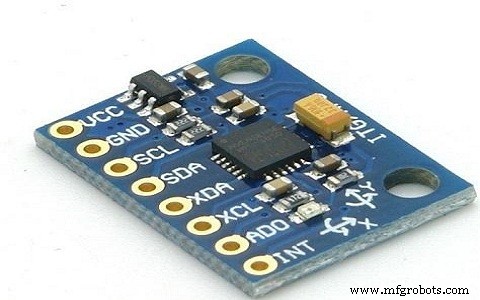
Vibrating‑structure gyros dominate the consumer market due to their small size and low cost. Their accuracy depends on the stationary element material—crystal or ceramic—and structural design such as double‑T, tuning fork, or H‑shaped configurations.
Gyroscope Sensors in Mobile Devices
Modern smartphones incorporate MEMS gyroscopes to provide motion‑aware features such as screen rotation, gesture control, and augmented reality. Apple introduced the first commercial gyroscope in the iPhone, setting the standard for consumer electronics. These sensors enable low‑power, high‑accuracy orientation tracking that enhances user experience while conserving battery life.
Simulating a Gyroscope on Devices Without One
For older phones lacking a built‑in gyroscope, apps like GyroEmu or Xposed modules can emulate the sensor by combining data from the accelerometer and magnetometer. This trick is especially useful for AR games and orientation‑based applications.
Practical Applications
- Aircraft and space shuttle navigation (ring‑laser gyros)
- High‑speed racing vehicles (fiber‑optic gyros)
- Automotive navigation and electronic stability control (vibrating‑structure gyros)
- Camera optical image stabilization
- Robotics and UAVs for attitude control
- Gesture‑based interfaces for wearables and assistive devices
Gyroscopes provide angular velocity, angle measurement, and control for these systems. By leveraging their high precision and low noise, designers can create efficient, low‑cost solutions for everything from virtual reality to medical assistive technology.
Common MEMS gyroscope models include the MAX21000, MAX21001, MAX21003, and MAX21100. Have you tried any app that simulates a gyroscope on your mobile device?
Sensor
- How Distance Sensors Work and Their Key Applications
- Virtual Sensors: How They Work and Key Applications
- Voltage Sensors: How They Work & Key Applications in Modern Power Systems
- Lambda (Oxygen) Sensor: Function, Operation, and Key Automotive Applications
- Image Sensors: Types, Operation, and Practical Applications
- Flame Sensors: How They Work and Key Applications in Fire Safety
- Sound Sensors: How They Work & Practical Applications
- Humidity Sensors: How They Work and Key Applications
- Rain Sensors Explained: How They Work & Key Applications
- Laser Sensors Explained: Working Principles & Industrial Applications