



Laser Sensors Explained: Working Principles & Industrial Applications
In modern manufacturing, detecting the presence or absence of objects with pinpoint accuracy is crucial. Laser sensors provide a non‑contact, high‑precision solution that enhances quality control and process reliability across diverse industries.
What Is a Laser Sensor?
A laser sensor is an electronic device that emits a narrow, collimated laser beam to detect objects or measure distances. The beam travels in a straight line because the light waves have a uniform wavelength, ensuring minimal divergence.
While the beam’s intensity is ideal for precise measurement, it is hazardous to the human eye. Operators must use appropriate eye protection or safety interlocks whenever the laser is active.
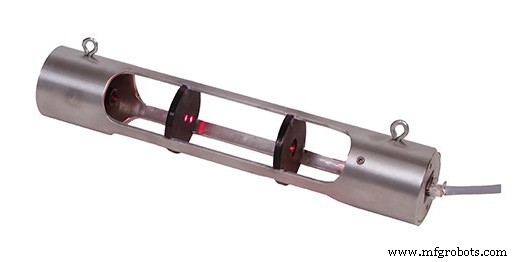
Pin Configuration & Working Principle
Laser sensors typically feature two power pins and one optional pin:
- VCC – voltage supply
- NC – not connected (often used for future expansion)
- GND – ground
The sensor’s transmitter emits a laser pulse; the receiver detects the reflected light. The time‑of‑flight or intensity of the returned signal is processed to determine distance or presence.
Types of Laser Sensors
Depending on application requirements, laser sensors are categorized by their image‑sensing technology:
- CCD (Charge‑Coupled Device)
- CMOS (Complementary Metal‑Oxide‑Semiconductor)
- PSD (Position Sensitive Detector)
- Photoelectric (simple photodiode)
Typical Ratings
- Supply voltage: 5 V DC
- Current draw: 30 mA
- Wavelength: 650 nm (red)
Pros & Cons
- Advantages
- Long measurement range
- High resolution (sub‑micron) at competitive cost
- Robust, solid‑state construction
- Disadvantages
- Performance can degrade in dusty or dusty environments
- Potential eye safety hazard if not protected
Key Applications
- Robot positioning and guidance
- Railway track alignment
- Automated quality inspection
- Brake rotor thickness measurement
- Welding head localization
- Wood thickness verification
Laser sensor technology offers significant benefits over mechanical measurement tools, including non‑contact operation, rapid data acquisition, and flexibility in integration. These advantages make them indispensable in modern automated processes.
Sensor
- How Distance Sensors Work and Their Key Applications
- Virtual Sensors: How They Work and Key Applications
- Voltage Sensors: How They Work & Key Applications in Modern Power Systems
- Lambda (Oxygen) Sensor: Function, Operation, and Key Automotive Applications
- Image Sensors: Types, Operation, and Practical Applications
- Gyroscope Sensors: How They Work and Their Key Applications
- Flame Sensors: How They Work and Key Applications in Fire Safety
- Sound Sensors: How They Work & Practical Applications
- Humidity Sensors: How They Work and Key Applications
- Rain Sensors Explained: How They Work & Key Applications