



How Oxygen Sensors Work and Their Key Applications in Automotive and Industrial Systems
Modern vehicles rely on a suite of sensors to fine‑tune engine performance and reduce emissions. Among them, the oxygen (O₂) sensor is indispensable. If it delivers inaccurate data, drivers may notice rough idling, higher fuel consumption, and a check‑engine light.
The first automotive O₂ sensor appeared in the 1976 Volvo 240, and by 1980 California mandated their use to curb emissions.
What Is an Oxygen Sensor?
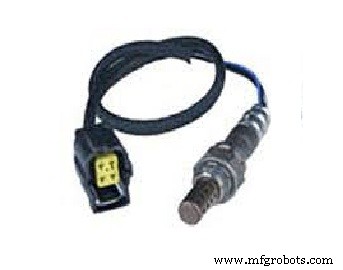
An oxygen sensor is a small, spark‑plug‑shaped device installed in a vehicle’s exhaust system. Depending on its position relative to the catalytic converter, it can be an upstream (pre‑converter) or downstream (post‑converter) sensor. Most cars produced after 1990 use both types, and many have four sensors—two per bank in a V‑engine or one on each side of a straight‑line engine.
Working Principle
The sensor measures the oxygen concentration in exhaust gases. It generates a voltage that varies with the O₂ level; the vehicle’s engine control unit (ECU) reads this signal and adjusts the fuel‑air mixture to keep it near the stoichiometric ratio. By monitoring oxygen levels both before and after the catalytic converter, the ECU can also assess converter efficiency and ensure clean exhaust.
Types of Oxygen Sensors
Oxygen sensors fall into two main categories:
1) Binary Exhaust Gas Sensor
Operating at approximately 350 °C, this sensor produces a sharp voltage swing that indicates whether the exhaust is rich (excess fuel) or lean (excess air). It compares the exhaust oxygen to the ambient air oxygen and is widely used in gasoline engines.
2) Universal Exhaust Gas Sensor
This sensor offers a more precise, continuous measurement of oxygen concentration, enabling accurate calculation of fuel‑air ratios for both gasoline and diesel engines. Its broader measuring range makes it ideal for modern, high‑efficiency powertrains.
Signs of a Faulty Sensor
- Elevated exhaust emissions during testing
- Reduced fuel economy
- Check‑engine light illumination
- Poor performance, stalling, or rough idling
- Diagnostic trouble codes indicating sensor failure
Applications
Beyond automotive use, oxygen sensors are critical in many fields: marine respiration monitoring, rapid‑reaction gas analysis, benchtop R&D, fuel‑tank monitoring, hydrocarbon‑rich environments, long‑term process control, fermentation monitoring, food and beverage packaging, and pharmaceutical and medical applications.
Oxygen sensors come in two primary geometries—ginger‑type and planar. They provide real‑time data that improves engine efficiency, reduces emissions, and enables advanced process control across industries.
Sensor
- Blood Pressure Sensor: How It Works & Key Applications
- Voltage Sensors: How They Work & Key Applications in Modern Power Systems
- RVG Sensor: How It Works and Why It’s Transforming Dental Imaging
- Lambda (Oxygen) Sensor: Function, Operation, and Key Automotive Applications
- Image Sensors: Types, Operation, and Practical Applications
- Color Sensors: How They Work & Key Applications
- Compass Sensors: From Ancient Navigation to Modern Devices
- ACS712 Current Sensor: How It Works and Key Applications
- Fingerprint Sensor Technology: Working Principles, Applications, and Arduino Integration
- Vibration Sensors: Principles, Types, and Industrial Applications