



Compass Sensors: From Ancient Navigation to Modern Devices
For centuries, the compass has guided explorers, merchants, and innovators. Its enduring legacy—from the 2nd‑century Chinese divination tools to today’s smartphone displays—showcases the power of magnetism in navigation.
What Is a Compass Sensor?
The first magnetic compasses appeared in the 2nd century, used by the Chinese to align building materials. By the 11th century, sailors were turning to compasses for reliable directional guidance across oceans. A compass sensor translates the Earth’s magnetic field into a digital signal that tells devices which way is north.
Unlike the fragile needles of ancient brass compasses, modern sensors are solid‑state magnetometers that detect the magnetic flux density of Earth’s field. They use the Hall effect or anisotropic magnetoresistance to sense changes in magnetic field strength, converting these into electronic signals the CPU can process.
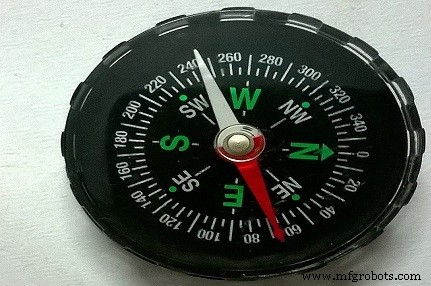
Working Principle
Early water‑filled compasses evolved into today’s three‑axis magnetometers. These devices contain magnetic elements whose resistance varies with the surrounding magnetic field. The sensor’s microcontroller reads this data, converts it to a digital format, and determines the device’s orientation relative to geographic north.
Types of Compass Sensors
Compass sensors fall into two main categories: magnetic compasses and gyro‑compasses. Magnetic compasses align with Earth’s magnetic field, while gyro‑compasses, which spin rapidly, align with true geographic poles.
Applications
Beyond maritime navigation, compass sensors power:
- GPS‑enhanced navigation in automotive and aviation systems
- Robotics and autonomous vehicles for orientation and mapping
- Construction for aligning structural elements
- Marine and submarine navigation
- Consumer electronics, providing tilt and direction data for gaming and AR/VR
Compass Sensors on Android
Android devices rely on an integrated magnetometer to generate a digital compass. Apps tap into the sensor framework to render a compass overlay, auto‑rotate maps, and provide heading information. If a device lacks a magnetometer, Google Maps can still offer direction using GPS, but without magnetic orientation.
Hardware developers can integrate small magnetometer ICs—such as the Bosch BNO055—into custom boards. These sensors are popular in DIY robotics projects due to their low power consumption and ease of communication over I²C or SPI.
When operating near ferromagnetic materials, the sensor’s readings can be distorted. Users should account for magnetic interference by calibrating the compass before use, especially in industrial or metallic environments.
Sensor
- Blood Pressure Sensor: How It Works & Key Applications
- Voltage Sensors: How They Work & Key Applications in Modern Power Systems
- RVG Sensor: How It Works and Why It’s Transforming Dental Imaging
- Lambda (Oxygen) Sensor: Function, Operation, and Key Automotive Applications
- Image Sensors: Types, Operation, and Practical Applications
- Color Sensors: How They Work & Key Applications
- Magnetic Sensors: Principles, Types, and Applications
- Fingerprint Sensor Technology: Working Principles, Applications, and Arduino Integration
- Vibration Sensors: Principles, Types, and Industrial Applications
- How Oxygen Sensors Work and Their Key Applications in Automotive and Industrial Systems