



Magnetic Sensors: Principles, Types, and Applications
Proximity, position, and displacement measurements are essential in a wide range of industries—from valve control and level detection to safety systems, machine operation, and process automation. Modern magnetic sensors deliver the reliability and cost‑efficiency demanded by these applications.
Recent research by the National Institute of Standards and Technology (NIST) has shown that layering magnetic alloys with silver nanofilms dramatically increases sensor sensitivity. Ultra‑thin magnetic films are now pivotal for high‑precision tasks such as threat detection, medical diagnostics, and advanced data storage.
What Is a Magnetic Sensor?
A magnetic sensor is a device that detects changes in a magnetic field—its strength, direction, or flux. Sensors can be grouped into two main categories: those that measure the total magnetic field and those that resolve its vector components.
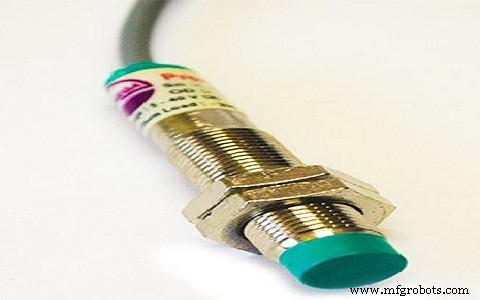
Vector‑resolution sensors pinpoint the individual components of a magnetic field, combining principles of physics and electronics to provide detailed spatial information.
Magnetic Sensor Working Principle
At the heart of a magnetic sensor is a magnetoresistive element that changes resistance in response to an applied magnetic vector. A built‑in magnet biases this element, creating a measurable voltage shift when the external field varies.
This resistance change is the key signal that the sensor’s electronics amplify and process, enabling functions such as electronic compasses and navigation aids.
Types of Magnetic Sensors
Sensors are typically classified by the field strength they are designed to detect:
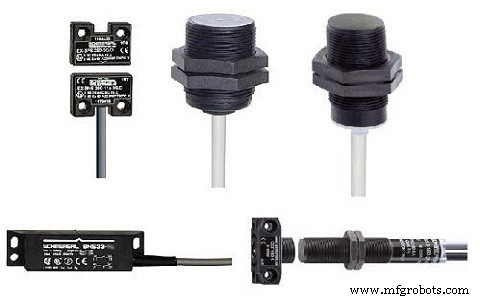
1). Low‑Field Sensors
These devices measure fields as weak as 1 µG (10‑4 T). Examples include nuclear magnetic resonance (NMR), fiber‑optic magnetometers, and SQUIDs. Applications span nuclear research and medical imaging.
2). Earth‑Field Sensors
Covering a range from 1 µG to 10 G, Earth‑field sensors exploit the planet’s magnetic field for vehicle navigation and geophysical surveys.
3). Bias‑Magnet Field Sensors
Designed for fields above 10 G, these sensors often use permanent magnets to bias a ferromagnetic core. Common types include Hall‑effect devices, GMR sensors, and reed switches, widely adopted in industrial control.
Measuring Magnetic Fields
A magnetic field can be generated by electric currents and detected through its influence on magnetic materials or electronic circuits. By measuring both magnitude and direction, sensors enable precise monitoring of environmental and engineered magnetic environments.
For instance, Earth‑field sensors track the planet’s magnetic vector for navigation systems, a capability developed by companies such as Honeywell. These sensors also find use in scientific instrumentation and industrial automation.
In summary, magnetic sensors are indispensable for measuring flux, direction, and strength across applications ranging from Android devices and navigation systems to advanced industrial and scientific tools. A key question remains: what exactly is a magnetic compass sensor?
Sensor
- Virtual Sensors: How They Work and Key Applications
- Voltage Sensors: How They Work & Key Applications in Modern Power Systems
- Lambda (Oxygen) Sensor: Function, Operation, and Key Automotive Applications
- Occupancy Sensors Explained: How They Work and Why They’re Essential for Energy Savings
- Door Sensors: How They Work and Their Role in Home Security
- Image Sensors: Types, Operation, and Practical Applications
- IoT Sensors: Functionality, Types, and Real‑World Applications
- Compass Sensors: From Ancient Navigation to Modern Devices
- MEMS Sensors: How They Work and Their Key Applications
- How Parking Sensors Work & Their Key Applications