



How Touch Sensors Work and Their Key Applications
What Is a Touch Sensor?
Touch sensors, also known as tactile sensors, are electronic devices that detect physical contact and act as a switch. They form the backbone of intuitive interfaces in everything from lamps and kitchen appliances to the touch screens on smartphones and tablets.
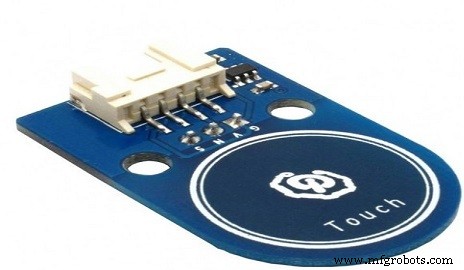
Manufactured at low cost and in high volumes, touch sensors are rapidly replacing traditional mechanical switches. They fall into two main categories: capacitive and resistive.
Capacitive Touch Sensors
These sensors consist of two parallel conductive plates separated by an insulating material, forming a capacitor. When a finger (a conductive object) approaches or touches the sensor, the capacitance changes slightly. A dedicated circuit continuously measures this value and triggers a signal when a threshold is crossed. Capacitive sensors are highly durable, robust, and widely used in mobile devices, automotive touch panels, and small household appliances. Their main drawback is occasional false triggers due to static electricity or nearby conductive objects.
Resistive Touch Sensors
Resistive sensors operate on pressure rather than capacitance. They contain two flexible conductive layers coated with indium tin oxide, separated by a very thin spacer. When pressure is applied, the layers touch, creating a voltage drop that is detected by the controller. These sensors require a definite amount of force and are commonly found in applications where the user deliberately presses, such as musical instrument interfaces, industrial keypads, and certain medical devices.
How Touch Sensors Work
Both types of touch sensors act as electronic switches. Contact or pressure closes the circuit, signaling the system, while removal opens it again. The key difference lies in the sensing mechanism—capacitance for capacitive sensors and mechanical pressure for resistive ones.
Common Applications
- Mobile Phones & Tablets: Capacitive screens for gesture and multi‑touch input.
- Home Appliances: Touch‑activated buttons on ovens, microwave ovens, and washing machines.
- Automotive: Infotainment system touch panels and power window controls.
- Industrial Controls: Press‑to‑activate panels in machinery and safety interlocks.
- Musical Instruments: Resistive pads for electronic drum kits and synthesizers.
Examples of Market‑Ready Touch Sensors
Popular models include the TTP22301 and the TTP229. These modules provide simple integration for hobbyists and professionals alike.
Which type of touch sensor is the best fit for your project? Consider the required pressure sensitivity, environmental conditions, and cost constraints to make the right choice.
Sensor
- Virtual Sensors: How They Work and Key Applications
- Voltage Sensors: How They Work & Key Applications in Modern Power Systems
- Lambda (Oxygen) Sensor: Function, Operation, and Key Automotive Applications
- Occupancy Sensors Explained: How They Work and Why They’re Essential for Energy Savings
- Door Sensors: How They Work and Their Role in Home Security
- Image Sensors: Types, Operation, and Practical Applications
- IoT Sensors: Functionality, Types, and Real‑World Applications
- MEMS Sensors: How They Work and Their Key Applications
- How Parking Sensors Work & Their Key Applications
- Magnetic Sensors: Principles, Types, and Applications