



How NFC Sensors Work: Principles, Modes, and Everyday Applications
Near‑Field Communication (NFC) has become a cornerstone of modern mobile technology, powering everything from contactless payments to quick file transfers. Though the term “NFC” is often seen on phone specifications, its inner workings and practical benefits are less well‑known. This article offers a concise, expert‑level overview of how NFC sensors function and the wide range of applications they enable.
What Is an NFC Sensor?
An NFC sensor is a high‑frequency wireless interface that enables data exchange over a very short range—up to 10 cm (about four inches). Because the signal is confined to such a tight proximity, NFC is inherently secure, requires minimal power, and can operate without a battery when one device powers the other.
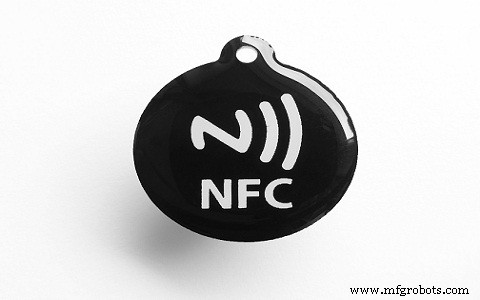
While NFC shares similarities with RFID, it offers a more dynamic interaction. Devices equipped with NFC—smartphones, tablets, laptops—can tap or hover within range to exchange data, authenticate, or trigger a transaction. The technology operates at 13.56 MHz and supports data rates of 106, 212, or 424 kbps, depending on the application.
How NFC Works
NFC eliminates the need for manual pairing. When two NFC‑enabled devices are brought close together, they automatically establish a connection and can start exchanging information immediately. This short‑range communication enhances security and reduces power consumption compared to Bluetooth, making NFC ideal for dense environments like public transit gates or conference badge readers.
There are three primary operation modes:
- Peer‑to‑Peer – Two devices share data in both directions. This is the most common mode on smartphones, enabling quick contact exchanges or file sharing via Android Beam (now replaced by Quick Share in newer OS versions).
- Read/Write – A device reads data from an NFC tag or writes information to it. This mode powers applications such as smart posters, product labels, and venue access badges.
- Card Emulation – The device emulates a contactless card, allowing it to function as a mobile payment instrument or access card. This mode underpins services like Google Pay, Apple Pay, and Samsung Pay.
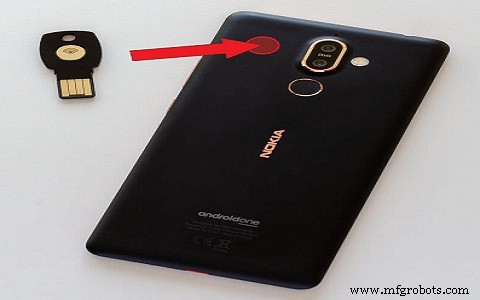
Real‑World Applications
- Contactless Payments – Tap‑to‑pay on retail terminals, transit fare cards, and mobile wallets.
- Secure Access – Unlock doors, log into computers, or authenticate at secure facilities.
- Data Transfer – Share photos, contacts, or Wi‑Fi credentials between phones with a simple tap.
- Device Pairing – Pair headphones, speakers, or smart watches without the need for Bluetooth setup steps.
- Industrial and Retail Use – Track inventory, read product tags, or provide interactive advertising experiences.
The proliferation of NFC across both Android and iOS devices has accelerated its adoption. With every new smartphone model, manufacturers are adding or enhancing NFC capabilities, making it a ubiquitous feature for modern consumers. By understanding the technical foundation and diverse use cases, users can fully leverage NFC’s convenience and security in everyday life.
Sensor
- How Distance Sensors Work and Their Key Applications
- Voltage Sensors: How They Work & Key Applications in Modern Power Systems
- Lambda (Oxygen) Sensor: Function, Operation, and Key Automotive Applications
- Image Sensors: Types, Operation, and Practical Applications
- Gyroscope Sensors: How They Work and Their Key Applications
- Flame Sensors: How They Work and Key Applications in Fire Safety
- Sound Sensors: How They Work & Practical Applications
- Humidity Sensors: How They Work and Key Applications
- Rain Sensors Explained: How They Work & Key Applications
- Laser Sensors Explained: Working Principles & Industrial Applications