



How Distance Sensors Work and Their Key Applications
In modern automation, accurate distance measurement is essential. Distance sensors employ a variety of technologies—laser, infrared (IR) triangulation, ultrasonic, and light‑emitting diode time‑of‑flight (LED‑TOF)—to detect the position of objects in real time. The choice of sensor depends on application requirements such as range, resolution, field of view (FOV), update rate, and cost of installation and operation.
What Is a Distance Sensor?
A distance sensor is a precision instrument that measures the space between the sensor and an object without physical contact. It provides fast, reliable data for positioning, object detection, and material inspection in industries ranging from robotics to packaging.
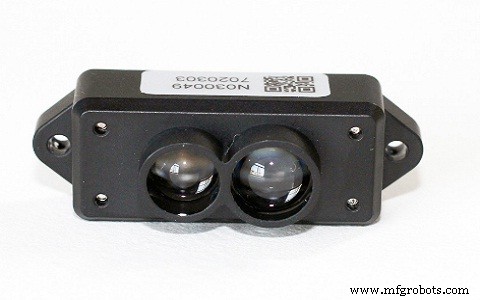
How Do These Sensors Work?
Distance sensors generate a signal—such as a laser beam, IR light, or ultrasonic pulse—and measure its return characteristics. The sensor calculates distance based on either the time it takes for the signal to return (time‑of‑flight) or the change in signal intensity. Key performance metrics include resolution, measurable range, and update rate.
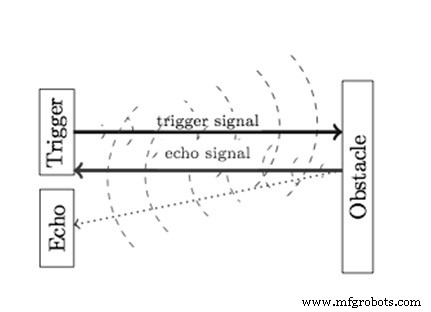
Choosing the right sensor depends on factors such as sensor type, speed, power consumption, and wiring distance to the control board.
How to Choose a Distance Sensor?
We focus on four common sensor families: LED, LIDAR, ultrasonic, and VCSEL. Each offers distinct advantages and trade‑offs, making it easier to match a sensor to your specific use case.
LED Sensors
- Low cost, compact footprint, and moderate update rate.
- Higher power draw and limited maximum range.
LIDAR Sensors
- Exceptional maximum range and ultrafast update rates.
- Higher price point, larger size, and greater power consumption.
Ultrasonic Sensors
- Very low current draw and a variety of interface options.
- Lower resolution and slower refresh rate.
VCSEL Sensors
- Wide input voltage range, good resolution, and low cost.
- I2C interface and relatively short maximum range.
Applications
Distance sensors are integral to many automation tasks:
- Robot gripper positioning during pick‑and‑place operations.
- Palletizing and stacking tasks.
- Coil diameter measurement.
- Component and parts detection.
- Stack height monitoring and double‑sheet detection in woodworking, handling, and packaging.
In summary, distance sensors provide rapid, non‑contact measurement that supports precise positioning and material detection across a wide range of industrial processes.
Sensor
- Understanding the AD8232 ECG Sensor: Functionality and Applications
- Voltage Sensors: How They Work & Key Applications in Modern Power Systems
- Lambda (Oxygen) Sensor: Function, Operation, and Key Automotive Applications
- Image Sensors: Types, Operation, and Practical Applications
- Gyroscope Sensors: How They Work and Their Key Applications
- Flame Sensors: How They Work and Key Applications in Fire Safety
- Sound Sensors: How They Work & Practical Applications
- Humidity Sensors: How They Work and Key Applications
- Rain Sensors Explained: How They Work & Key Applications
- Laser Sensors Explained: Working Principles & Industrial Applications