



Sony IMX586 Camera Sensor: How It Works & Key Features
High‑end smartphones demand exceptional image quality. In 2018, Sony introduced the IMX586 image sensor, a 48‑megapixel powerhouse that has become a staple in flagship mobile cameras.
The IMX586 uses a 0.8‑µm pixel pitch and a Quad‑Bayer color filter array, allowing the sensor to capture high‑resolution images while maintaining impressive light sensitivity. Built‑in exposure control and advanced signal processing further enhance dynamic range and color fidelity.
How the IMX586 Operates
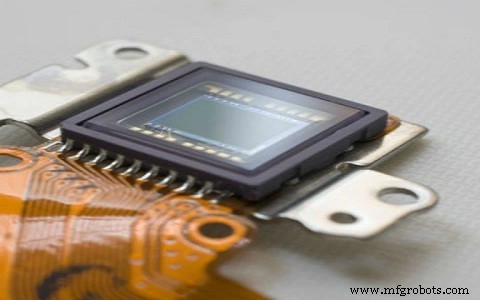
At its core, the IMX586 delivers 8,000 × 6,000 effective pixels—48 million in total—within a compact 8.000 mm diagonal sensor. Its small pixel size is complemented by a Quad‑Bayer arrangement that aggregates 2 × 2 blocks of like‑colored pixels, boosting sensitivity without sacrificing detail.
Key Features
- Model: IMX586
- Effective resolution: 8,000 × 6,000 pixels (48 MP)
- Sensor diagonal: 8.000 mm
- Pixel pitch: 0.8 µm × 0.8 µm
- Sensitivity: ~133 LSB
- Full‑well capacity: 4,500 e⁻ (saturation)
- Power supply: Analog 2.8 V / 1.8 V, Digital 1.1 V, Interface 1.8 V
- Primary function: HDR imaging
- Color filter array: Quad‑Bayer
- Output format: Bayer RAW
Because of its versatility, the IMX586 is found in many flagship devices, including the Honor View 20, ZTE Axon 10 Pro, OnePlus 7, Xiaomi Mi 9, and ASUS ZenFone 6.
Performance in Leading Smartphones
Honor View 20 combines the IMX586 with a time‑of‑flight (ToF) module, enabling 48‑MP night mode and an AI Ultra Clarity feature that sharpens details. Pixel‑binning is used for a convenient digital 2× zoom.
ASUS ZenFone 6 features the sensor on its front‑facing camera, employing pixel‑binning to deliver higher‑resolution selfies. The device also includes a motorized rear lens that flips for a unique selfie experience.
OnePlus 7 houses a dual‑rear setup: the IMX586 provides the primary 48‑MP sensor, while a secondary module adds 2× optical zoom. Though the sensor can output full‑resolution images, practical tests often limit output to 12 MP for compatibility with software pipelines.
Xiaomi Mi 9 and ZTE Axon 10 Pro both mount the IMX586 alongside additional cameras, offering optical zoom and ultra‑wide lenses. These systems balance the high‑resolution sensor with versatility for varied shooting scenarios.
Across all devices, the IMX586’s Quad‑Bayer design and HDR processing consistently deliver sharp, high‑dynamic‑range photos—even in challenging lighting.
Sensor
- How Distance Sensors Work and Their Key Applications
- Understanding Load Cells: How Weight Sensors Work and Their Key Specifications
- Understanding the AD8232 ECG Sensor: Functionality and Applications
- HC‑SR04 Ultrasonic Sensor: How It Works and Key Applications
- Voltage Sensors: How They Work & Key Applications in Modern Power Systems
- Lambda (Oxygen) Sensor: Function, Operation, and Key Automotive Applications
- Image Sensors: Types, Operation, and Practical Applications
- Gyroscope Sensors: How They Work and Their Key Applications
- Flame Sensors: How They Work and Key Applications in Fire Safety
- Sound Sensors: How They Work & Practical Applications