



Lambda (Oxygen) Sensor: Function, Operation, and Key Automotive Applications
The modern automotive landscape relies on sophisticated digital control systems to fine‑tune engine performance and emissions. Central to these systems are a range of sensors that feed real‑time data to the vehicle’s engine control unit (ECU). Accurate sensor readings are critical; inaccurate data can lead to increased fuel consumption, higher emissions, and even engine damage.
What Is a Lambda Sensor?
A lambda sensor, commonly known as an oxygen sensor, measures the concentration of unburned oxygen in exhaust gases. This measurement allows the ECU to adjust the air‑fuel mixture so that combustion occurs at the optimal stoichiometric ratio, thereby maximizing efficiency and minimizing pollutants.
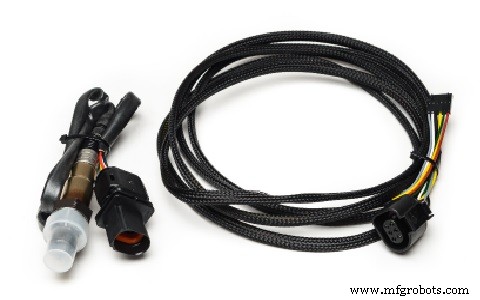
The first lambda sensor was introduced by Robert Bosch GmbH in 1976, and Volvo and Saab were pioneers in its adoption. By 1993, lambda sensors had become standard on virtually all gasoline vehicles in Europe.
Working Principle
A lambda sensor consists of two primary components: the sensing element and a heating element. The sensor must reach an operating temperature between 300 °C and 600 °C, achieved by the heating element. Once warmed, the sensor detects the oxygen content in exhaust gases and converts this into a voltage signal.
The ECU receives this signal, references a pre‑programmed look‑up table, and calculates the exact amount of fuel required to achieve the desired air‑fuel ratio. This calculated injection ensures complete combustion, protecting the catalytic converter and maintaining optimal engine performance.
Most modern engines employ two lambda sensors: one upstream of the catalytic converter to control the mixture, and a second downstream to verify the upstream sensor’s accuracy.
Applications
The number of lambda sensors varies with vehicle year, make, model, and engine configuration. Their benefits include:
- Reduced fuel consumption—up to 15% in some vehicles.
- Lower pollutant emissions, helping vehicles meet stringent regulations.
- Protection of the catalytic converter by ensuring a lean‑rich balance.
As lambda sensors age, their response times slow, leading to incorrect air‑fuel mixtures, increased fuel use, and frequent check‑engine light activations. Regular maintenance such as descaling or hydrogen cleaning can restore sensor responsiveness and extend lifespan.
For example, the 2015 Mercedes‑Benz E‑Class sedan uses four lambda sensors to monitor both sides of the catalytic converter and to provide redundancy for critical emissions control.
Sensor
- How Distance Sensors Work and Their Key Applications
- Virtual Sensors: How They Work and Key Applications
- Voltage Sensors: How They Work & Key Applications in Modern Power Systems
- Image Sensors: Types, Operation, and Practical Applications
- Gyroscope Sensors: How They Work and Their Key Applications
- Flame Sensors: How They Work and Key Applications in Fire Safety
- Sound Sensors: How They Work & Practical Applications
- Humidity Sensors: How They Work and Key Applications
- Rain Sensors Explained: How They Work & Key Applications
- Laser Sensors Explained: Working Principles & Industrial Applications