



MQ2 Gas Sensor: Functionality, Working Mechanism, and Practical Applications
Sensors enable electronic devices to perceive and respond to environmental changes. Among the many varieties—light, sound, proximity, and more—gas sensors play a pivotal role in safety systems by detecting hazardous gases such as LPG, propane, methane, hydrogen, alcohol, smoke, and carbon monoxide. The MQ2 gas sensor is a widely used chemiresistor designed specifically for this purpose.
What is an MQ2 Gas Sensor?
The MQ2 is a metal‑oxide semiconductor sensor that measures gas concentrations in the range of 200 ppm to 10,000 ppm. It operates on a 5 V DC supply and employs a voltage divider network to translate changes in resistance into readable analog signals.
At its core, the MQ2 contains a tin dioxide (SnO₂) coated aluminium‑oxide ceramic element enclosed within a stainless‑steel mesh. Six leads attach to the element: two for heating the sensor and four for output signals.
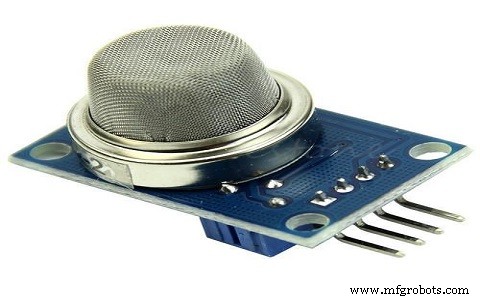
When heated, oxygen molecules adsorb onto the tin dioxide surface, capturing electrons from the material and increasing resistance. Exposure to reducing gases (e.g., methane, LPG, hydrogen) causes these adsorbed oxygen atoms to react with the gas, freeing electrons and lowering resistance. The resulting change in current flow produces an analog voltage proportional to the gas concentration.
Working Principle
1. Heating: The two dedicated leads supply a current that brings the sensor to its operating temperature (~400 °C).
2. Oxygen Adsorption: In air, oxygen molecules bind to the sensor’s surface, trapping electrons and raising resistance.
3. Gas Interaction: When a reducing gas contacts the sensor, it reacts with the adsorbed oxygen, releasing electrons and decreasing resistance.
4. Signal Generation: The change in resistance is converted to a voltage by the internal divider; higher gas concentrations yield higher voltages.
Applications
The MQ2’s broad detection range makes it ideal for:
- Gas leak alarms in residential and commercial settings
- Air quality monitoring in hospitals and laboratories
- Industrial safety systems for detecting harmful gas leaks
While the sensor cannot differentiate between specific gases, its module version—featuring built‑in electronics—allows straightforward integration without a microcontroller for single‑gas detection. For precise ppm measurement, the raw sensor should be interfaced with a microcontroller and appropriate analog‑to‑digital conversion.
Alternatives to the MQ2 include the MQ‑6, M‑306A, and AQ‑3 sensors, each offering different sensitivity profiles and target gases.
Sensor
- How Distance Sensors Work and Their Key Applications
- Voltage Sensors: How They Work & Key Applications in Modern Power Systems
- Lambda (Oxygen) Sensor: Function, Operation, and Key Automotive Applications
- Image Sensors: Types, Operation, and Practical Applications
- Gyroscope Sensors: How They Work and Their Key Applications
- Flame Sensors: How They Work and Key Applications in Fire Safety
- Sound Sensors: How They Work & Practical Applications
- Humidity Sensors: How They Work and Key Applications
- Rain Sensors Explained: How They Work & Key Applications
- Laser Sensors Explained: Working Principles & Industrial Applications