



MEMS Sensors: How They Work and Their Key Applications
MEMS stands for micro‑electro‑mechanical systems, a family of miniature devices that integrate mechanical and electronic components on a single silicon chip. These sensors, ranging from 1 µm to 100 µm in structural dimensions, are fabricated using advanced micromachining techniques such as oxidation, diffusion, ion implantation, and low‑pressure chemical vapor deposition.
What Is a MEMS Sensor?
MEMS sensors are low‑cost, high‑accuracy devices used across industries—from automotive airbags to consumer wearables. By converting physical stimuli (pressure, acceleration, magnetic field, etc.) into electrical signals through micro‑mechanical elements, they provide real‑time, reliable measurements.
The fabrication process begins with a silicon wafer onto which thin layers of material are deposited and patterned. Subsequent etching releases suspended micro‑structures such as diaphragms, beams, levers, and springs, forming the sensor’s mechanical core.
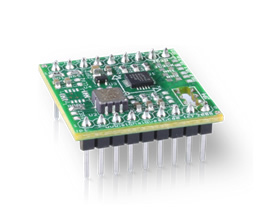
The manufacturing process mirrors semiconductor IC production, enabling mass production at a fraction of the cost of conventional mechanical sensors.
Working Principle
When a MEMS sensor is subjected to a physical stimulus, a micromass or proof‑mass moves relative to a fixed frame. This motion changes a physical parameter—typically capacitance, piezoresistive resistance, or mass‑in‑air velocity—which is converted by on‑chip electronics into a voltage, current (4‑20 mA), or digital output.
Because the mechanical elements are tiny, MEMS sensors exhibit low power consumption and high bandwidth, making them ideal for applications where size, weight, and cost are critical.
Common MEMS Types
- Accelerometers
- Gyroscopes
- Pressure sensors
- Magnetometers
Key Advantages
- Mass‑produced at semiconductor scale, yielding low unit cost.
- Compact size: 20 µm to 1 mm overall.
- Very low power draw—often < 1 mW.
- Easy integration into PCB and system designs.
- Stable thermal response and high shock/vibration tolerance.
- Excellent radiation hardness for aerospace and defense.
- High reproducibility and parallelism across wafers.
Applications Across Sectors
MEMS sensors underpin many modern technologies: automotive (airbag acceleration, tire pressure, steering sensors), consumer electronics (smartphones, wearables, gaming controllers), industrial automation (position control, platform leveling), medical devices (inertial navigation, blood‑pressure monitoring), aerospace (navigation, attitude control), and telecommunications (RF MEMS switches).
Advanced MEMS devices also find use in optical systems (adaptive mirrors, tunable lenses), ink‑jet printers, and high‑precision RF components.
Design Considerations and Costs
While individual parts are inexpensive, the upfront cost of designing and prototyping a MEMS product can be significant due to the need for specialized equipment and clean‑room facilities. This barrier often limits widespread adoption for low‑volume applications.
Nonetheless, the rapid evolution of MEMS technology and decreasing fabrication fees continue to expand their market share in both high‑volume and niche markets.
Sensor
- Virtual Sensors: How They Work and Key Applications
- Voltage Sensors: How They Work & Key Applications in Modern Power Systems
- Lambda (Oxygen) Sensor: Function, Operation, and Key Automotive Applications
- Occupancy Sensors Explained: How They Work and Why They’re Essential for Energy Savings
- Door Sensors: How They Work and Their Role in Home Security
- Image Sensors: Types, Operation, and Practical Applications
- IoT Sensors: Functionality, Types, and Real‑World Applications
- Gyroscope Sensors: How They Work and Their Key Applications
- How Parking Sensors Work & Their Key Applications
- Magnetic Sensors: Principles, Types, and Applications