



Occupancy Sensors Explained: How They Work and Why They’re Essential for Energy Savings
Occupancy sensors are sophisticated motion‑detection devices that automatically turn lights, HVAC, and other equipment on or off based on whether a space is occupied. By eliminating unnecessary energy use, they enhance security, comfort, and sustainability in both commercial and residential settings.
What Is an Occupancy Sensor?
An occupancy sensor is a sensor that detects human presence inside a room or building. Common technologies include passive infrared (PIR), microwave, ultrasonic, and camera‑based systems. When motion is detected, the sensor triggers connected lighting or HVAC controls; when the area becomes vacant for a preset period, the system shuts them off automatically.
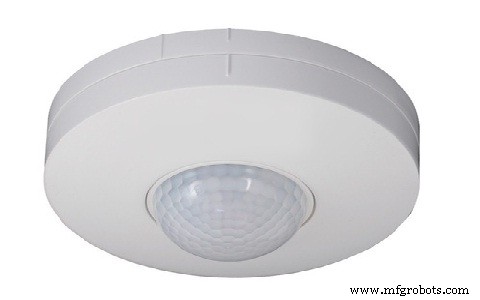
These devices are integral to modern building automation, working alongside keycard locks, smart meters, and other IoT components to deliver energy‑efficient, secure environments.
Types of Occupancy Sensors
Occupancy sensors come in several varieties, each suited to different use cases:
- Passive Infrared (PIR) Sensors
- Ultrasonic Sensors (Passive & Active)
- Microwave Detectors
- Camera‑Based (Image‑Processing) Sensors
- Environmental Sensors (light, temperature)
- Keycard‑Integrated Light Controls
- Smart Meter‑Connected Systems
How They Operate
When a sensor registers movement, it activates the associated lighting or HVAC. If no motion is detected for a configurable delay—typically 30 seconds to several minutes—the system turns the equipment off, conserving energy.
Research from Lawrence Berkeley National Laboratory shows that occupancy‑based controls can cut lighting energy use by up to 24 % in typical commercial spaces.
Because of their proven efficiency and simplicity, occupancy sensors are required by many building codes—including ASHRAE 90.1 and the International Energy Conservation Code—making them a standard feature in new construction and retrofit projects.
Practical Applications
Occupancy sensors are widely deployed in offices, schools, hospitals, hotels, and homes. They activate lights when people enter and turn them off when rooms become vacant, preventing wasted electricity and enhancing security.
Leading brands such as Ecoamicatechs Sirius, Philips Lumimotion, and LSG’s Pixelview offer a range of products from simple PIR units to advanced camera‑based systems that can count occupants, track movement direction, and integrate with building management systems.
In addition to energy savings, these devices improve occupant comfort, reduce maintenance costs, and provide data for building analytics.
What are the main benefits of installing an occupancy sensor?
Sensor
- Virtual Sensors: How They Work and Key Applications
- Voltage Sensors: How They Work & Key Applications in Modern Power Systems
- Lambda (Oxygen) Sensor: Function, Operation, and Key Automotive Applications
- Door Sensors: How They Work and Their Role in Home Security
- Image Sensors: Types, Operation, and Practical Applications
- IoT Sensors: Functionality, Types, and Real‑World Applications
- Gyroscope Sensors: How They Work and Their Key Applications
- MEMS Sensors: How They Work and Their Key Applications
- How Parking Sensors Work & Their Key Applications
- Magnetic Sensors: Principles, Types, and Applications