



How Parking Sensors Work & Their Key Applications
Parking is a core skill for every driver, yet it can become a challenge—especially for newcomers or when space is limited. Traditional methods rely on mirrors and judgment, which can result in minor bumps or even larger collisions. Modern vehicles counteract these risks with parking sensors that deliver real‑time distance feedback, turning a stressful maneuver into a simple, safe task.
What Is a Parking Sensor?
Parking sensors are proximity devices that alert drivers to nearby obstacles while reversing. Most manufacturers mount them along the rear bumper, integrating them into the vehicle’s driver‑assistance suite. As cars grow larger and parking spots shrink, the demand for reliable sensor systems has surged.
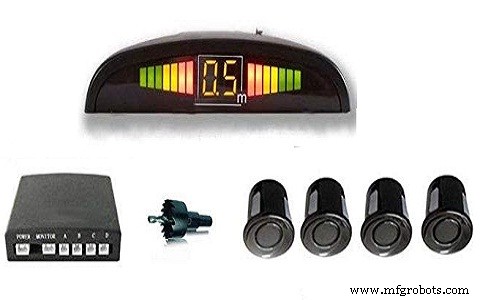
Types of Parking Sensors
Two primary technologies dominate the market:
- Ultrasonic Parking Sensors
- Electromagnetic Parking Sensors
1. Ultrasonic Parking Sensors
These units emit high‑frequency sound waves that bounce off nearby objects. The reflected waves are captured by a receiver, and the time difference between emission and return is used to calculate the distance to the obstacle. Many systems pair this data with an audible alarm that activates when the vehicle approaches too closely.
- Pros: Simple, inexpensive, and widely available.
- Cons: Small or thin objects can be missed; certain materials (e.g., flesh, plastic, blood) do not reflect sound well. Dirt, grime, or a layer of ice on the bumper can also impede performance.
2. Electromagnetic Parking Sensors
These sensors generate electromagnetic fields that interact with nearby objects across a broad spectrum. Because they are not limited by sound‑wave reflection, they can detect a wider range of materials, including those that are difficult for ultrasonic units. Many models now incorporate a rear camera, providing a visual overlay on the infotainment display to give drivers a clear view of the surroundings.
Both ultrasonic and electromagnetic systems are typically activated only when the vehicle is in reverse or moving at low speed, preventing unnecessary data transmission while cruising.
Working Principle
When the driver engages reverse gear, the sensor array sends out signals—ultrasonic pulses or electromagnetic waves. Upon striking an object, the signal reflects back to the sensor. By measuring the round‑trip time, the vehicle’s control unit calculates the exact distance to the obstacle. If the distance falls below a predefined threshold, an audible alert informs the driver. Many vehicles also display a visual indicator on the dashboard or provide a live camera feed.
Advantages
- Reduces driver fatigue by automating the distance‑monitoring process.
- Expands the usable “blind spot,” making tight‑space parking safer and easier.
- Decreases the likelihood of collision with nearby objects, protecting both the vehicle and surrounding property.
Limitations
- Very thin or flat obstacles (e.g., a slim column) may be hard to detect.
- Surface coverage—such as snow, mud, or heavy grime—can impair sensor accuracy.
Parking sensors are commonly found in public spaces like hotels, airports, banks, trade fairs, and shopping malls. They enhance safety and convenience for both drivers and property owners.
If you’re curious about the downsides of parking sensors, remember that no system is flawless: sensor performance can degrade in adverse weather, and maintenance (cleaning the bumper) is essential for optimal operation.
Sensor
- Virtual Sensors: How They Work and Key Applications
- Voltage Sensors: How They Work & Key Applications in Modern Power Systems
- Lambda (Oxygen) Sensor: Function, Operation, and Key Automotive Applications
- Occupancy Sensors Explained: How They Work and Why They’re Essential for Energy Savings
- Door Sensors: How They Work and Their Role in Home Security
- Image Sensors: Types, Operation, and Practical Applications
- IoT Sensors: Functionality, Types, and Real‑World Applications
- Gyroscope Sensors: How They Work and Their Key Applications
- MEMS Sensors: How They Work and Their Key Applications
- Magnetic Sensors: Principles, Types, and Applications