



Innovative Siemens Customers Showcase MindSphere’s Real‑World Impact
Imagine an automated robotic parking garage that doubles the vehicle capacity of a conventional concrete structure. When a car pulls in, the system swiftly relocates the vehicle, eliminating the need for drivers to hunt for a spot.
Picture a digital twin of surfable waves generated in large pools that mimic the natural feel of ocean surf.
Or envision designing a car as effortlessly as playing a video game.
These scenarios are not only possible; they are actively being realized by Siemens customers. Siemens, a finalist in the IoT World Awards, has promoted its IoT platform MindSphere for years, and its capabilities are becoming clearer as the user base has grown to over 1,000 companies, including SurfLoch—an industry leader in wave‑generation technology—and Hackrod, a startup pushing the boundaries of hot‑rod design with breakthroughs in gaming, virtual reality, and 3D printing.
Automated Parking Technology
AUTOParkit, a division of Dasher Lawless Automation, has been installing automated parking garages since 2013 and has partnered with Siemens since 2016. Leveraging Siemens automation hardware, electrification, and digital tools, AUTOParkit’s strategy enables twice the vehicle capacity of a traditional garage at a comparable price point.
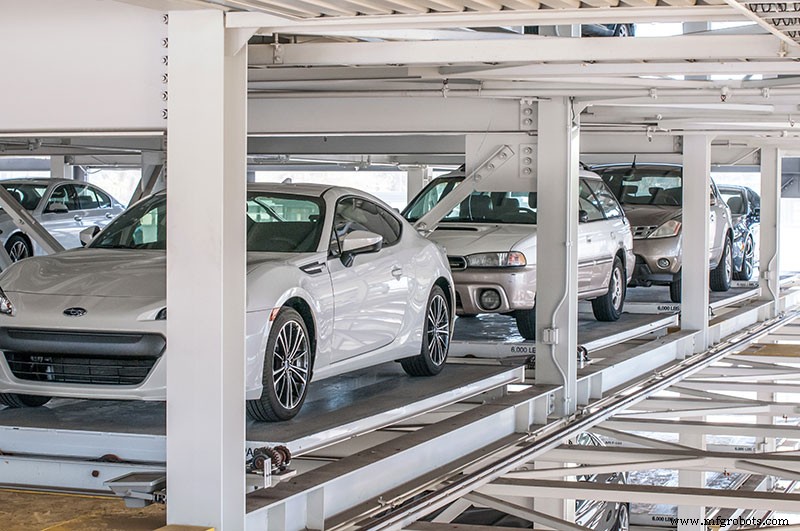
In 2017, AUTOParkit completed the largest automated subterranean parking structure in Marina Del Rey, California, with 277 stalls. The location’s proximity to the ocean made a conventional underground garage prohibitively expensive. By avoiding a four‑story depth, the project saved over a million dollars, according to Dasher president Christopher Alan.
Digitally Enabled Waves
Tom Lochtefeld, a lifelong surfer from La Jolla, California, left football scholarships to pursue his passion for artificial waves. After earning degrees in law from UC San Diego, he founded Wave Loch in the 1980s, creating the FlowRider system that generated “sheet waves” for cruise ships and water parks. He later developed Wave House, an entertainment center featuring FlowBarrel technology.
Seeking to replicate oceanic paddle‑in waves, Lochtefeld partnered with Siemens. Using rapid prototyping and algorithmic controls, he optimized wave frequency and shape with pneumatic blowers. At Hannover Messe, he highlighted how Siemens’ global scale, engineering expertise, and digital experience accelerated his innovation, leading him to adopt digital twins—beginning with a digital twin of the wave itself.
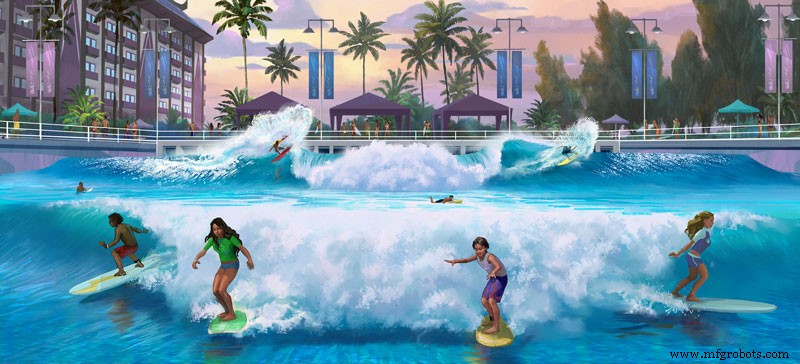
The MindSphere‑based digital twin monitors wave characteristics and water quality, enabling continuous optimization and filtration. Lochtefeld envisions digital showcases worldwide, “We’re a wave factory,” he said, expressing excitement about the platform’s potential.
Hacking Together Hot Rods
Mike “Mouse” McCoy, CEO of Hackrod, transitioned from professional motocross to stunt work, filmmaking, and now automotive innovation. Inspired by the maker movement, Hackrod unites virtual reality, Siemens PLM, artificial intelligence, and 3D printing to revolutionize car design.
The startup refined the aerodynamics of its vehicle, “La Bandita,” in the virtual realm, deploying IoT sensors to collect extensive data. MindSphere serves as an AI platform, enabling Hackrod to iterate design rapidly. “La Bandita is a proof of concept for a new design and manufacturing paradigm,” McCoy explained in a YouTube interview.
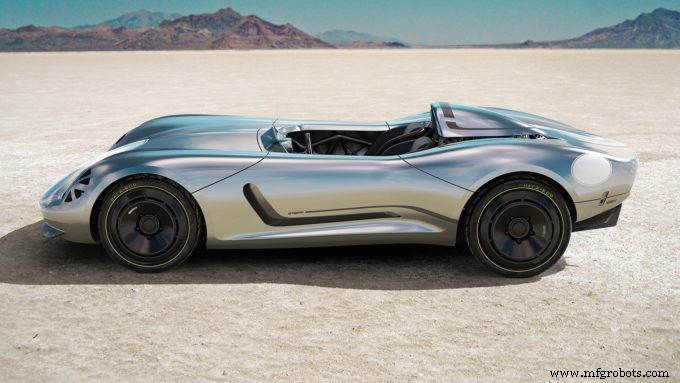
McCoy described the future as the age of the digital hot‑rodder, citing four and a half years of research to bridge hobbyist creativity with industrial production. He draws parallels to the music and film industries, where democratized tools lowered barriers to entry.
“Industrial additive manufacturing is now a reality,” McCoy noted, referencing Oak Ridge National Labs’ 3D‑printed micro nuclear reactor. Hackrod uses 5‑axis machining and full‑scale aluminum 3D printing within a 12‑by‑8‑by‑6‑foot footprint.
Ultimately, Hackrod envisions factories that function like social networks—fully integrated and connected—facilitated by video game engines. “Gamification of engineering design is the missing piece in Industry 4.0,” he said, emphasizing the convergence of gaming and manufacturing technologies.
Internet of Things Technology
- Understanding Square Wave Signals: Fundamentals and Applications
- The Tempest and the Digital Grid: How Smart Technology Cuts Outage Times
- Siemens Acquires Pixeom’s Edge Technology to Expand Digital Factory Solutions
- Siemens & Bentley Announce Joint Solution to Accelerate Power Plant Digitalization
- B2B Product Innovation: A Strategic Roadmap for Product Managers
- Monetizing Mobile Network Data Drives Operational Efficiency
- Microsoft and PTC Showcase Industrial Applications of HoloLens 2 in Augmented Reality
- Siemens MindSphere: Driving Industrial IoT Success with Digital Twins & Secure Cloud Solutions
- Wave vs. Reflow Soldering: Key Differences & How to Choose the Right Process
- Siemens Sinumerik 802S: Advanced CNC Control with Stepper Drive Interface