



Why There Aren’t ‘Good’ Bots—What Makes a Bot Truly Successful
When people ask, “Why aren’t there good bots?” I’m often reminded that the question itself is based on a misunderstanding of what a bot should accomplish. It’s not about creating a conversational marvel; it’s about solving real problems efficiently and consistently.
Defining “Good” vs. “Successful”
In the world of customer engagement, a bot is only as good as the objectives it meets. A successful bot delivers measurable results—whether that’s freeing up human agents, driving revenue, or deepening fan engagement. By asking whether a bot is “successful,” we shift from vague hype to tangible outcomes.
Take the example of a major musician who once received hundreds of unanswered messages daily on Messenger. Implementing a bot that handles the most common queries meant that over 35,000 messages a year—otherwise ignored—were answered. That level of engagement would have been impossible without automation.
In the retail sector, a North American retailer used a bot over a six‑month period to keep 55% of customer interactions within the automated channel. The result? Customers resolved issues without human intervention, cutting contact‑center costs by $1.6 million.
For artists like Hardwell, a bot on Messenger increased weekly voting activity by roughly 100x compared to a website alone. Fans could now vote, inquire about tour dates, and submit podcast shout‑outs—all within a single, frictionless conversation.
And when businesses turn to Messenger for direct communication, the impact is striking: 99% read rates and a 21% click‑through rate. In contrast, email campaigns would require an audience 30 times larger to achieve the same results.
These statistics illustrate that a bot’s value is often hidden in private, one‑to‑one interactions—what marketers call “dark social.” External observers cannot see the full scope of success because the conversations remain private.
So next time you wonder why there are no “good” bots, consider what you’re actually asking for. A bot’s worth is measured in the problems it solves, the resources it saves, and the genuine engagement it unlocks.
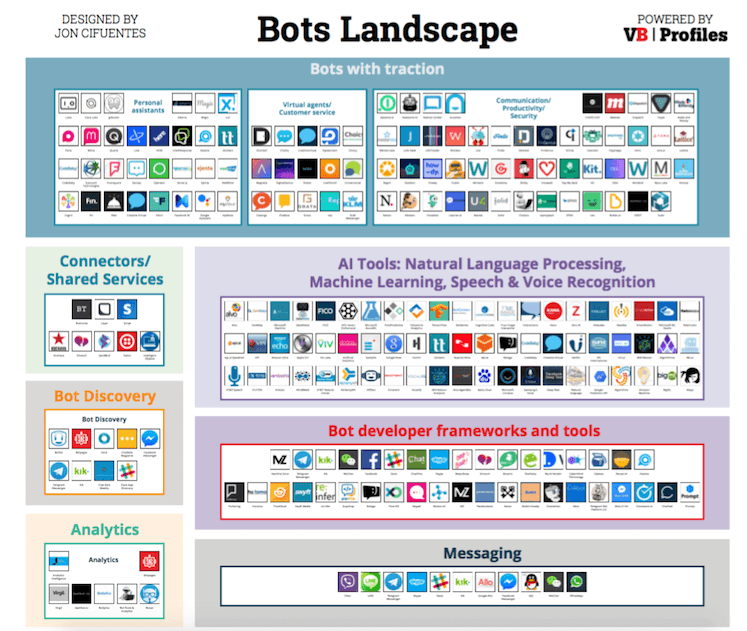
This article is part of our bots landscape series. Download the high‑resolution landscape featuring 197 companies here.
Internet of Things Technology
- Value‑Added Processes: The Next Frontier for Autonomous Robots
- Why Robust Maintenance Procedures Are Essential for Industrial Success
- Why There’s No One-Size‑Fit Killer App for IoT
- Samsung and AT&T Launch First U.S. 5G Innovation Zone to Transform Smart Manufacturing
- Why Selecting Industrial IoT Connectivity Is Harder Than It Appears
- Unlocking Business Potential: The Key Benefits of Robotics
- Why CNC-Machined Aluminum Parts Are in High Demand
- Centers of Excellence: Purpose, Benefits, and Strategic Value
- Why Regular PPE Inspections Matter: Ensuring Safety & Effectiveness
- Broaching Tools: Key Applications and Advantages