



Stopwatches Threaten the Future of Manufacturing Resurgence
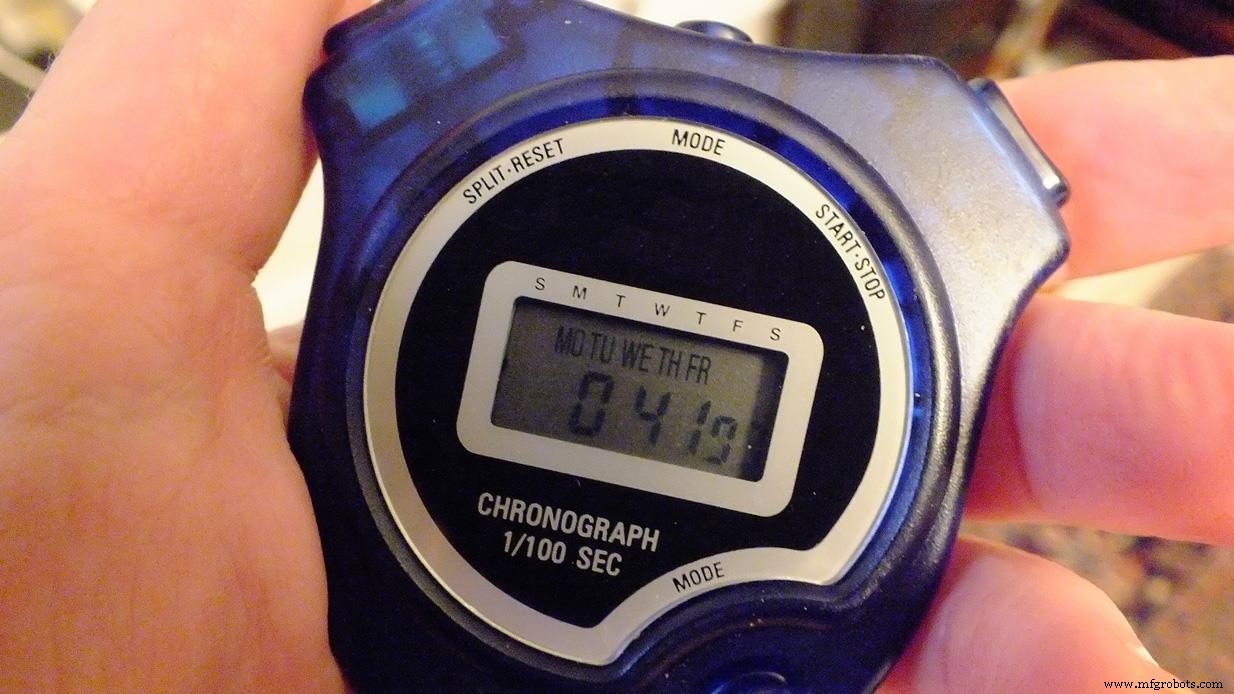
Nearly 25 years ago, I cut my teeth on a General Motors (GM) plant floor, working in both the highly automated body shop and the human‑centered assembly line. I quickly learned that robotic processes transmit data seamlessly over Ethernet, whereas human activity had to be captured manually by industrial engineers using stopwatches—a technique pioneered by Frederick Taylor in the Model T era. The contrast was stark: a modern industrial era clashing with a data‑collection method that was already 75 years old.
Today, I still walk assembly lines and see young engineers performing time studies. The tools have evolved—from Casio watches to iPhones—but the practice remains unchanged, and that alarmingly out‑of‑date method continues to hinder progress. Time and motion studies once propelled American manufacturing to the top of the world; today they are deeply flawed in an age of the Industrial Internet of Things (IIoT).
Focus on Time to Market and Productivity
American manufacturing is experiencing a renaissance, expanding at the fastest rate since 2004. In 2017, 171,000 jobs returned to the United States as a result of reshoring and foreign direct investment. Market access is a key driver: “Reshoring is all about time to market,” says Ben Smith, senior advisor at AT Kearney. “Modern manufacturers may prefer 15 small plants across the country for better market access, shifting their focus from costs to productivity.”
Industry consensus holds that IIoT will be the primary engine of productivity growth. Accenture predicts it as the biggest productivity driver of the decade, while GE Digital estimates annual performance gains of roughly $8.6 trillion. Yet most value created in a factory comes from people—Boston Consulting Group reports that humans perform up to 90 % of tasks on the plant floor. Optimizing machines alone captures only a fraction of the true activity.
Time to Market Bumps Against Time to Data
Peter Marcotullio, VP of commercial research and development at SRI International, notes that “only a small percentage of tasks are performed by machines.” Thus, instrumenting machines captures just a fraction of the process. While IIoT can generate 50 GB of machine data in the time it takes to conduct a traditional time study, the link between equipment optimization and overall plant productivity remains tenuous. Decisions that shape daily staffing, output projections, job costing, and quoting rely on human‑generated data, which drives both the top and bottom line.
An Incomplete and Unreliable Dataset
Time studies suffer from two major flaws: limited data volume and questionable reliability. A typical engineer might sample ten operations per station—insufficient to account for operator variability or contextual factors such as day of the week, pay period, or work‑day fatigue. This sparse data set cannot establish robust correlations or causation.
Moreover, the act of observation can alter performance. Inspired by Heisenberg’s uncertainty principle, some workers may accelerate or decelerate under observation, and inconsistent start‑and‑end definitions further compromise accuracy. Consequently, time studies produce dubious measurements that can mislead both operators and managers.
What’s Missing from the Modern Plant?
Modern plants lack scalable, real‑time human‑centric data. While Gemba walks, instrumented light curtains, and poka‑yoke systems can capture some human activity, the volume remains too low for meaningful analytics. Anik Bose, general partner at Benhamou Global Ventures, explains that “manufacturers gather workers and managers to brainstorm, but without real‑time data, they rely on manual, ad‑hoc methods.” Without reliable human productivity metrics, plants cannot improve the very resource that drives most value.
Marshall Goldsmith famously said, “What got you here will not get you there.” The time study methodology propelled us to our current manufacturing peak, but it is no longer sufficient for accelerating time to market by enhancing human labor productivity. It’s time to retire the stopwatch and embrace data‑driven, AI‑enhanced human collaboration on the factory floor.
About the Author
Dr. Prasad Akella led the team that built the world’s first collaborative robots at GM. He is the CEO of Drishti, a company deploying artificial intelligence to collaborate with and enhance humans on the factory floor.
Internet of Things Technology
- Why Digital Memory Matters
- 7 Key Reasons Industrial IoT Projects Fail — Expert Guide to Success
- Why Data Is the Cornerstone of Reliability Engineering
- AI is Shaping Manufacturing’s Future—Why Human Expertise Remains Essential
- Why City Data Matters: Turning Insights into Urban Innovation
- Why 98% of IoT Traffic Remains Unencrypted — A Call for Immediate Action
- Samsung and AT&T Launch First U.S. 5G Innovation Zone to Transform Smart Manufacturing
- Why There Aren’t ‘Good’ Bots—What Makes a Bot Truly Successful
- Unlocking Real-Time Value: Why Your Business Must Embrace IoT
- Edge Analytics: How Companies Are Gaining Real-Time Insights and Boosting Efficiency