



RF Energy Harvesting Drives the Expansion of AI‑Powered Wireless Applications
As the number of mobile devices and connected systems continues to surge, reliable, continuous power is becoming a critical bottleneck. Replacing conventional batteries with an RF energy‑harvesting system can eliminate many safety and logistical issues while powering the next wave of AI‑driven technologies. Global market analysts project a 22% CAGR for RF‑powered solutions between 2020 and 2025, largely fueled by the data demands of modern AI algorithms.
Why AI Fuels the Shift to RF Power
Artificial intelligence models thrive on data, and the more data they receive, the better their predictions become. Wireless power provides a dependable energy source that can keep AI sensors and edge devices online without the need for frequent battery replacements or cumbersome wired connections. In an interview with EE Times Europe, Charlie Goetz, CEO of Powercast, highlighted IoT, advanced driver assistance systems (ADAS), and smart‑city infrastructure as key AI‑centric sectors poised to benefit from wireless power.
RF Energy Harvesting: An Ever‑Present Resource
Radiofrequency signals span 3 kHz to 300 GHz and are emitted everywhere—from Wi‑Fi routers to cellular towers—regardless of weather or geography. By capturing these ambient waves, a receiver antenna induces a voltage that can be stored in a capacitor and then conditioned into usable DC power. While the concept is straightforward, maximizing efficiency hinges on the design of the receiving antenna and the associated power‑conditioning circuitry.
Applications Across Industries
Industrial Automation
Factories often place sensors in hard‑to‑reach or hazardous locations. Traditional batteries require risky manual replacements. Wireless‑powered sensors can be “set and forget,” ensuring uninterrupted data streams to AI systems that monitor equipment health and trigger preventive maintenance.
Autonomous Vehicles
Self‑driving cars rely on a constellation of sensors—radar, lidar, cameras—to interpret their surroundings. Wiring each sensor adds weight and complexity. RF‑powered sensors eliminate these cables, enhancing vehicle reliability and safety.
Smart Cities
Urban infrastructure—traffic lights, public Wi‑Fi, environmental monitors—needs continuous power and connectivity. Wireless charging powered by ambient RF can support dense sensor networks, enabling real‑time analytics for traffic management, energy distribution, and public safety.
Technical Foundations
The received power diminishes with distance as described by the Friis transmission equation:

where PT is transmitted power, PR is received power, GT and GR are antenna gains, λ is wavelength, and d is distance. The design of the receiving antenna—whether etched into a PCB or a dedicated coil—directly influences harvesting efficiency.
Figure 1 demonstrates Powercast’s 900 MHz patch antenna, integrated into the P2110 evaluation kit.
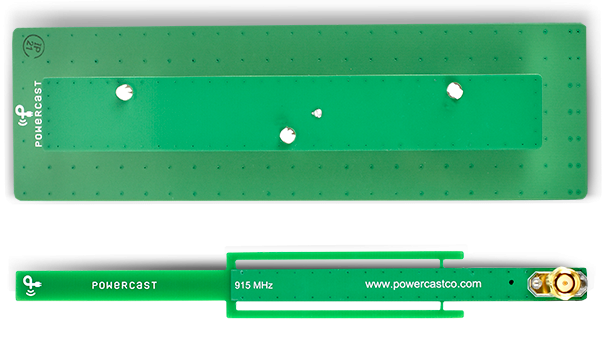 Figure 1: Powercast’s patch antenna (900 MHz) included in the P2110 evaluation kit.
Powercast’s Real‑World Solutions
In 2021, Powercast earned the BIG Innovation Award for its wirelessly powered RFID temperature‑scanning system, a COVID‑19 screening tool that charges on the fly when a user stands near an RFID reader. The system combines a temperature sensor, an RFID reader, and a display to provide instant, contactless health checks at corporate entrances.
Goetz explains that the antenna’s design is crucial: "At 915 MHz we’re dealing with only a few milliwatts, even at close range. Therefore, meticulous antenna tuning and energy management are essential to deliver a practical user experience."
Figure 2 shows the P2110‑EVAL‑02 evaluation kit, featuring an RF receiver, transmitter, antenna, and charge‑pump board.
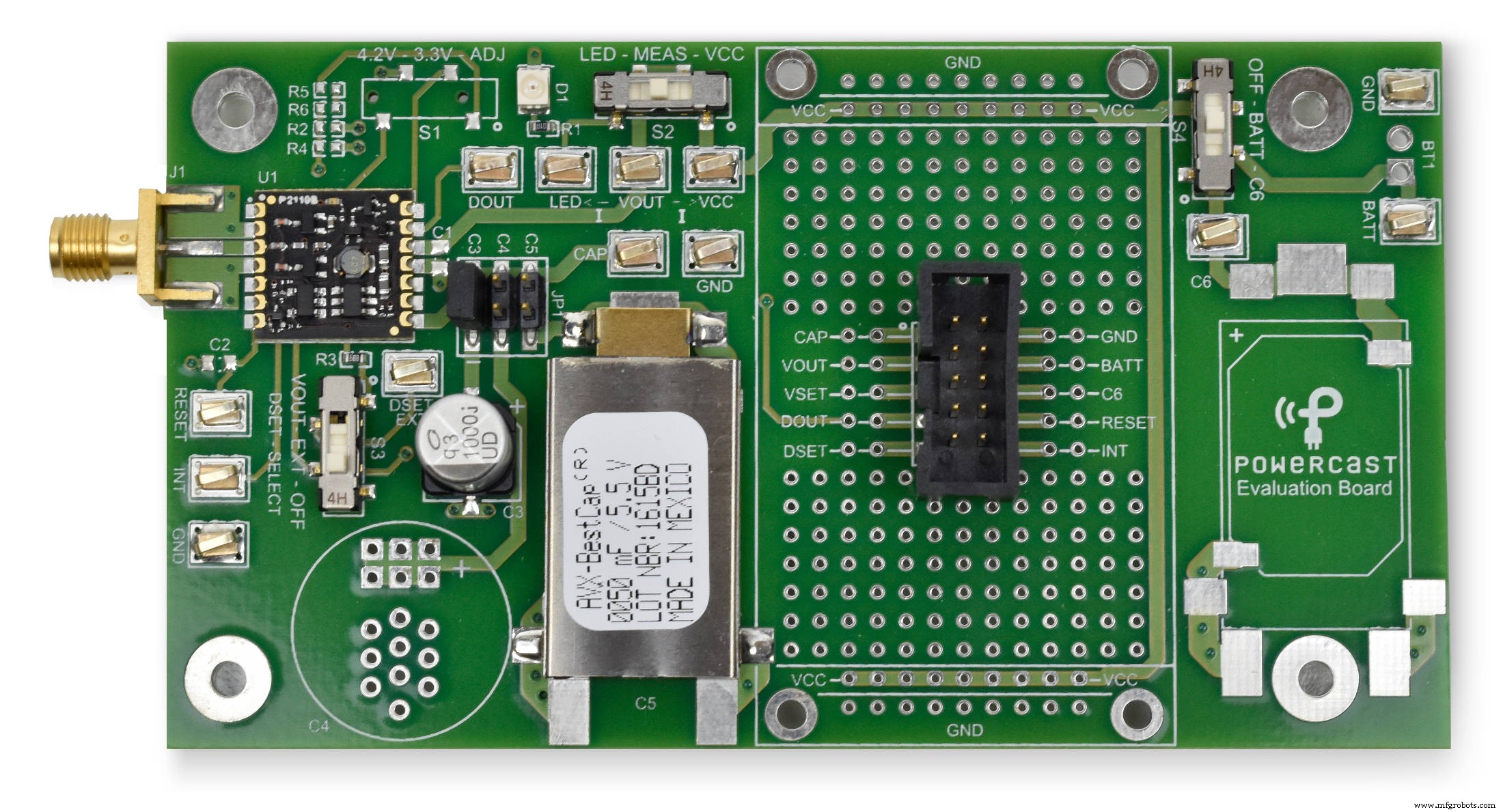 Figure 2: P2110‑EVAL‑02 Evaluation Kit.
With an impedance of 50 Ω, the receiving antenna matches the device’s input stage, and the collected voltage is stepped up by a charge pump before conversion to DC. Powercast’s evaluation kits enable rapid prototyping and field testing for developers exploring RF harvesting.
Conclusion
RF energy harvesting is poised to become the backbone of AI‑driven, wirelessly powered ecosystems. By providing a clean, maintenance‑free power source, it empowers industrial automation, autonomous vehicles, and smart‑city deployments to achieve higher reliability and lower operational costs.
> This article was originally published on our sister site, EE Times Europe.
Internet of Things Technology
- Amplifiers: Harnessing Active Devices to Boost Power
- The Emerging Role of IoT in the Energy Sector: Key Use Cases and Benefits
- Understanding Low‑Power Wireless Sensor Networks: Driving Efficient IoT Solutions
- Vapor‑Chamber Cooling: A Growing Solution for High‑Heat Electronics
- Embedded Vision Drives Innovation Across Industries
- Startups Pioneer Battery‑Free IoT with Energy Harvesting
- USB‑C’s Growing Role in Power Management for Wearables and Mobile Devices
- GE’s Wireless Vibration Sensors Boost Reliability at NV Energy’s Ft. Churchill Plant
- Energy Harvesting Unlocks 1 Trillion Battery‑Free IoT Sensors
- Harnessing Hydroelectric Power: A Comprehensive Guide