



Revolutionizing Mobility: Inside Arrow Electronics’ Semi‑Autonomous Motorcar for Disabled Drivers
This article is part of the AspenCore Special Project on Semi‑Autonomous Motorcar technology.
Explore the other articles in this Special Project:

Special Project Intro

How to Build a Car for Someone Who Can’t Drive

The Eyes Have It

Let’s Modify a Car
Visit the Special Projects homepage for more insights from this initiative and other topics covered by the AspenCore Network.
Arrow Electronics has engineered a Semi‑Autonomous Motorcar (SAM) that empowers individuals with severe mobility limitations to operate a vehicle safely and independently. Leveraging primarily off‑the‑shelf (OTS) components and custom-built solutions where necessary, the SAM team integrated advanced sensor inputs into a drive‑by‑wire architecture.
Unlike conventional teardown analyses, which aim to uncover proprietary secrets, Arrow has openly disclosed the SAM’s architecture. The following documentation presents a comprehensive list of all system components, including a detailed bill of materials (BOM) for the human‑machine interface (HMI) controller designed in-house.
At its core, the SAM vehicle relies on two key sensor modalities:
- A quartet of motion‑tracking cameras that capture the driver’s head movements for steering commands.
- A sip/puff pressure sensor that translates inhalation (sip) into braking and exhalation (puff) into acceleration.
A GPS‑based navigation module supplements these inputs, ensuring the vehicle remains on course and preventing abrupt deviations. Sensor data is processed and routed to a drive‑by‑wire system supplied by a specialized subcontractor. Further technical details can be found in the accompanying EETimes feature, "How to Build a Car for Someone Who Can’t Drive."
Software development constituted the majority of the effort, encompassing fine‑tuning of navigation algorithms and the integration of sensor streams to deliver precise vehicle control.
Non‑driving subsystems—including input sensors, drive‑by‑wire actuators, and a co‑driver fail‑safe module—were housed in the rear compartment. In the prototype, a Chevrolet Corvette Stingray trunk accommodated the majority of these components, as illustrated below.
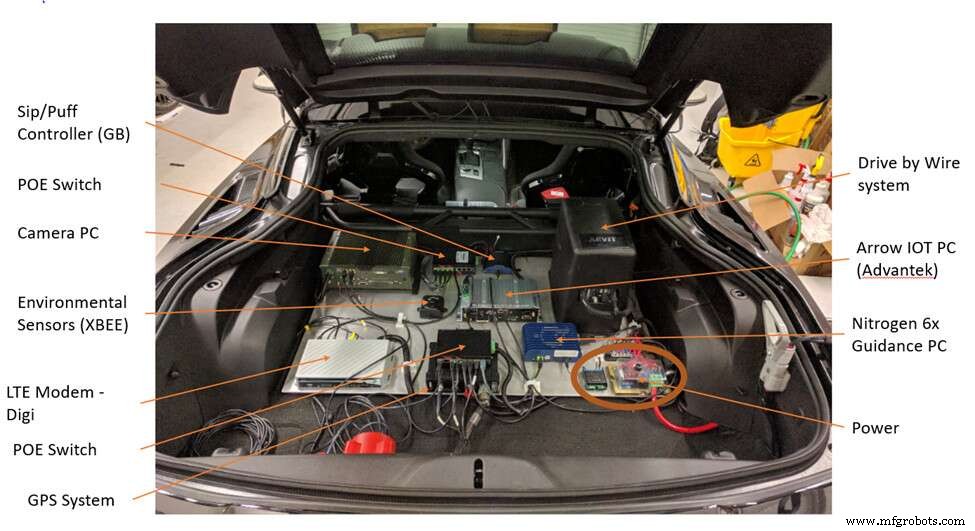
The Arrow Electronics SAM team stored most subsystems in the Corvette Stingray trunk to enable a quadriplegic driver to operate the vehicle. Source: Arrow Electronics.
Sip/Puff Controller
The sip/puff module not only reads pressure to command acceleration and braking but also provides multimodal feedback—visual, audio, and haptic—to the driver. Key components include:
- NXP K64 microcontroller (120 MHz Cortex‑M4, 1 MB Flash, 256 KB SRAM)
- MPXV7025GP pressure sensor (NXP)
- SGTL5000 stereo audio codec (NXP)
- PCA9626B 24‑LED driver (NXP)
- Power‑over‑Ethernet (PoE) support devices (Analog Devices)
- Ethernet PHY (Microchip)
The BOM also includes EEPROM, a variety of resistors, capacitors, switches, and other miscellaneous components sourced from multiple suppliers.
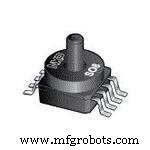
The MPXV7025GP pressure sensor from NXP. Source: Arrow Electronics.
Guidance Computer
According to SAM engineer Josh Willis, the guidance computer aggregates steering, throttle, and brake inputs, translating them into a virtual hand‑control interface that communicates with the drive‑by‑wire system over CAN bus. The device is the Nitrogen 6X Guidance PC—a compact SBC featuring an NXP i.MX 6 ARM‑Cortex‑A9, 1 GB DDR3, and gigabit Ethernet. Arrow requested a single modification from Boundary Devices: PoE capability.
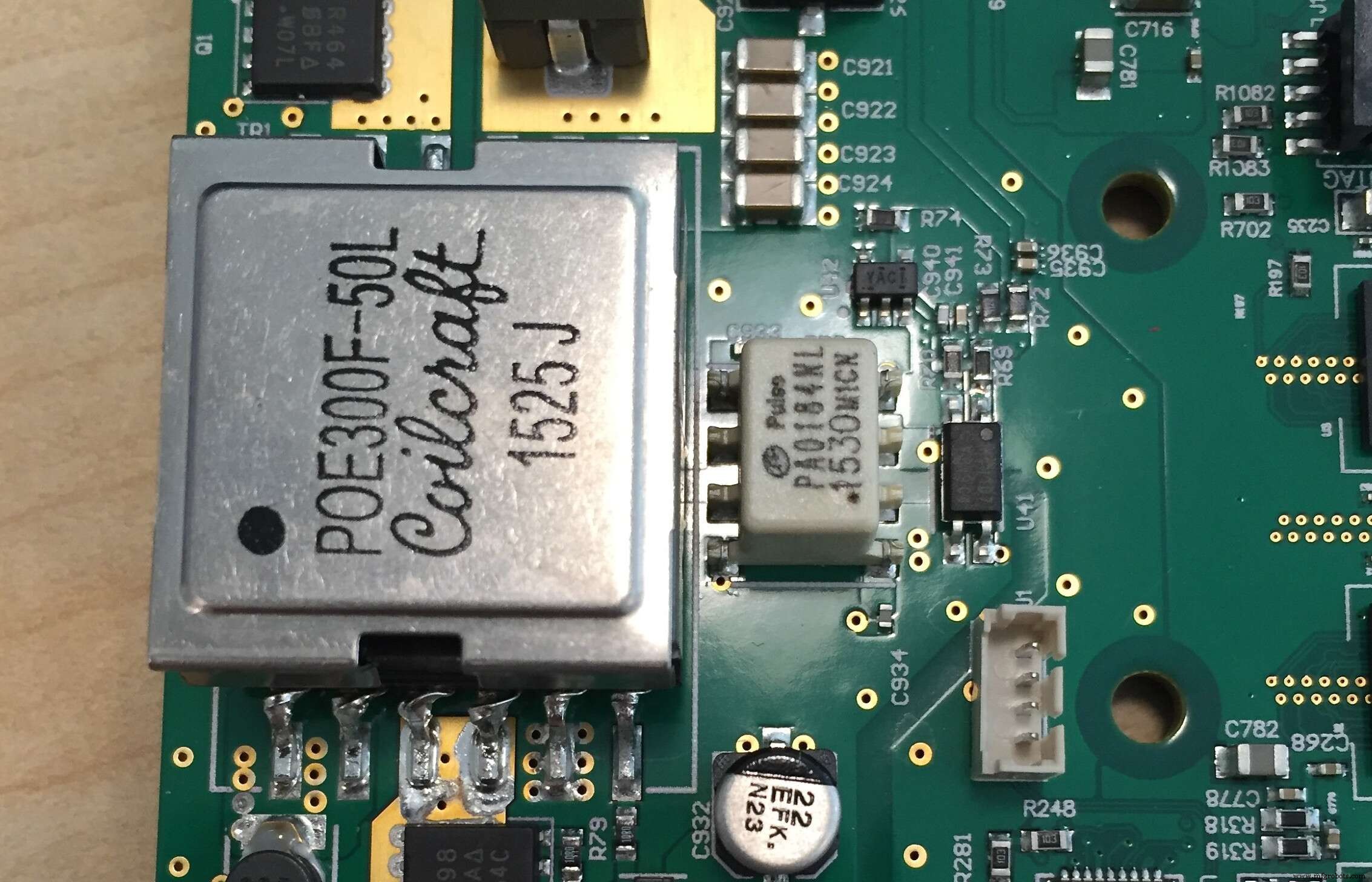
The SAM team relied heavily on off‑the‑shelf subsystems, customizing only when PoE support was required. Source: Arrow Electronics.
Internet of Things Technology
- MEMS Sensors: Powering the Invisible IoT
- Lean Continuous Improvement: Drivers, Principles, and AI-Enhanced Benefits
- Autonomous Donkey Car: TensorFlow MobileNetV2 AI for Garbage Collection
- How 5G Is Transforming Connected Cars: Speed, Safety, and Smart Features
- Safety First: How Europeans View Future Connected Cars
- Car HUD: Real‑Time Windshield Speed & Compass Display
- Buffing: The Ultimate Car Finishing Technique for a Mirror‑Gloss Finish
- Product Data Exchange: The Key Challenge for Automotive Manufacturers
- Choosing the Right Turbocharger for Your Car: A Practical Guide
- Precision Torque Screwdrivers for CNC Machinists: Achieve Consistent Tightening & Extended Tool Life