



IoT and Mobile Operators: Navigating Growth, Challenges, and Strategic Success
IoT and Its Challenges for Mobile Network Operators
The IoT market is expanding rapidly as enterprises accelerate digital transformation. Christina Patsioura, lead analyst for IoT & Enterprise Research at GSMA Intelligence, notes in this report—produced with support from floLIVE—that mobile operators are struggling to convert that growth into sustainable revenue. Connectivity alone is becoming commodified.
Key challenges include:
- Declining connectivity revenues. Intense competition from MVNOs, hyperscalers and IoT service providers is eroding margins, making it hard for operators to differentiate.
- Enterprise churn and value creation. Enterprises now demand end‑to‑end security, integration and multi‑country network consistency, pushing operators beyond basic connectivity.
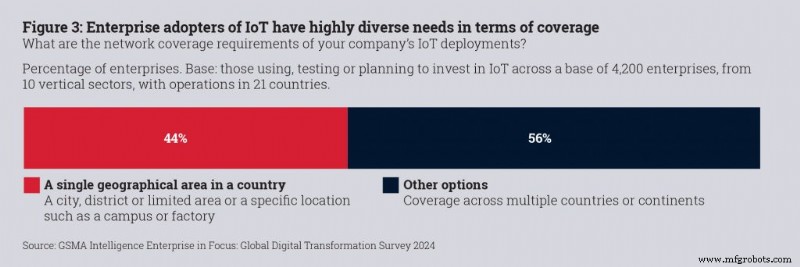
- Complexity of global coverage. With 38% of enterprises requiring multi‑continental deployments, traditional roaming models fall short, necessitating new connectivity frameworks.
- Investment dilemma around 5G RedCap and legacy support. While enterprises seek future‑proof, low‑power solutions, many existing IoT connections still rely on 4G, LPWA and even 2G/3G networks.
- Enterprise IoT adoption barriers. Implementation cost, security concerns and integration challenges remain the main hurdles to large‑scale deployments.
To capture value beyond connectivity, leading operators are pursuing three core strategies:
- Vertical‑specific solutions – Targeting high‑growth sectors such as automotive and utilities.
- Cloud‑native IoT platforms – Enabling scalable, API‑driven integrations for enterprise customers.
- Strategic partnerships – Collaborating with hyperscalers, systems integrators and IoT solution providers to enhance offerings.
These challenges have narrowed the operator‑led IoT market, prompting a strategic rethink. GSMA Intelligence’s Global Digital Transformation Survey identifies four main obstacles for potential adopters: high implementation costs, security concerns, integration difficulties and a lack of in‑house expertise. Operators can help enterprises overcome these barriers by deploying a modern, purpose‑built IoT technology stack and investing in the right talent and resources.
IoT Has Come a Long Way
Mobile operators evolved from M2M pioneers to key enablers of the connected world. As adoption accelerates, they face growing demands for seamless, cost‑effective and scalable connectivity.
This report examines the biggest pain points—global connectivity management, regulatory compliance, security and monetisation strategies—so operators can refine their approaches and secure long‑term success.
Evolution to Key Enablers of the Connected World
2000–2010: The M2M Era
Operators began by exploring M2M communication for industrial and telematics applications. Early investments in proprietary or third‑party platforms laid the groundwork for what would later become IoT.
2010–2019: IoT Proliferation
Recognising IoT’s vast potential, operators intensified investments and defined their role in the ecosystem. Applications such as usage‑based insurance telematics and smart meters modernised utilities, while the convergence of IoT, digital technologies and cloud platforms unlocked new opportunities. IoT became a central pillar of 5G’s future vision.
2020 to Present: A Dynamic IoT Market
Today’s market is experiencing rapid growth and consolidation, especially in connectivity services, equipment and management platforms. However, monetising certain use cases remains challenging, constraining the total addressable market for operator‑led IoT—from small, low‑margin deployments to cross‑border rollouts that demand advanced solutions. In response, some operators are re‑evaluating their strategies, exploring new business models and reassessing their value‑chain role.
New entrants, leveraging technological advancements and early‑adopter groundwork, are also entering the space, offering innovative solutions and capturing emerging opportunities.
Plans for IoT Among Mobile Operators
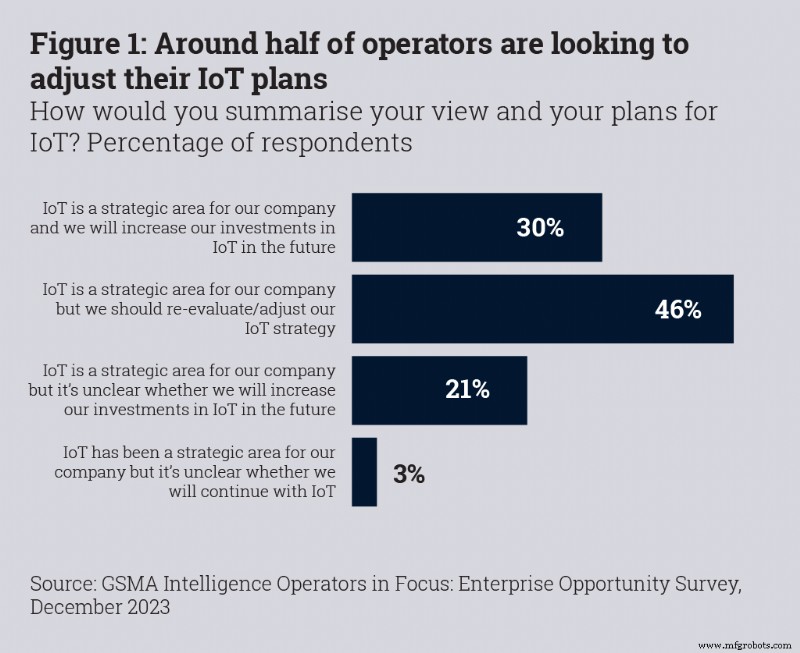
Half of Operators Are Looking to Re‑evaluate Plans
GSMA Intelligence tracking shows the following outlook:
- About a third remain confident in their IoT strategy and plan to continue investing.
- Nearly half believe they should reassess their strategies, even though they remain committed to IoT.
- Approximately one in four appear less confident about continuing investment or offering IoT services.
IoT Challenges for Mobile Operators
Profitability of IoT Connectivity
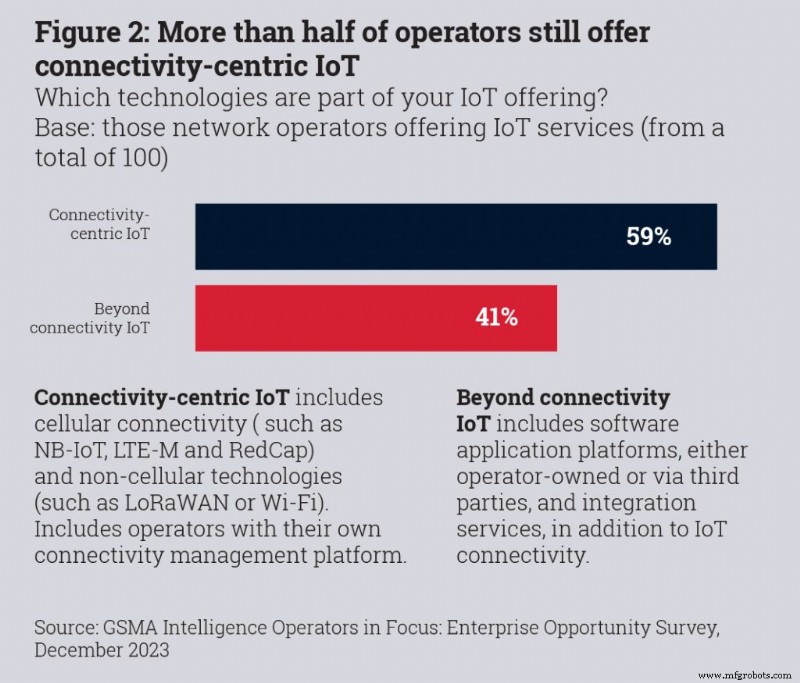
After a decade in IoT, just over half of operators globally still focus on connectivity‑centric services. Average revenue per user (ARPU) has declined, with some offerings earning as little as €1 per year. Competition from MVNOs and IoT service providers, coupled with high network costs, suppresses margins. Operators must streamline legacy‑infrastructure‑heavy stacks to reduce costs and improve profitability.
Growing and Retaining Customers
While targeting high‑volume connections to offset declining ARPU, operators struggle to serve diverse customer profiles. Infrastructure is often optimised for large deployments, not small‑scale projects, and limited global reach hampers support for international rollouts. This misalignment can drive churn and limit market share growth.
Providing Seamless IoT Connectivity Wherever Needed
Traditional focus on home networks limits service quality outside domestic borders. Modern use cases demand consistent performance across multiple countries. Operators rely on roaming agreements, but these may be constrained by privacy laws such as GDPR in Europe or by countries that prohibit permanent roaming (e.g., Türkiye, Brazil, UAE). Even domestically, coverage gaps—often 10–20% below the 80–90% threshold required for utilities like smart meters—present challenges for large‑scale deployments.
You've read 30% of the report – please log in or register to continue reading!
Please note: This report can only be read by users who have logged in.
Internet of Things Technology
- Blockchain Emerges as a Game Changer for IoT Security
- Why Smart Buildings Struggle: The Missing Standards That Hold Them Back
- Unlock Peak Performance: The Benefits of Self‑Monitoring Hydraulic Systems
- Four Key Factors for Selecting a Trusted IoT Platform‑Enabled Solution
- Leveraging IoT for Smarter Investment Strategies
- Why eBay's Entry into China Fell Short – Lessons on Guanxi, Payment Preferences, and Localized Marketing
- Three Ways Bluetooth Low Energy Drives Manufacturing Efficiency
- 5G Deployment: Investment Strategies and IoT Growth Opportunities
- Elevate Industrial Performance: IoT-Powered Liquid Level Monitoring for Higher Efficiency
- India Launches the World’s Largest IoT Network, Transforming Communities and Businesses