



Why Satellite Connectivity Remains the Backbone of Global Mobile Transport
Why Satellite Connectivity Remains the Backbone of Global Mobile Transport
Modern fleets, intermodal containers, and autonomous vehicles increasingly rely on real‑time data—everything from basic GPS updates to critical cold‑chain monitoring. Reliable, low‑latency communication is the single most essential element that keeps these systems running safely and efficiently.
Cellular Coverage: Capable but Incomplete
While 4G and 5G networks have dramatically improved vehicle connectivity along highways, rail corridors, and inland ports, they still leave significant gaps. Black spots on land and the vast stretches of open ocean remain out of reach. Cellular networks are also prone to congestion, occasional outages, and capacity limits that can disrupt time‑sensitive logistics operations.
Satellite: The Unmatched Redundancy Solution
Satellite connectivity addresses these shortcomings by offering:
- Global coverage that spans oceans and remote regions where terrestrial infrastructure is absent.
- Low latency and high‑bandwidth links essential for autonomous driving data streams and mandating compliance checks.
- Built‑in redundancy—satellites can serve as a failover when cellular signals falter, ensuring continuous operation.
Historically viewed as a high‑cost option, satellite has become increasingly affordable. Innovations in satellite design, optimized launch schedules, and economies of scale have lowered both upfront and recurring expenses. Moreover, many providers now partner with cellular operators to deliver seamless hybrid solutions that automatically switch between networks.
Market Momentum
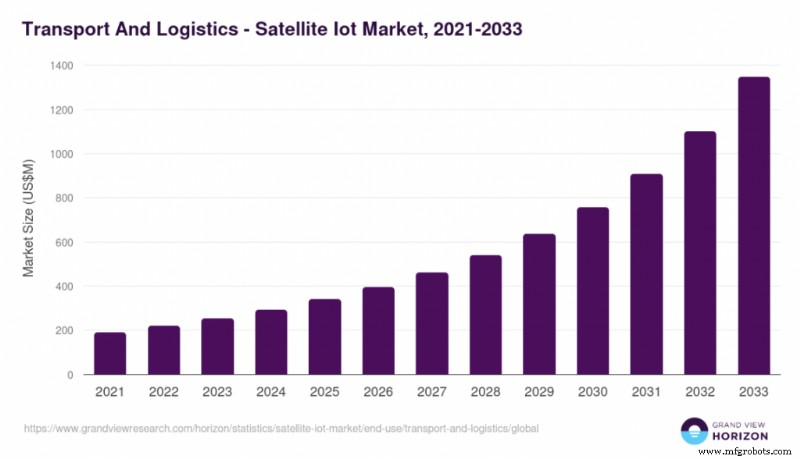
Grand View Research projects an 18.7% CAGR for the satellite IoT segment in transport and logistics, reaching a market value of US$1.347 billion by 2024. This growth underscores the sector’s confidence in satellite’s unique ability to bridge coverage gaps and provide resilient, high‑performance links.
Fleet managers are already harnessing satellite to unlock smarter, data‑driven operations. Learn more about the shift to satellite‑cellular hybrid systems here: The future of connected transport: why satellite‑cellular is the new standard.
The author is George Malim, the managing editor of IoT Now.
Comment on this article via X: @IoTNow_ and visit our homepage IoT Now
Internet of Things Technology
- 6 Essential IoT Sensors Driving Smart Solutions Across Industries
- Predictive Maintenance: Unlocking Efficiency and Risk Reduction with Data-Driven Insights
- Qualcomm Launches First 5G‑Enabled AI Robotics Platform for Industry 4.0
- Mobile Technology: How It Has Revolutionized Global Travel in 20 Years
- AI is Reshaping SOCs: Tackling Talent Shortages and the Surge of Cyber Threats
- Biz4Intellia: Optimizing Machine Downtime Analysis for Manufacturing Excellence
- Aspinity Unveils RAMP: Analog Processor Cuts Edge Power by 10×
- How to Choose the Most Cost‑Effective Medical Device Tracking Technology
- Building a Robust Time‑Series Monitoring System: Integrating RTI Connext DDS with Telegraf and InfluxDB
- Top 2019 IoT Devices That Will Revolutionize Your Daily Life