



How IoT Drives Transformational Change in Freight Logistics
Honeywell recently unveiled its Connected Freight solution, a cutting‑edge IoT platform that empowers shippers and logistics providers to track high‑value and perishable cargo in real time, dramatically reducing damage and loss.
Developed in partnership with Intel and leading third‑party logistics firms, the system delivers continuous updates on a shipment’s location and environmental conditions—essential for refrigerated pharmaceuticals, delicate electronics, or any goods vulnerable to temperature shifts, vibration, or shock.
I spoke with Sameer Agrawal, VP of Supply Chain Solutions at Honeywell SPS, to uncover how this technology is reshaping the freight industry.
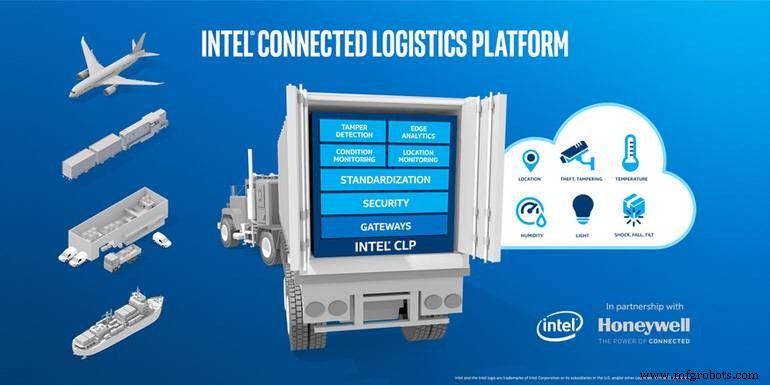
At its core, Connected Freight uses affordable sensor tags that monitor temperature, vibration, humidity, pressure, and intrusion. These tags can be attached to pallets or individual packages. A mobile gateway installed inside a truck or container captures the data and relays it via cellular networks to a cloud‑based command‑and‑control platform.
See also: Can blockchain and IoT solve international freight’s issues?
Customers can configure threshold alerts for any monitored parameter. The platform notifies stakeholders if a shipment deviates from its prescribed conditions—such as a sudden temperature spike or excessive vibration—allowing immediate corrective action. Additionally, the cloud stores data for compliance, audit, and predictive analytics, helping shippers avoid high‑risk routes and optimize asset utilization.
Agrawal highlights several factors driving the current adoption wave, citing affordability and consumer‑grade expectations as key motivators:
“When you order from Amazon, you get real‑time visibility from door to door. In business shipping, we’re still dialing the truck driver. That gap is driving demand for the same transparency.”
The impact of human error
The early roll‑out of Connected Freight has already revealed insights into the balance between over‑ and under‑monitoring. Agrawal notes:
“Pharmaceuticals have no luxury of delay. In regions where a single failed batch can mean lives lost, IoT is not optional—it’s critical.”
Predictive analytics and remote repair
Beyond real‑time alerts, the platform’s data lake enables logistics providers to perform predictive analysis. By aggregating metrics from thousands of shipments, the system can flag high‑risk routes, recommend rerouting when demand shifts, and even predict vehicle or cargo issues before they manifest.
While still nascent, the vision extends to remote diagnosis and potentially remote repair of cargo or vehicle problems, promising a future where disruptions are not just detected but mitigated before they affect the supply chain.
In sum, Honeywell’s Connected Freight solution exemplifies how IoT can transform logistics from reactive to proactive, enhancing safety, compliance, and operational efficiency.
Internet of Things Technology
- How IoT is Revolutionizing Construction: Safety, Visibility, and Asset Management
- Ensuring Data Compliance in the Internet of Things
- How Industrial IoT Sensors Drive Modern Factory Efficiency
- Smart Data: Navigating the Next Frontier of IoT and Big Data
- Top 3 Challenges in Preparing IoT Data for Industrial Success
- Democratizing the Internet of Things: Next‑Gen Satellite IoT Brings Universal, Affordable Connectivity
- Unlocking the Value of IoT Data: Secure, Insight‑Driven Strategies
- Why Warehouses Should Adopt IoT Now: Boost Efficiency, Accuracy, and Security
- Harnessing Cloud Power for IoT: Unlocking Seamless Connectivity & Data Insights
- How IoT-Enabled Asset Monitoring Drives Safety and Efficiency in Oil & Gas