



Prevent Enterprise IoT Security Breaches: The Comprehensive Checklist
Reduce risks and protect your industrial equipment, customers, and plants.
Industrial enterprises—factories, plants, and manufacturing facilities—must recognize the spectrum of IoT security threats and deploy a multi‑layered cybersecurity strategy. This guide outlines the primary risks posed by connected devices and presents practical solutions that secure your operations now and in the future.
[[Get your IoT security checklist]]
What is IoT Security?
IoT security protects the safety of connected devices and the networks that support them from potential threats. In an industrial context, adding internet connectivity to systems, computing devices, and mechanical machinery expands the attack surface. Because new exploits surface daily, securing your devices is an ongoing process that requires robust, continuously updated safeguards.
The Risks of Connected Industrial IoT Devices
Without a dedicated security and privacy program, IoT systems become attractive targets for attackers. Poor monitoring lets vulnerabilities go unnoticed, while connecting operational technology (OT) to corporate IT networks exposes confidential, business‑critical data. Malicious actors have already leveraged internet‑connected sensors to infiltrate industrial networks. Prioritising IIoT cyber resilience is therefore essential.
We created this checklist to ensure you consider every aspect of IoT security and have the controls needed to prevent breaches.
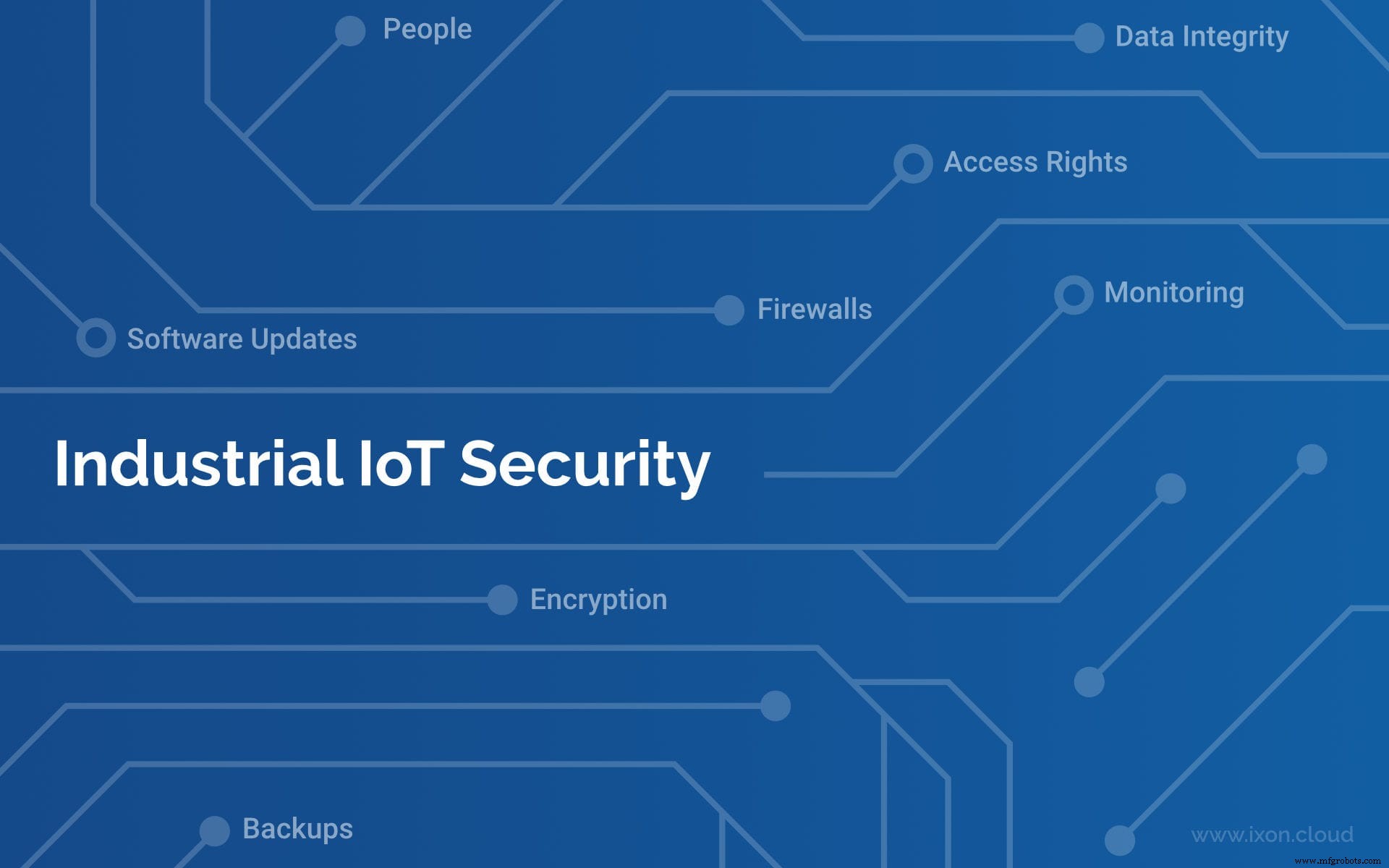
An Industrial IoT Security Checklist to Prevent Issues and Breaches
Machine engineers and their customers must collaborate on IoT risk assessment and mitigation. The checklist below covers key security domains, minimises threats, and offers actionable solutions to keep plants and operations secure.
Firewalls – Limit Your Surface Area
Effective cybersecurity starts by shrinking the attack surface. Think of your IoT environment as a vault containing intellectual property and customer data. A single, well‑configured gateway—your firewall—makes monitoring and protection far easier. Firewalls filter traffic by source IP, destination port, or packet content, allowing you to expose only essential services to trusted sources.
Ask yourself which ports need external access and which should be restricted. For example, an SSH service might be limited to your headquarters, while a database port should remain localhost‑only.
Read more about why you should care about incoming connections to your factory.Encryption – Protect Data in Transit
Encryption converts readable data into unreadable ciphertext, safeguarding it from interception. Robust encryption, such as TLS 1.3 with forward secrecy, protects against man‑in‑the‑middle attacks. Not all encryption algorithms are equal; consult reputable sources like SSL Labs or the Mozilla TLS configuration guide to stay current with industry best practices.
Data Loss Prevention – Backup Your Environment
Backups are your first line of defense against data loss. However, a backup is only useful if it is comprehensive, up‑to‑date, and secure. Consider these questions:
- Which data must be recoverable to recreate your IoT environment?
- What is an acceptable data‑loss window?
- How long should backups be retained?
- How do you verify backup integrity?
- How are backups protected from unauthorized access?
Software Vulnerabilities – Update, Update, Update
Operating system and application patches are often released before the public is aware. Allocate a dedicated hour each month to review updates across all devices. Most major OS vendors provide automatic security‑only update mechanisms, ensuring you stay protected without manual intervention.
People – Educate Your Workforce
Employees remain the weakest link in many breaches. Comprehensive training should cover:
- Strong password creation and management
- Phishing recognition
- The benefits of multi‑factor authentication
- Least‑privilege access principles for IT staff
The principle of least privilege means giving users only the access necessary for their role.
Dylan Eikelenboom
Security Officer, IXON
Monitoring – Keep an Eye on Everything
In the cloud, everything is always accessible—an attractive premise for attackers. Comprehensive monitoring of processes, network traffic, and command execution provides visibility into anomalies. Avoid data sprawl by focusing on metrics that inform system health and security posture.
Vulnerability Testing – Know Your Weaknesses
Cybersecurity is a continuous commitment. Regular penetration testing or automated vulnerability scans identify exploitable gaps. While full‑scale pen tests can be costly, affordable automated scanners—ranging from free to a few dollars per server—offer actionable insights. Re‑run tests after remediation or major architecture changes to confirm ongoing safety.
Read more about Securing your IoT devices.Access Rights – Choose Wisely
Vendor‑managed services—hosting providers, email servers, monitoring tools—can introduce risk. Always verify that each partner implements robust security controls and aligns with your own standards. A flaw in a third‑party system can directly affect your operations.
Redundancy – Ensure Availability
While most controls focus on confidentiality and integrity, consider high‑availability and failover solutions if uptime is critical. Redundancy mitigates downtime and supports business continuity.
Get Your Free IoT Security Checklist
Download the complete checklist to fortify your enterprise and IoT applications.
[[Download IoT security checklist]]
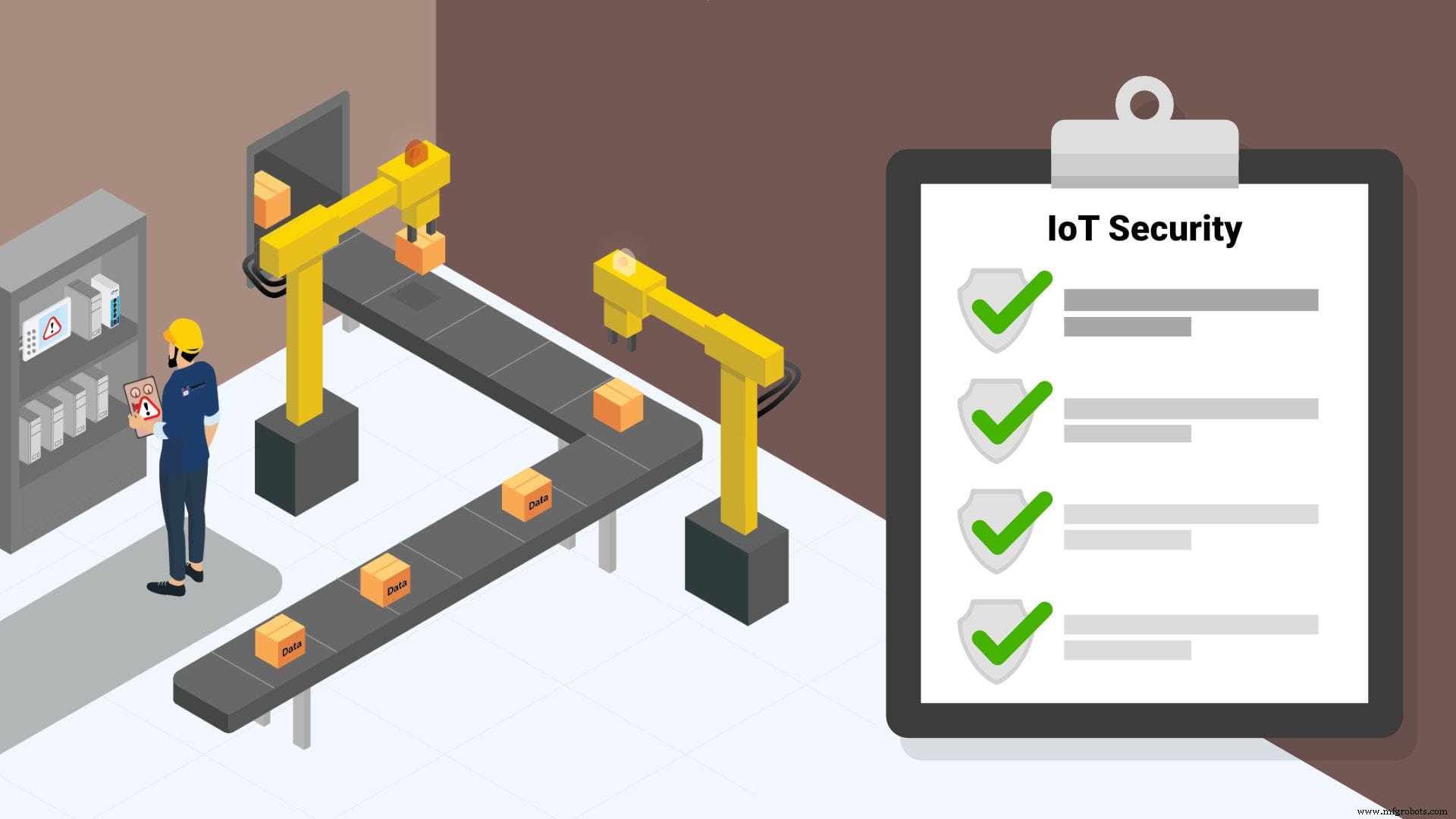
Additional Resources
- Discover how IXON protects industrial networks, equipment, and machine data in our security whitepaper.
- Infographic: 9 Security Areas to Minimise the Threats of IoT
- Related cybersecurity topics
- Contact one of our security specialists for additional questions
Internet of Things Technology
- Securing the Industrial IoT: A Practical Roadmap
- How IoT is Revolutionizing Inventory Tracking
- Two Essential Strategies for IoT Security
- How IoT is Revolutionizing Construction: Safety, Visibility, and Asset Management
- Designing Security into the Industrial IoT: Expert Guidelines for Protecting IIoT Systems
- The Definitive Checklist for Purchasing Plastic Fasteners
- Securing Your IoT Ecosystem: Expert Strategies to Counter Ransomware and Cyber Threats
- How IoT is Transforming Enterprise Mobility for Modern Businesses
- Security Unlocks IoT’s Full Potential
- Comprehensive IoT Security Checklist: Protect Your Data from Compromise