



Ensuring Trustworthy AI/ML Processors: The Critical Role of Reliability Verification
Why Reliability Verification Matters for AI/ML Processors
With AI and machine learning now integral to a broad spectrum of applications—from autonomous vehicles to healthcare diagnostics—any failure in the underlying hardware can undermine the credibility of the entire system.
Over the past few years, enterprises have accelerated AI adoption, making it a top priority for achieving business objectives. This momentum is driven by algorithmic advances, cutting‑edge hardware designs, and the exponential growth of digitized data. However, to sustain this growth, companies must prove that the results generated by AI/ML technologies are trustworthy. That trust starts with the design and verification of the integrated circuits (ICs) that power AI/ML functionality.
AI/ML Processing Paradigms
AI workloads are broadly categorized as either datacenter/cloud‑based or embedded. In the former, compute resources reside in remote data centers, while in the latter, dedicated AI chips or co‑processors are embedded within devices or edge servers closer to the user. Edge devices can be specialized for training (machine learning) or inference. Historically, training occurred in the cloud, but the rise of high‑performance edge solutions is shifting more training workloads to the edge.
Designing AI/ML Chips for Mission‑Critical Environments
Embedded AI chips are tailored for specific domains such as automotive, industrial control, or medical diagnostics—many of which are mission‑critical. For example, an advanced driver assistance system (ADAS) must process sensor data within stringent latency windows; a delay can lead to catastrophic collisions.
These ICs feature extensive parallel compute units, high power densities, and complex circuitry designed to deliver peak performance within tight power envelopes. While general‑purpose CPUs can handle some AI tasks, their serial nature limits throughput. GPUs excel at parallel workloads, and field‑programmable gate arrays (FPGAs) offer reconfigurable acceleration. Nevertheless, the most efficient path often involves application‑specific integrated circuits (ASICs) optimized alongside the software stack.
Benefits of ASIC‑Based AI Solutions
ASICs provide superior performance per watt, deterministic behavior, area savings, and faster time‑to‑market. Figure 1 illustrates a typical ASIC AI chip block diagram.
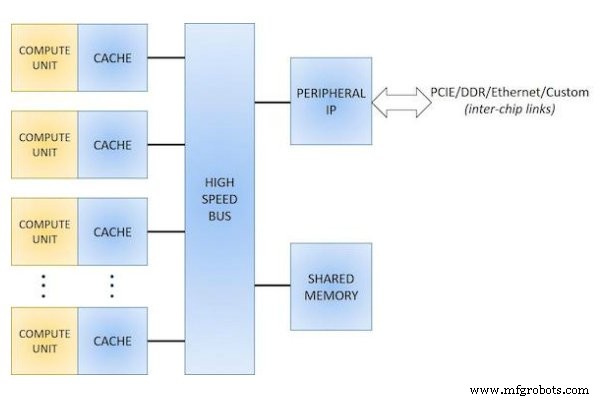 Figure 1. Block diagram for an ASIC AI chip design.
Heterogeneous Computing for Optimal Performance
Many modern AI systems combine multiple core types—such as CPUs, GPUs, and ASICs—to balance serial control tasks with parallel data processing. This heterogeneous approach improves throughput while maintaining power efficiency, often measured as tera‑operations per second per watt (TOPS/W). Power‑saving techniques like dynamic voltage and frequency scaling, power gating, and multi‑Vt designs are essential to meet these metrics.
Given the high stakes, reliable design and verification of these complex ICs are paramount. A single circuit fault can compromise AI validity and erode stakeholder confidence.
Challenges of Reliability Verification for AI/ML ICs
AI/ML chips contain millions to billions of transistors—NVIDIA’s Tesla P100 GPU, for example, boasts 15.3 billion transistors, while Intel’s Loihi contains 2.07 billion. Designers must meet distinct reliability requirements for each target environment, which necessitates thorough testing against well‑defined specifications.
Traditional Verification Limitations
Manual inspection and classic SPICE‑style simulations are impractical for such large designs, being time‑consuming, error‑prone, and lacking scalability. Even when designers partition IP blocks for isolated verification, inter‑block interactions—especially across compute cores, interconnects, and high‑bandwidth memory—are often overlooked, leading to incomplete coverage.
Long runtimes on conventional verification tools can delay product launches, underscoring the need for automated, scalable solutions that leverage multi‑core and distributed computing environments.
Calibre PERC: A Foundry‑Qualified Reliability Platform
The Calibre PERC reliability platform addresses these challenges by offering multi‑threaded (MT) and multi‑threaded flexible (MTflex) scaling, distributing verification tasks across multiple CPUs and remote machines for rapid execution on large AI/ML designs.
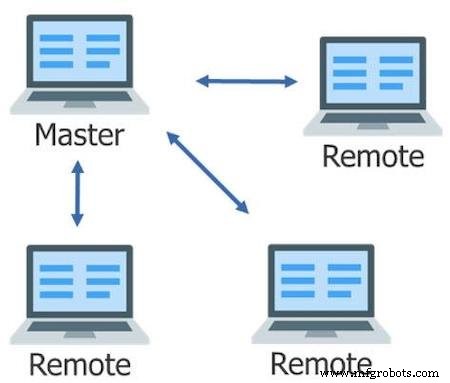 Figure 2. Multi‑threaded, flexible scaling distributes tasks to multiple remotes for faster overall execution.
Beyond basic scaling, Calibre PERC integrates netlist and layout data to detect a broad spectrum of reliability issues, enabling designers to proactively mitigate performance and operational failures.
Transistor‑Level Reliability in Multi‑Domain Power Architectures
Modern AI/ML ICs often employ multiple power domains to isolate analog IP, enable power gating, and support independent voltage scaling. For instance, Intel’s Skylake architecture uses nine primary power domains.
Specialized circuit elements—voltage regulators, header/footer switches, level shifters, isolation cells, and state‑retention cells—are required at each domain interface. Verification must confirm correct implementation and connectivity of these elements, as illustrated in Figure 3.
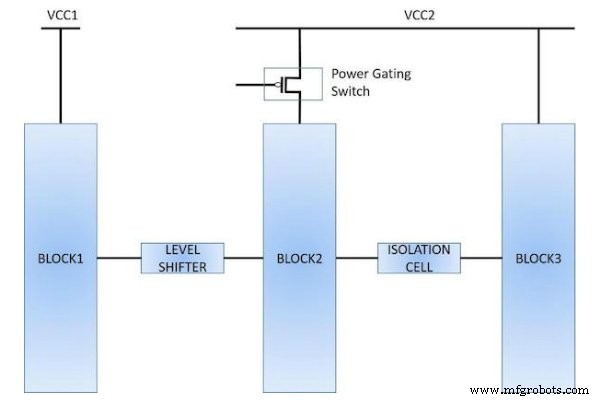 Figure 3. The use of special elements (such as level shifters, isolation cells, and power‑gating switches) inside a low‑power design requires specialized verification techniques.
Designers must also ensure appropriate device selection across domains—for example, using thick‑oxide transistors for high‑voltage supplies—to avoid bias temperature instability (BTI) and other degradation mechanisms.
Unified Power Format (UPF) for Transistor‑Level Validation
UPF provides a consistent power intent description throughout the design flow. Traditional UPF flows focus on logic or gate level, but Calibre PERC extends UPF usage to the transistor level, enabling automated checks for missing or misconnected level shifters, electrical overstress (EOS) conditions, floating wells, and more.
Lifetime Reliability: Preventing Long‑Term Degradation
AI/ML chips must maintain reliable operation over their entire design life. Issues such as BTI, EOS, electromigration (EM), and current‑density hotspots can silently degrade performance or cause catastrophic failure.
For example, a high‑voltage domain driving a thin‑oxide transistor without an appropriate level shifter will not fail immediately but will experience accelerated degradation over time, leading to eventual failure. Similarly, EM—driven by current flow—creates voids and hillocks that increase resistance or cause shorts. Foundries provide EM limits based on intended application environments; designers typically target worst‑case conditions and validate against these limits.
Missing reliability checks pre‑silicon can lead to tape‑out delays, loss of customer trust, negative market reactions, recalls, or even physical harm in safety‑critical deployments.
Strategic Analysis and Management of AI/ML Reliability
The rapid advancement of AI/ML hardware hinges on rigorous reliability analysis. Advanced EDA tools that address the unique challenges of large, complex AI/ML chips enable design houses to deliver products that perform reliably throughout their intended lifetime, fostering confidence in AI outcomes across industries.
Industry Articles are a form of content that allows industry partners to share useful news, messages, and technology with All About Circuits readers in a way editorial content is not well suited to. All Industry Articles are subject to strict editorial guidelines with the intention of offering readers useful news, technical expertise, or stories. The viewpoints and opinions expressed in Industry Articles are those of the partner and not necessarily those of All About Circuits or its writers.
Internet of Things Technology
- Why Electrical Safety Matters: Protecting Your Life and Work
- Why Facility Management Drives Industrial Success
- Why Data Is the Cornerstone of Reliability Engineering
- The Key to Reliability Success: Culture Change Over Technology
- How Trending Enhances Reliability of Electric Motors
- Why Safety‑Critical Software Is Becoming a Cornerstone of the IoT Revolution
- Boosting Productivity: Why It Matters & How to Achieve It
- Why Precision Matters: The Critical Role of Robot Accuracy in Production
- Why Water Matters: The Key to Sustainable Innovation
- Why the Layer Fan is Crucial for FDM 3D Printing Success