



Leveraging LoRa for Secure, Remote Smart Metering
Exploring LoRa for Long‑Range, Low‑Power Smart Metering of Utilities
The proliferation of connected devices is reshaping the smart‑metering landscape. Cities and enterprises are now turning to LoRa‑based solutions to monitor and control utilities more efficiently.
According to IHS Markit, over 700 million smart meters were installed worldwide in 2018, and the firm projects that by 2025, one‑third of all meters will be replaced by smart technology.
Traditional meter‑reading relied on technicians driving through neighborhoods to capture data via short‑range wireless devices. That approach worked in rural or suburban settings but struggled in dense urban areas, indoors, and underground.
LoRa’s ability to penetrate thick walls and reach underground installations has made it the preferred choice for many utility operators. The following sections detail how LoRa devices can be deployed for smart metering and showcase real‑world applications.
Typical LoRa Deployment
A standard LoRa deployment (see Figure 1) consists of four core components, all governed by the LoRaWAN protocol—a global, open standard that ensures interoperability across regional, national, and international networks.
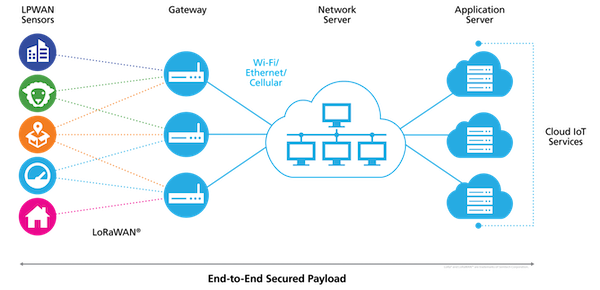
Figure 1. LoRa network breakdown
The architecture begins with end‑node sensors that transmit data using LoRaWAN to an LPWAN gateway—a hub that aggregates signals from multiple smart‑metering devices. The gateway forwards the data to a network server, which routes it to an application server or cloud IoT platform for processing. Finally, the processed information reaches the end‑user via a computer or mobile device.
Security for Wireless Utility Monitoring
Wireless transmission of meter data demands robust privacy and security measures. LoRaWAN’s baseline authentication relies on AES‑128 encryption, as defined by IEEE 802.15.4/2006 Annex B. Separate keys protect user data and ensure network integrity.
IoT devices connect to a LoRaWAN network in one of two ways. Activation by Personalization (ABP) embeds the network session key, application session key, a unique 32‑bit device address, and a 24‑bit network ID directly into the device firmware. The 24‑bit network ID identifies the specific LoRaWAN network the device is intended for.
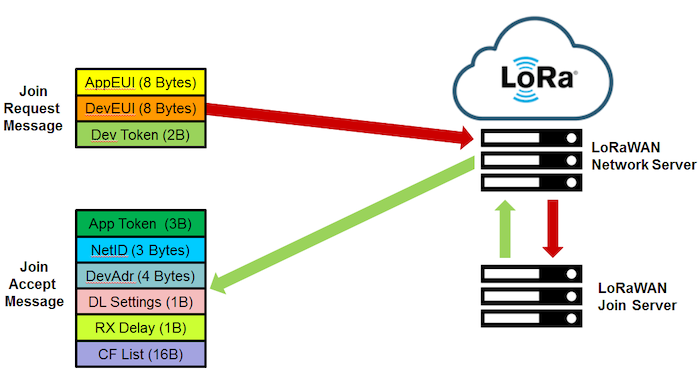
Figure 2. Join request and join accept message formats.
The more common method, Over‑The‑Air Activation (OTAA), has the device send a join request to the network server. The request is forwarded to a join server, which replies with a join accept. The MAC command includes a unique AppEUI that identifies the target application server.
Smart Water Management
Businesses are increasingly adopting sustainable practices, and water conservation is a critical component. Washington‑based Apana offers a “security system for water consumption,” providing insights that help organizations reduce their water footprint by identifying process drift, mechanical failures, and hidden leaks.
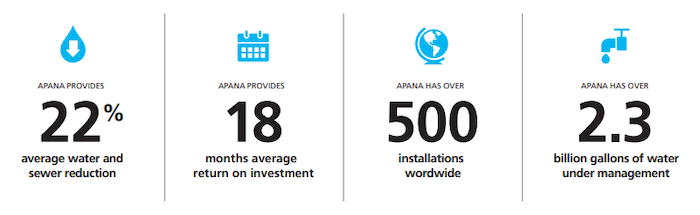
Figure 3. A snapshot of Apana’s achievements.
Costco Wholesale implemented Apana’s solution and quickly pinpointed water usage patterns and the causes of abnormal spikes—often linked to inefficient operations or faulty equipment. As a result, Costco cut water consumption by 20%, translating into roughly 22% savings on its water bill.
France’s Road to Three Million Connected Devices
Birdz, a subsidiary of Nova Veolia and a global leader in resource optimization, deployed a LoRa‑based water‑management system in Lyon, France, in 2015. The city now operates more than 400,000 LoRa sensors.
Since the rollout, Lyon has repaired over 1,200 leaks and achieved an 8% boost in water‑network efficiency, saving about one million cubic meters of water each year.
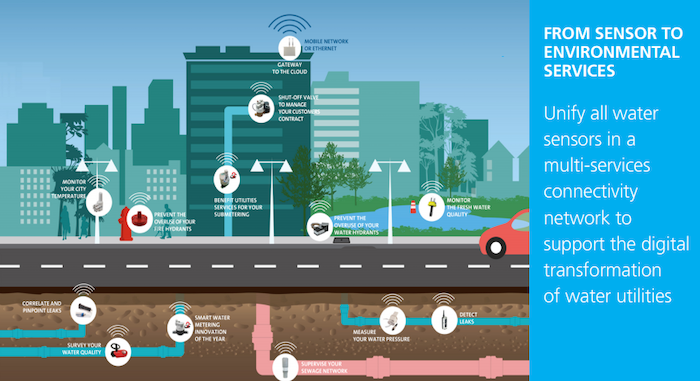
Figure 4. The infrastructure approach to smart utilities.
Birdz plans to expand across France, adding three million additional intelligent sensors. The long‑term goal is to enable remote reading for more than 70% of water meters within the next decade.
LoRa‑Based Sensors Offer Scalability
The scalability and interoperability of LoRa sensors are essential drivers of the transition from legacy practices to intelligent, data‑driven utility management in the connected era.
Industry Articles are a form of content that allows industry partners to share useful news, messages, and technology with All About Circuits readers in a way editorial content is not well suited to. All Industry Articles are subject to strict editorial guidelines with the intention of offering readers useful news, technical expertise, or stories. The viewpoints and opinions expressed in Industry Articles are those of the partner and not necessarily those of All About Circuits or its writers.
Internet of Things Technology
- Why OSGi Is the Ideal Framework for Modern IoT Solutions
- Smart Lighting: The Cornerstone of a Truly Connected City
- Finding a Reliable Z‑Wave Alternative: 2.4 GHz Mesh & Star Networks
- AIoT: The Next Generation of Smart Traffic Management
- 3 Keys to Successful Industrial IoT Deployment
- AI in Manufacturing: Three Key Trends Shaping 2019
- Smart Core Network Slicing for IoT and MVNOs: Unlocking 5G Potential in 3G/4G Networks
- Secure Linux Solutions for the Intelligent Edge: Expert Webinar
- Innovating Smart Solutions for Gas Flow Devices
- Litmus and Oden Launch Integrated IIoT Solutions for Smart Manufacturing