



Requirements for Optimal IQ Modulation and Demodulation in Communication Links
Discover the exact specifications required for both analog and digital IQ modulation/demodulation to achieve superior communication link performance.
In the previous article we explored whether digital or analog methods are preferable for combining and separating I and Q components. This installment builds on that discussion by outlining the performance criteria that must be met to ensure reliable links.
Analog IQ Modulator and Demodulator Requirements
Table 1 summarizes findings from recent literature on how IQ imbalance degrades OFDM‑based links. For reference, see the prior article for the full list of citations.
Table 1: Requirements for Analog IQ Modulator and Demodulator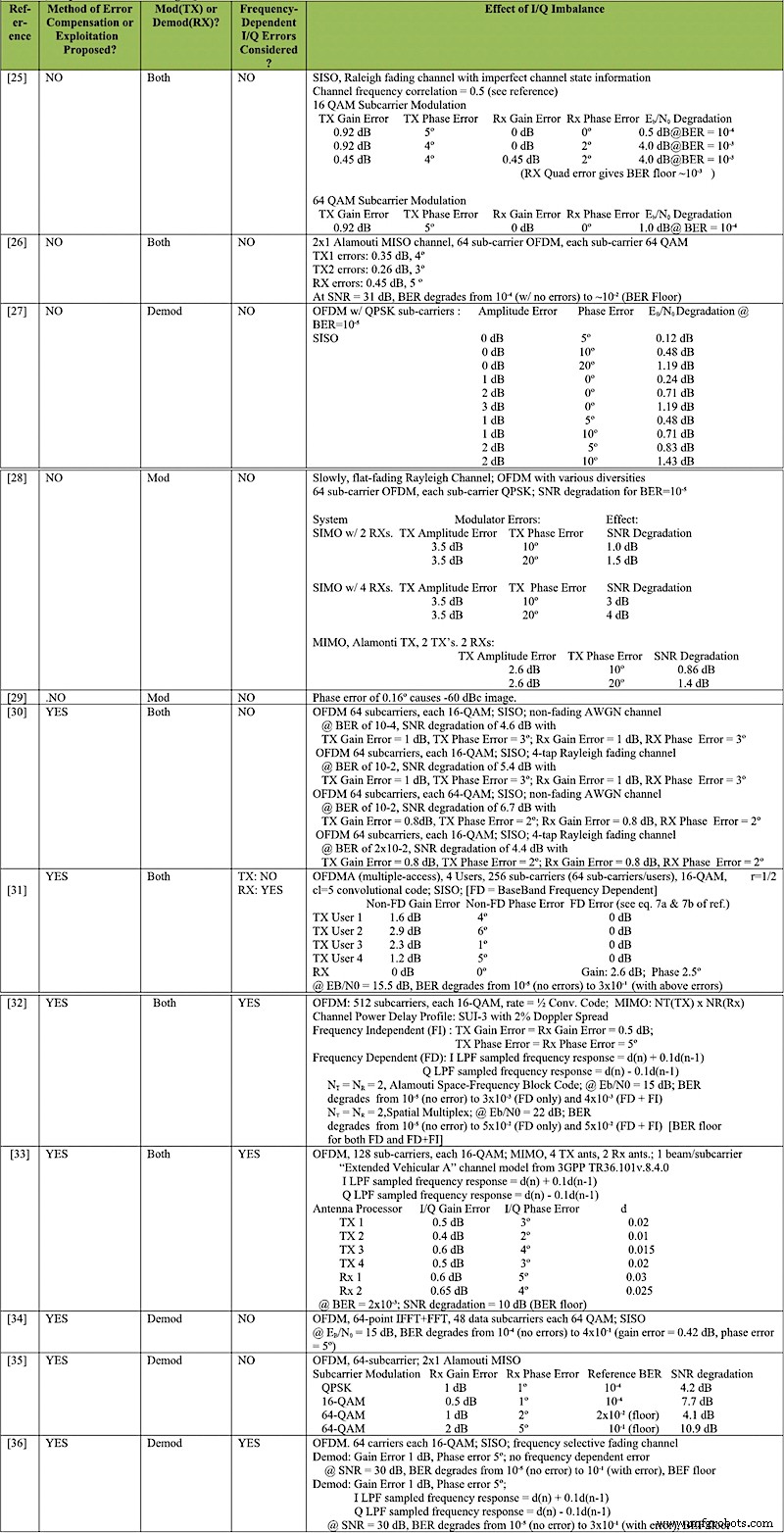
Click to enlarge table to full size
The data reveal a clear asymmetry between transmitter (TX) and receiver (RX) sensitivity to IQ imbalance. At the TX side, an imbalance of up to 1 dB and 5° can be tolerated while still achieving bit‑error rates (BER) in the 10⁻⁴–10⁻⁵ range, even with 64‑QAM OFDM subcarriers. In contrast, the RX side is far more fragile: the same 1 dB/5° imbalance produces multi‑dB losses, and for N‑QAM subcarriers with N > 4 a BER floor between 10⁻³ and 10⁻¹ appears. Even a modest 0.5 dB/1° mismatch can degrade 16‑QAM performance by ~8 dB at a BER of 10⁻⁴. No published results exist for imbalances below 0.5 dB/1°, nor for N > 16, leaving a knowledge gap despite the availability of integrated modulators with ~0.02 dB and 0.2° imbalance.
DACs and ADCs Requirements
Baseband Converters for Analog IQ
Analog IQ designs still rely on data converters in the baseband I/Q paths, as shown in Figures 1A and 1B of the previous article.
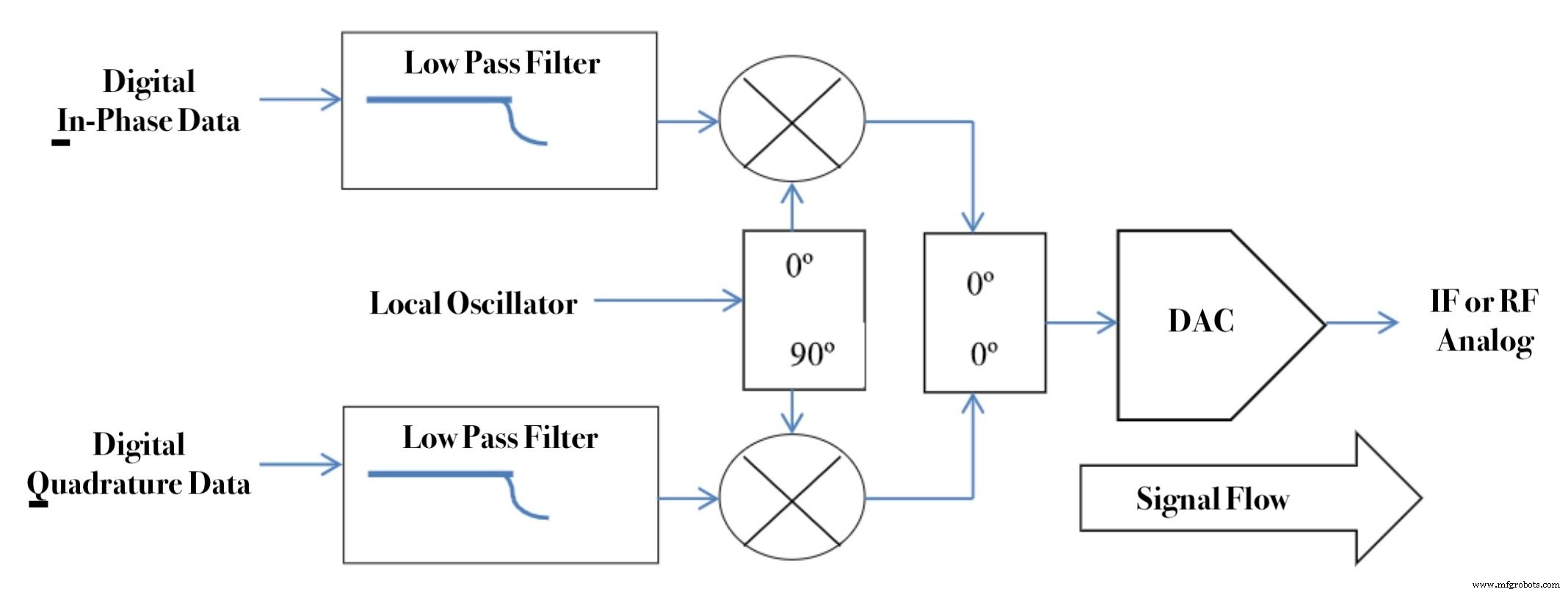
Figure 1(a). Modulator
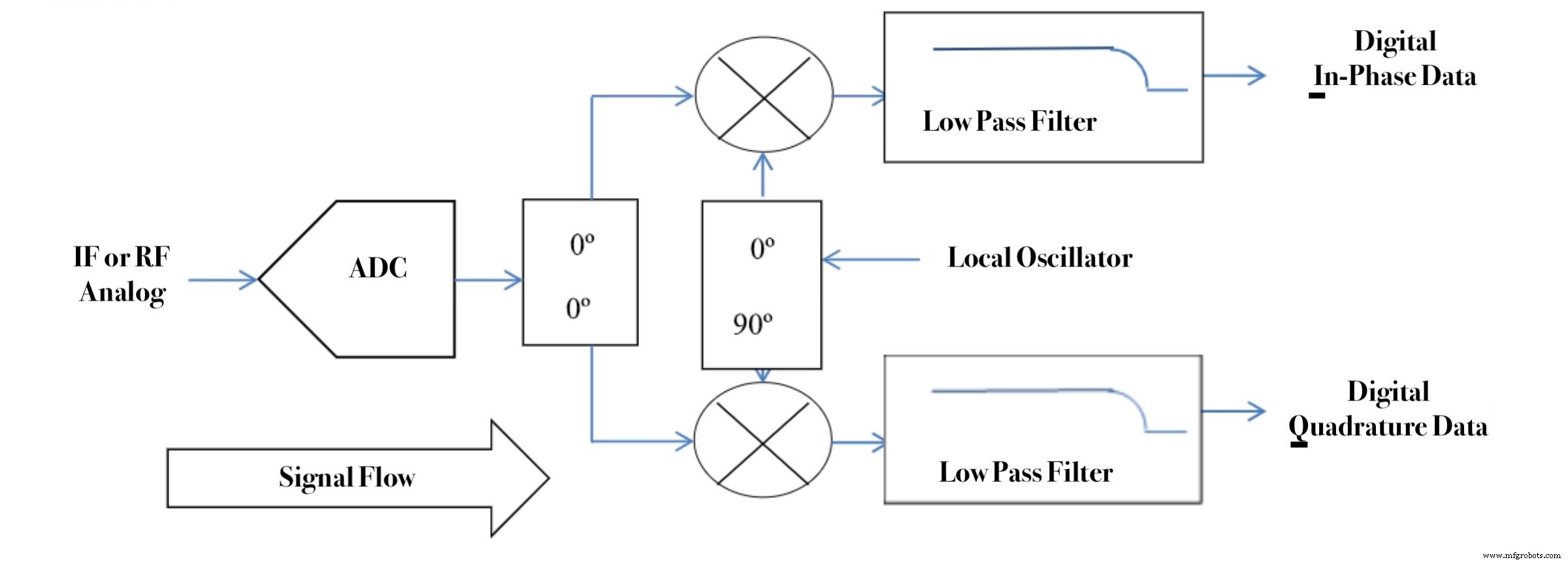
Figure 1(b). Demodulator
Research indicates that a Signal‑to‑Noise+Distortion Ratio (SINAD) exceeding 38 dB is necessary to keep IQ‑related degradations within acceptable limits.
RF/IF Converters for Digital IQ
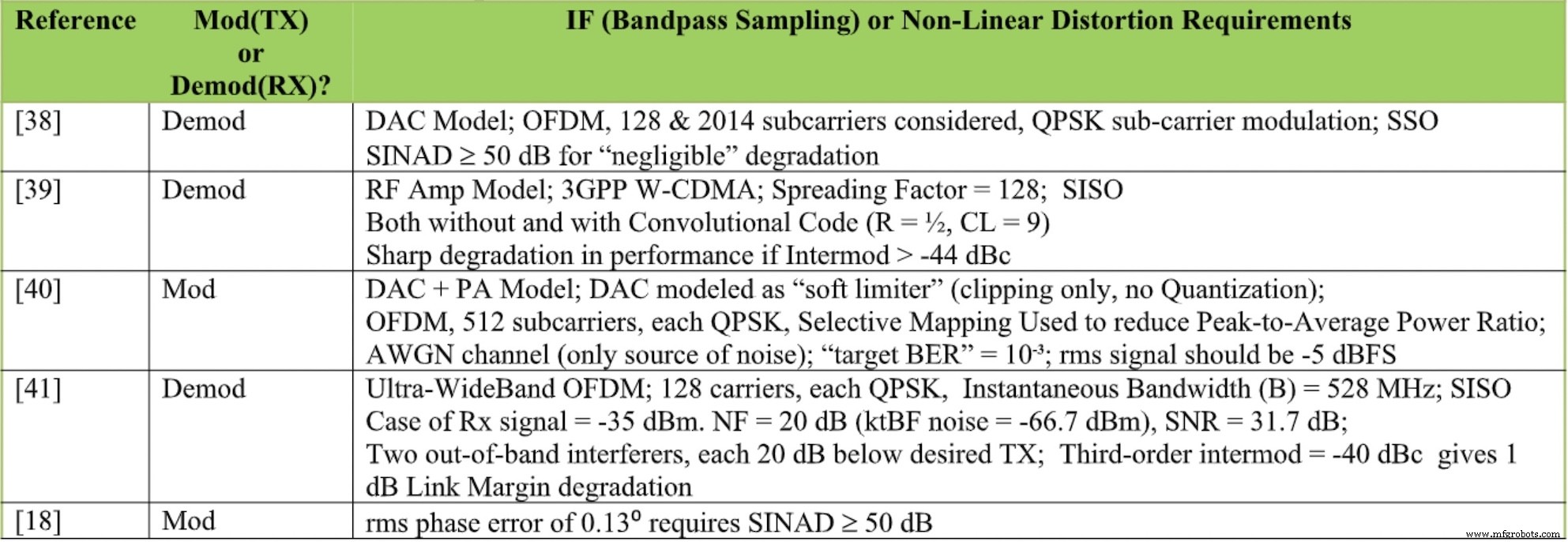
Digital IQ architectures place converters at the RF or IF stage (position D in Figures 1A and 1B). Limited literature exists, but studies on third‑order intermodulation (IP3) suggest that a SINAD > 50 dB and an IP3 > 44 dBc are required for minimal performance loss.
Table 2. Baseband Data Converter Requirements
Internet of Things Technology
- CyrusOne Enhances User Experience with Real‑Time Application Monitoring
- Insertion Loss & EMI Filter Performance: Expert Guide to Optimal Design
- Why Control-Centric Projects Prefer Symphony Link Over LoRaWAN: Security, Reliability, and Cost Advantages
- Cadence Unveils Tensilica ConnX B20 DSP: 30× Faster for 5G & Automotive Radar
- Designing 5G Devices: Selecting the Ideal Performance Band for Your Application
- ExxonMobil’s Paxon SP5504: A Breakthrough HDPE for Superior Blow‑Molded Bottles and Containers
- Mastering the Engineering Requirements Document: Expert Tips for Clear, Effective Writing
- Connecting Control Systems: Trusted Communication Interfaces for Position & Motion Sensors
- Selecting Optimal Turning Tools & Cutting Fluids for Aluminum Alloys
- Optimizing CNC Machining: Key Performance Criteria & Tool Selection Strategies