



Elevate Asset Reliability: Harness Machine Learning for Proactive Asset Performance
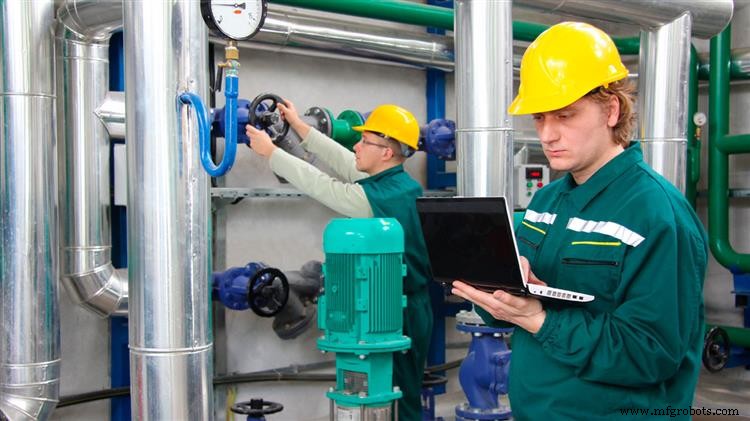
Industry leaders are now turning to the Industrial Internet of Things (IIoT) and machine learning to unlock higher reliability and value from their assets.
Unplanned downtime currently erodes about 15 % of gross margin, while top performers keep losses at roughly 5 %. Bridging this gap demands a new partnership between maintenance and production.
Traditional reliability engineering builds first‑principles models tuned with real‑time data, applies corrective factors, and flags statistical anomalies. However, those models only view the asset itself and often miss upstream process drivers that cause degradation.
For four decades, engineers have relied on equations, statistics, and rule engines. While effective in some contexts, these techniques still signal problems only after damage is evident.
First‑principles models require deep expertise and precise calibration. They excel at forecasting expected behavior under ideal conditions, but struggle with the variability of real production.
Production environments are dynamic: thousands of simultaneous variations make it hard for deterministic models to anticipate which patterns will trigger outages.
In contrast, machine learning learns from the actual operational data—seasonal swings, varying throughput, start‑up/shut‑down cycles, and evolving wear patterns—providing predictions that reflect reality.
By mining process and asset data, machine learning uncovers early warning patterns that point to root causes of degradation before symptoms become visible.
When combined with risk analysis, these algorithms can forecast failures weeks or months ahead, giving maintenance teams the bandwidth to plan rather than react.
Unlike traditional models, machine‑learning “signatures” measure failure modes directly from sensor streams, ignoring industry or machine type, and focus solely on data‑driven relationships.
Even with limited engineering resources, a well‑configured machine‑learning pipeline can deploy predictive signatures across thousands of unique assets in minutes, delivering actionable insights in seconds.
If you still rely exclusively on first‑principles models, it’s time to modernize. Merging engineering models with machine‑learning signatures offers the most powerful way to detect and prevent risky operating conditions.
This hybrid approach delivers accurate, real‑time status while simplifying calibration, empowering maintenance and operations to collaborate for peak performance.
Read more: Overall Equipment Effectiveness
About the Author
Michael Brooks is a senior advisory consultant in asset performance management at AspenTech.
Internet of Things Technology
- How AI and ML Revolutionize Asset Tracking: Enhancing Accuracy, Efficiency, and Insight
- Advance Your IIoT Maturity with Machine Performance Analysis
- Boost Asset Availability with Advanced Machine Learning – Proven Industrial Success
- Boost Reliability and Cut Downtime: Machine Learning Transforms Maintenance
- Machine Learning Models Accurately Forecast Battery Health and Longevity
- Deep Learning vs. Machine Learning: Understanding the Key Differences
- Enhancing Human Expertise with Machine Learning: Trusted Solutions by Senseye
- Elevate Production Efficiency with IIoT‑Driven Resource Monitoring
- Accurate Battery Lifetime Forecasting with AI – DOE Argonne Study
- Revolutionizing Heat Exchanger Design through Additive Manufacturing