



Elevate Continuous Improvement with Industrial IoT: A Guide to Smarter, Safer Manufacturing
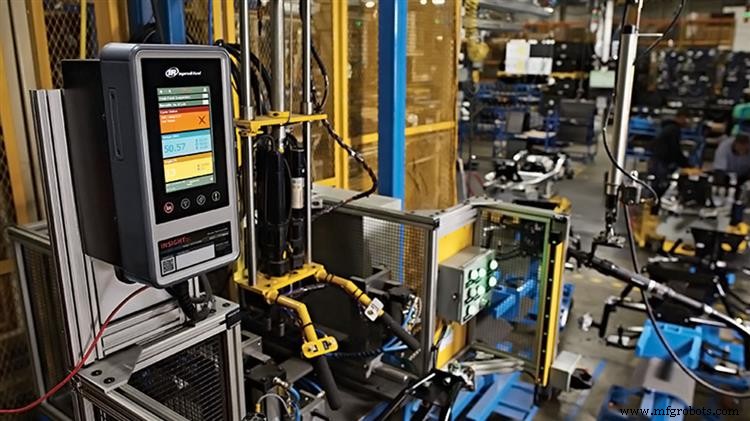
History teaches that continuous improvement hinges on key performance indicators—quality, safety, delivery time, and inventory control. While these benchmarks remain timeless, emerging technologies are reshaping them at an unprecedented scale. Industrial Internet of Things (IIoT) and robust networking now deliver real‑time data that accelerates production, standardizes outcomes, and fortifies workplace safety.
Transforming Lean Manufacturing
In today’s IIoT‑enabled factories, human insight blends seamlessly with digital analytics. The technology connects virtually every electrically active asset—from heavy machinery to handheld tools—into a cohesive data mesh. Though still growing, the IIoT market is projected to reach trillions of dollars in the coming years, underscoring its strategic importance.
Automotive leaders were early adopters, deploying IIoT to safeguard critical assemblies and high‑value equipment such as CNC machines, air compressors, and HVAC systems. After witnessing tangible gains in safety, quality, and uptime, they expanded connectivity to entire production lines. Today, many plants transition to fully connected toolsets or design new lines around digital infrastructure.
Early IIoT deployments focused on high‑capital assets because the cost of sensors and network gear was prohibitive for lower‑value equipment. Today’s economies of scale—affordable sensors, fiber‑optic cabling, and cloud‑based data platforms—enable manufacturers of all sizes to implement IIoT across the shop floor. Cloud services provide the low‑cost compute and storage necessary to process and analyze vast data streams, leveling the playing field and accelerating digital transformation.
For instance, a premium faucet maker began tracking fastening torque in real time. By capturing data on each assembly step, the company could prevent costly product‑liability claims and enhance component reliability.
Enhancing Manufacturing Processes
Embedded sensors and actuators on machinery feed analytics engines with granular metrics. Starting with line‑level equipment, manufacturers now merge this data with cloud metadata to generate actionable insights into quality, throughput, and efficiency. Closed‑loop analytics reveal trends that help engineers diagnose and resolve production bottlenecks quickly.
The IIoT also optimizes information flow, work sequencing, and error‑proofing. Smart equipment broadcasts status updates to operators, quality teams, and plant managers in real time. The larger the dataset, the more robust the statistical sample, enabling data‑driven decisions that reduce waste, improve safety, and elevate product quality.
From Total Productive Maintenance to Total Predictive Maintenance
Traditional Total Productive Maintenance (TPM) applies lean principles to maintenance. IIoT elevates TPM into Total Predictive Maintenance (TPM‑P), where sensor data forecasts impending downtime. By detecting anomalous vibration, temperature, or load patterns, plants can schedule interventions before failures occur, eliminating unnecessary downtime and maintenance costs.
When diagnostics flag a required repair, connected tools enable technicians to perform precise, data‑guided fixes. This systematic, proactive approach enhances quality control and process stability.
Artificial Intelligence Fuels the IIoT
Despite recent advances, some high‑tech sectors remain hesitant to adopt IIoT, often due to resistance to change. However, market research—such as a 2023 Gartner report—shows that enterprises increasingly demand the transparency and performance data that IIoT delivers.
As IIoT converges with artificial intelligence, manufacturing will see a dramatic reduction in manual, time‑consuming tasks. Machine‑learning models analyze real‑time data to generate predictive recommendations, alerting plant engineers before operators encounter problems. Continuous data ingestion lets algorithms learn and improve, while virtual production assistants guide improvements before issues surface.
In sum, IIoT is exponentially accelerating lean manufacturing. Its adoption will only accelerate, as the ability to capture, analyze, and act on raw data becomes the cornerstone of continuous improvement in modern production environments.
Internet of Things Technology
- Ensuring Continuous Health of Your IIoT Systems
- How to Seamlessly Integrate the Industrial IoT: A Practical Guide
- 3 Keys to Successful Industrial IoT Deployment
- Harnessing Data in the Internet of Reliability: Strategies for Effective Management
- Driving the Internet‑of‑Everything with Intelligent Data Distribution
- Future Outlook: Advancing Industrial IoT for Production Excellence
- How Smart Cities Harness IoT, Microservices, and Dashboards for Efficient Asset Management
- Remote Telemetry: The Foundation of a Successful IIoT Deployment
- Boost IoT Performance with Metadata-Driven Data Insights
- Data-Driven Continuous Improvement: Fueling Operational Excellence