



Remote Telemetry: The Foundation of a Successful IIoT Deployment

In every supervisory control and data acquisition (SCADA) system, the first rule is clear: communication will fail. Rising data volumes stress both the central server and the network links that deliver critical telemetry.
Craig Abbot, Sales Manager for the Asia region at Ovarro, explains why remote telemetry units (RTUs) are essential for easing congestion in power, utility, broadcast and transport applications.
The Internet of Things (IoT) envisions low‑cost sensors reporting across communication links into cloud databases for analysis. With more data, the goal is to extract deeper insights that optimise plants, cities, and everyday life.
RTUs have been monitoring power consumption and battery backup at telecom towers for decades. In a process plant connected to Wi‑Fi or 5G, with servers in the cloud or a nearby control room, RTUs collect data on critical assets. If a grid failure occurs, the RTU keeps operators able to monitor and maintain uninterrupted operation.
RTUs operate on a simple principle: understanding an asset’s condition allows efficient management and rapid response. They are now deployed on wind turbine towers to monitor production, not just consumption.
Each RTU is sized to handle the limited number of input/output (I/O) points required at a power generation tower. In manufacturing, industrial IoT (IIoT) extends these benefits to pumps, valves, compressors, railway lines and potable water systems. However, cybersecurity remains a major challenge.
Cybersecurity and RTUs
Many industrial applications touch public safety—transporting people or hazardous materials, producing food, beverages and medicines. External access to control systems can compromise safety, so open connectivity, a core IoT driver, must be balanced with robust security.
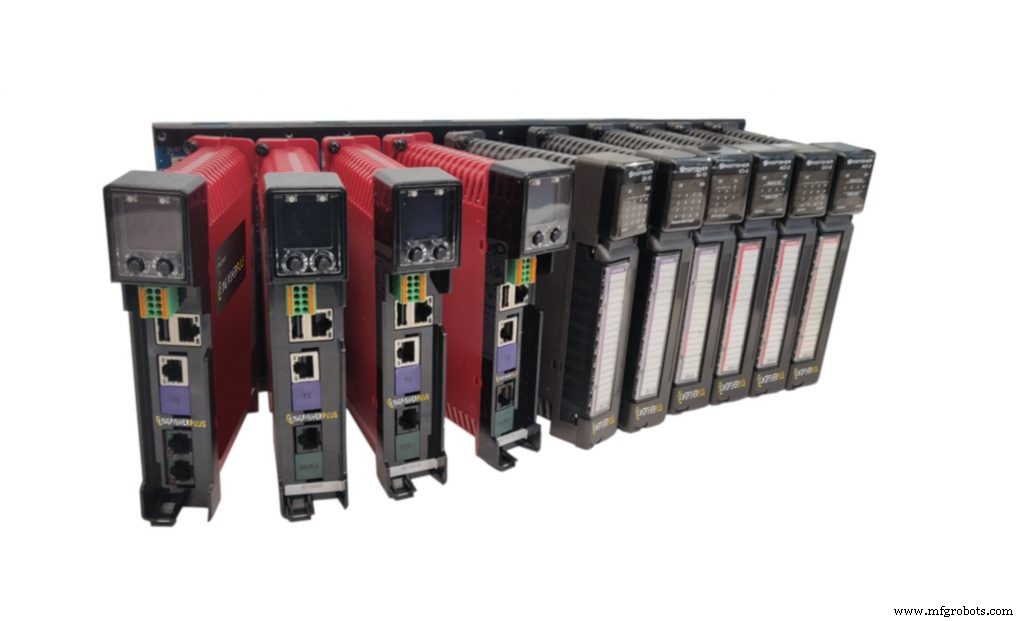
RTUs capture sensor data at remote sites and process it locally for immediate, autonomous response. They eliminate latency that would occur if data were sent to a central server for a reply. When a link to the main server is lost, RTUs maintain local control for extended periods.
Serving as data concentrators, RTUs avoid flooding the network by transmitting only what is essential. Sending every raw sample to the main server would quickly overload a communication link.
Faster, Low‑Latency Response
An RTU can sample a water tank level or a train power line voltage multiple times per second for alarm and control, but it only transmits key metrics—minimum, maximum, average, total, and standard deviation—once per hour. This reduces traffic by up to 99.9%, enabling insight even with limited bandwidth.
Today’s RTUs use process‑control algorithms similar to programmable logic controllers (PLCs). As IIoT evolves, these units are gaining more sophisticated functions. For instance, the Kingfisher CP‑35 runs Linux on a 1 GHz processor, providing substantial field‑level processing power. A fleet of 100 such RTUs offers 100 GHz of distributed compute.
Because SCADA systems can experience communication failures, RTUs must also log data locally. Offline, they store hundreds of thousands—or even millions—of events and upload them once connectivity is restored. For example, 100,000 events represent roughly 140 days of hourly averages from 30 remote sensors.
In the IoT, edge computers pre‑process data and act before forwarding it to the central server, ensuring rapid, low‑latency decisions and minimizing back‑haul traffic. RTUs fulfill this role in IIoT, providing congestion reduction while maintaining safety and security.
The author is Craig Abbot, Sales Manager for the Asia region at Ovarro.
Internet of Things Technology
- Ensuring Continuous Health of Your IIoT Systems
- How to Seamlessly Integrate the Industrial IoT: A Practical Guide
- Elevate Continuous Improvement with Industrial IoT: A Guide to Smarter, Safer Manufacturing
- 3 Keys to Successful Industrial IoT Deployment
- Harnessing Data in the Internet of Reliability: Strategies for Effective Management
- Driving the Internet‑of‑Everything with Intelligent Data Distribution
- Future Outlook: Advancing Industrial IoT for Production Excellence
- How Smart Cities Harness IoT, Microservices, and Dashboards for Efficient Asset Management
- Boost IoT Performance with Metadata-Driven Data Insights
- 6G Takes Off: Milestones, Satellites, and Global Telecom Momentum