



How Smart Supply Chains Transform Manufacturing Efficiency
 In the animal kingdom, many animals store food to survive harsh winters. Remarkably, 74% of gray squirrels’ buried caches remain unrecovered.
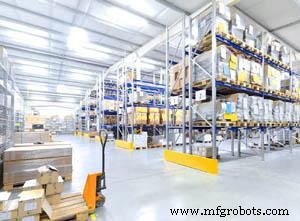
Manufacturers have adopted a similar strategy by stockpiling spare parts for industrial automation systems, hoping to mitigate future failures. However, conventional inventory practices waste space and resources. Modern smart‑supply‑chain solutions can streamline the process, maximizing factory floor utilisation and minimizing waste.
Industry 4.0
When Siemens and the German federal government introduced Industry 4.0, they championed the concept of the smart factory: an integrated, data‑driven environment that uses intelligent analytics to cut downtime and eliminate waste.
Lean manufacturing—originated by Toyota executive Taiichi Ohno after World War I—has long promoted waste reduction. Yet a recent study by the Institution of Mechanical Engineers (IME) revealed that 92% of UK manufacturers lack a clear understanding of Industry 4.0, even though 59% recognise its transformative potential.
This knowledge gap risks leaving firms behind competitors that are already embracing tomorrow’s factory and the AI‑powered systems essential for global competitiveness.
So how can manufacturers fully adopt the smart‑factory vision? A foundational step is embedding sensors into equipment, connecting them to the Internet of Things (IoT).
But communication confined to the shop floor is insufficient for a truly intelligent plant. Robust decision‑making across manufacturing and distribution requires advanced analytics that operate autonomously.
Predict Bottlenecks
A smart supply chain is both self‑organising and self‑optimising. Sensor data from the factory is fused with external variables—such as consumer demand, weather patterns, and supply‑chain disruptions—to forecast potential bottlenecks.
By anticipating adverse weather events, the system can adjust production schedules, preventing over‑production and waste, and thereby driving leaner operations.
Retail leader Gap demonstrates this in practice. Their seamless inventory system tracks every item, ensuring the right products are available in the right quantity at the right time. This precision boosts customer satisfaction while slashing costs in a highly competitive market.
Predictive Analytics
Many plants keep large inventories of replacement parts, especially for components deemed high‑risk. This surplus occupies valuable floor space and risks obsolescence, particularly for legacy systems.
Predictive analytics continuously monitors equipment health. When performance dips below optimal thresholds, automated alerts notify plant managers, enabling pre‑emptive part replacement before a full shutdown occurs.
Integrating a smart supply chain amplifies these benefits. If a machine detects a fault, it can autonomously adjust its operation or, if necessary, place an order for a replacement part from a vetted supplier—eliminating the need to store excess inventory on‑site.
With a dynamic supply chain, spare parts are always on hand, independent of seasonal demand fluctuations.
As winter approaches, manufacturers who adopt cutting‑edge smart‑factory strategies will navigate the season with minimal waste—unlike the gray squirrel that never recovers its stash.
About the Author
Jonathan Wilkins is the marketing director at EU Automation, a specialist in obsolete components. Contact him at jonathan.wilkins@euautomation.com.
Internet of Things Technology
- Top 5 Benefits of Smart Warehouse Systems for Modern Logistics
- Revolutionizing Coffee: How Blockchain Enhances Traceability, Transparency, and Fairness
- 5 Proven Benefits of IoT-Enhanced Supply Chains
- Biz4Intellia Smart Contracts: Secure Your Supply Chain Efficiently
- Harnessing IoT for Smarter Supply Chains: Benefits, Challenges, and Real-World Examples
- Unlocking the Advantages of Smart IIoT-Enabled Factories
- Understanding Supply Chain Management: Key Concepts & Benefits
- Revolutionize Supply Chain Efficiency with Smart Manufacturing Technologies
- Mexico’s Manufacturing Expansion Boosts Local Supply Chain Benefits
- 5 Proven Strategies to Overcome Factory Automation Hurdles Caused by Supply Chain Disruptions