



Protecting Factory Workers: How Technology Drives Safety on the Plant Floor
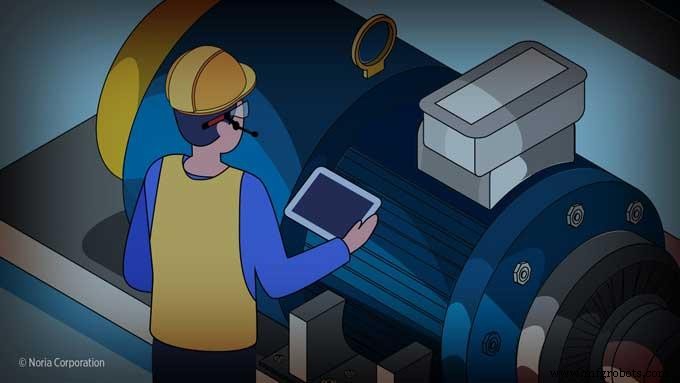
For weeks, the public has celebrated frontline workers—healthcare staff in full PPE, postal carriers, and grocery clerks—whose dedication keeps communities functioning during the pandemic.
Yet another critical frontline workforce—factory workers—remains largely unseen in the media narrative, despite their essential role.
Supply chain disruptions have led to stark shortages across shelves. Protecting factory workers is key to sustaining production and delivery of critical items such as PPE, groceries, pharmaceuticals, and more.
In this Q&A with Ben Cheng, Vice President of Customer Operations at Parsable, we examine how technology bolsters safety for plant workers.
Reliable Plant: Why are factory workers indispensable during the pandemic?
BC: Throughout this pandemic, many frontline workers have become visible in our neighborhoods—those working at grocery stores, hospitals, and delivering mail. Manufacturing frontline workers play an equally important role, yet they’re less visible because consumers rarely think about how products are made. These workers power the heart of our supply chains—the plant floor where raw materials enter and finished products exit.
Without people operating plants, the world would be at a loss and entire supply chains would be disrupted. Groceries and personal hygiene products would never reach supermarkets. Every high‑demand essential product, especially during this pandemic, would be inaccessible without the massive frontline factory workforce committing to their jobs, often at great personal risk.
This raises the question: how are we supporting these workers? They play such an important role during this crisis, yet who is looking out for them? We keep seeing plant closures and high infection rates among plant workers. We need to better support them; many are risking their health with insufficient protection or inadequate safety adherence.
RP: What are the biggest roadblocks or challenges that industrial frontline workers face today?
BC: Safety is the paramount concern. Parsable works with global industrial companies that have hundreds of sites and tens of thousands of employees, and safety is top of mind for all of them. It’s the most immediate and critical issue industrial companies are confronting now.
Beyond the safety adherence itself, scaling it across an organization is a challenge. For large enterprises, rolling out new safety protocols one plant at a time can take months—time that is simply unavailable when uncertainty evolves daily. And with regulatory bodies like the CDC updating recommendations frequently, by the time you finish implementation at a site, a new standard may already be in place. The deployment process must be re‑imagined. Time is not on your side.
For frontline workers, the reality is that social distancing is difficult to maintain when moving throughout a plant in close proximity to others. Certain production processes make distancing impossible, and the sheer number of people required forces a major re‑haul of work standards—or the work itself—encompassing operations, human resources, and other stakeholders.
Another challenge is keeping up with production demands. Manufacturers are pivoting to produce items like face masks, ventilators, and hand sanitizer, which requires faster work and rapid onboarding. The combination of increased pace and new processes presents a significant hurdle for operations and the frontline workforce.
RP: How is technology keeping them safer?
BC: There is an irony: factory workers produce millions of PPE yet are often inadequately protected themselves. On the floor, safety extends beyond PPE to limiting the spread of disease, and technology is key.
Connected worker technology digitizes standard, paper‑based operating procedures to continuously improve safety, productivity, and quality wherever humans work. Digitizing procedures eliminates contact with paper and the need to exchange documents, enabling digital sign‑offs that maintain social distancing while verifying product quality and safety criteria. That’s just the beginning.
Connected worker technology embeds safety measures directly into SOPs, providing real‑time alerts and reminders—hand hygiene, mask usage, temperature checks. When new standards are introduced, they’re instantly updated in the digital procedures, ensuring every worker receives the latest guidance regardless of location. This embeds proactive safety steps into the workflow—safety at scale.
The technology also captures operational and human activity data, valuable when minimizing face‑to‑face contact. For example, shift handovers traditionally involve in‑person exchanges about production schedules, equipment issues, or unfinished jobs. A mobile connected worker solution can track real‑time task progress, reducing or eliminating the need for face‑to‑face handovers.
RP: Is connected worker technology helping them better meet growing production demand?
BC: Absolutely. Connected worker technology guides workers to perform tasks effectively and accurately—crucial when organizations pivot product lines or ramp up production to meet heightened demand. Many customers operate at 24/7 capacity. As new workers join the frontline, they can onboard quickly. For existing workers taking on new roles, digital, multimedia work instructions and real‑time collaboration via SMS, video, photos, and more facilitate knowledge transfer.
Because the technology captures human activity data, plant managers gain insights into what's happening on the floor. They can identify bottlenecks, uncover underlying issues, and adjust workflows to keep production on pace and at the required quality level, meeting quotas and customer expectations.
RP: Anything else you’d like to add on this topic?
BC: Technology alone cannot—and should not—be the sole safety measure. Plants must implement comprehensive, clear safety policies that prevent employees from being at risk. This must start at the top and involve collaboration across all departments, not just safety or EHS teams. Most of our customers recognize this, and also see connected worker technology as a critical component of building a safety‑first culture.
Ben Cheng Bio:
As Vice President of Customer Operations at Parsable, Ben manages the company’s customer success, value consulting, and support teams to ensure a world‑class experience and drive positive outcomes for new and existing customers. With nearly two decades of experience spanning sales, marketing, planning, supply‑chain optimization, business excellence, and IT—focused on big data, advanced analytics, and the Internet of Things (IoT)—Ben brings deep industry insight.
Internet of Things Technology
- Outdoor GPS Asset Tracking: Trends, Challenges, and Emerging Technologies
- Honeywell Launches Intelligent Wearable System to Boost Plant Worker Efficiency
- Why Implement IIoT in Your Plant: 5 Key Benefits
- Revolutionizing Sand Casting with Stratasys FDM Technology
- Driving the Internet‑of‑Everything with Intelligent Data Distribution
- How IoT Is Transforming Consumer Business and Manufacturing
- How Technology is Transforming Healthcare: A Deep Dive into the Hybrid Revolution
- Secure Your Smart Devices: Best Practices for IoT Safety
- 3 Essential Safety Tips for CNC Router Work
- Ensuring Safety for Temporary Workers: Essential Employer Guidelines