



Embedded FPGA (eFPGA) Technology: Revolutionizing ASIC and SoC Design
The embedded FPGA (eFPGA) technology is a highly adaptable solution that functions like an off‑the‑shelf FPGA chip, enabling logic reconfigurability within ASICs and SoCs.
Embedded FPGA has entered mainstream production, with its presence spanning wireless infrastructure, artificial intelligence, smart storage, and even cost‑sensitive microcontrollers. As an SoC subsystem—comparable to a CPU or DSP—it dynamically reconfigures hardware logic across a spectrum of sizes, from 1,000 to 500,000 look‑up tables (LUTs).
To gain deeper insight into this emerging programmable technology, EDN spoke with Andy Jaros, VP of IP Sales, Marketing and Solution Architecture at Flex Logix Technologies. Founded in 2014, Flex Logix claims to deliver high‑density FPGA fabric that simplifies logic reconfigurability without imposing a heavy engineering burden.
We began by asking Jaros about the roots of this technology. With a career that has spanned Arm, ARC, Motorola and Synopsys, Jaros brings a wealth of industry experience.
History: A Gradual Evolution
While the idea of embedding LUTs into ASICs dates back to the 1990s, practical adoption stalled due to a lack of robust tooling. Traditional FPGAs rely on a mesh interconnect that consumes roughly 80% of the silicon area. Flex Logix co‑founder Cheng Wang addressed this inefficiency by developing a hierarchical interconnect that reduces area by half, offering substantial cost and footprint savings. According to the company, its interconnect achieves 90% utilization versus the 70% typical of mesh designs.
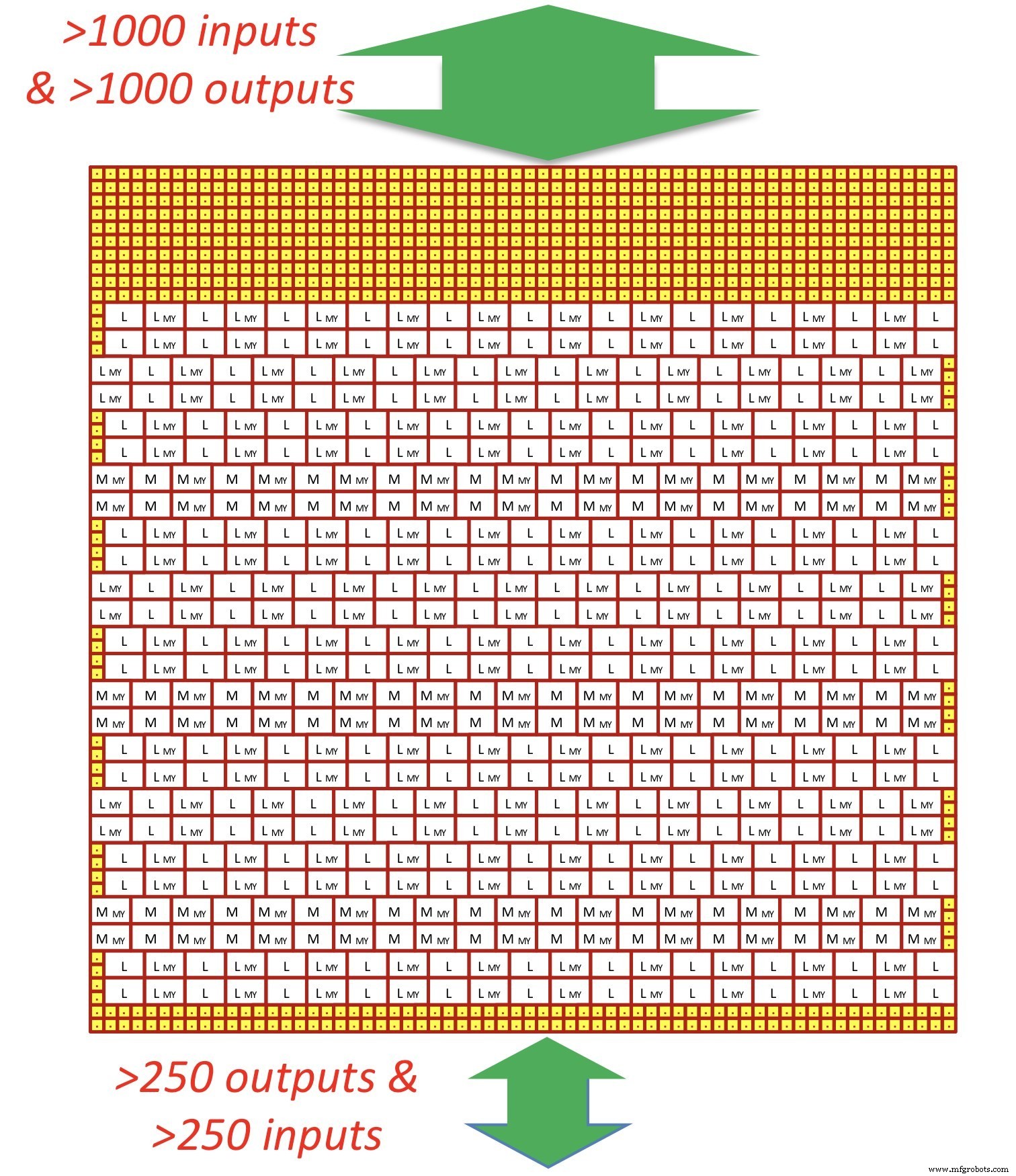
Figure 1: An eFPGA can be easily optimized for various bus sizes. Source: Flex Logix
Present: Strong Market Adoption
Flex Logix’s eFPGA IP is remarkably generic, supporting a wide range of application sizes. Because it behaves like a standalone FPGA, developers can provision arrays of any scale in just a few days.
Jaros notes growing interest from ASIC companies: "Integrating FPGA functionality directly into an ASIC improves performance, cuts power, and reduces overall system cost." This allows design teams to replace expensive discrete FPGAs or eliminate them entirely, depending on the use case.
System integrators, traditionally reliant on discrete FPGAs, are now exploring eFPGA IP in partnership with ASIC vendors. This approach keeps them within the lower tiers of the stack, accelerating feature roll‑outs. "In automotive OEMs and tier‑1 suppliers, the ability to add RTL configurability is far more valuable than it was a decade ago," Jaros observes.
High‑end MCUs that embed neural‑network accelerators—typically requiring 16,000 to 20,000 LUTs—are also turning to eFPGA solutions. Mixed‑signal designers can now attach a configurable state machine without the overhead of a full MCU and its software ecosystem.

Figure 2: Flex Logix’s eFPGA is based on EFLX 4K, a tile that comes in two versions: all‑logic or mostly logic with a few multiply‑accumulate units (MACs). Source: Flex Logix
Future: Complementary to Discrete FPGAs
There is a misconception that eFPGA will cannibalize the discrete FPGA market. In reality, Intel and Xilinx are focusing on large‑scale, feature‑rich FPGAs for data‑center applications, bundling CPU subsystems and other high‑end capabilities. "eFPGA does not threaten their core business," Jaros says. "They view it as complementary, and we have found no conflict with traditional FPGA vendors."
Supply‑chain control is another driver: manufacturers with proprietary MCUs or ASICs can embed eFPGA logic to swap security algorithms or custom code without redesigning the entire chip.
Multiple IP providers offer eFPGA solutions, and as process nodes shrink—from 180 nm to 3 nm—designers are increasingly willing to trade a modest area increase for greater configurability. "We anticipate that 90% of chips going to tape‑out in the next five to ten years will incorporate some form of eFPGA content," Jaros concludes.
>> This article was originally published on our sister site, EDN.
Related Contents:
- Qomu MCU and eFPFA dev kit fits into USB port
- QuickLogic has new automatic eFPGA creation tool
- Open-source tools help simplify FPGA programming
- FPGAs target edge AI computing designs
- Embedded design with FPGAs: Hardware resources
For more Embedded, subscribe to Embedded’s weekly email newsletter.
Embedded
- Embedded System Design: Steps, Principles, and Real‑World Applications
- High‑Performance FPGA Accelerator for Embedded Vision with MIPI Cameras
- FPGA Implementation Languages: From VHDL and Verilog to High‑Level C/C++
- FPGA Hardware Resources for High‑Performance Embedded Systems
- Getting Started with FPGA Development: Building a 4‑Bit Adder on Xilinx Artix‑7
- Embedded FPGA Design: A Complete Development Process
- Mastering FPGA Embedded Design: A Practical Implementation Guide
- Streamline Electrical Harness Design with E3.series
- Benefits of Embedded Technologies in Modular Design
- Maximizing Production with Advanced Additive Manufacturing Software