



How Wide‑Bandgap Semiconductors Revolutionize Motor Control Design
Motor control systems comprise software and hardware—including IGBTs, wide‑bandgap (WBG) semiconductors, and microcontroller units (MCUs)—whose complexity is steadily rising.
In the era of Industry 4.0, motor control sits at the heart of digital transformation. Energy efficiency is paramount, as the global electricity demand of industrial electric motors continues to climb. Developers and component manufacturers are therefore prioritizing solutions that deliver higher performance while cutting power consumption.
Design complexity also grows, driven by stringent control requirements that demand sophisticated electronics. Wide‑bandgap materials such as gallium nitride (GaN) and silicon carbide (SiC) are becoming essential enablers.
Motor control spans multiple layers—from low‑level motion control, which executes computationally intensive algorithms, to high‑level application logic that manages fans, pumps, robots, and servo mechanisms. Below we outline the key building blocks.
Motors and Drivers
DC motors dominate cost‑critical applications. They consist of a stator (often a permanent magnet) and a rotor that houses windings connected to a commutator. Speed regulation is achieved by controlling the DC voltage. Depending on the application, full‑bridge, half‑bridge, or step‑down converters drive the motor.
AC motors rely on a transformer: the primary side is connected to the AC supply, while the secondary side generates the induced current. Microprocessor‑based electronics, inverters, and signal conditioning manage speed and torque.
The controller is the “brain” of the system. In simple setups a single controller suffices; in complex drives multiple controllers coordinate commands to the motors and read back actuator signals.
Industrial robotics almost exclusively use three‑phase AC motors. Figure 1 illustrates a block diagram of an electronic control circuit where a dedicated MCU generates a PWM signal. For more demanding filtering tasks, DSPs or FPGAs are preferred.
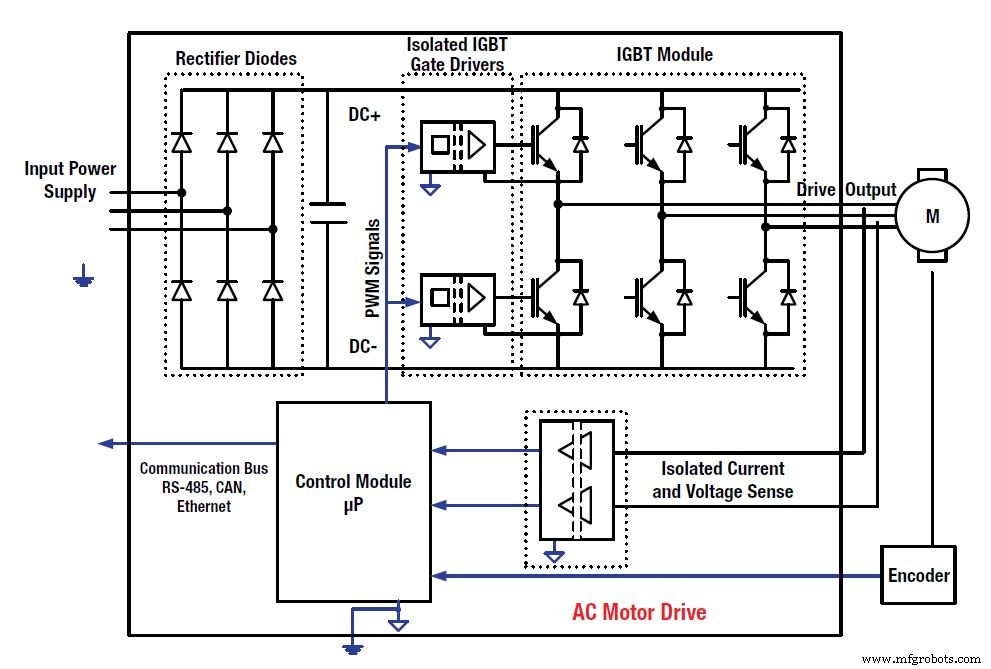
Figure 1: Block diagram of an AC‑powered three‑phase induction motor control (Source: Texas Instruments)
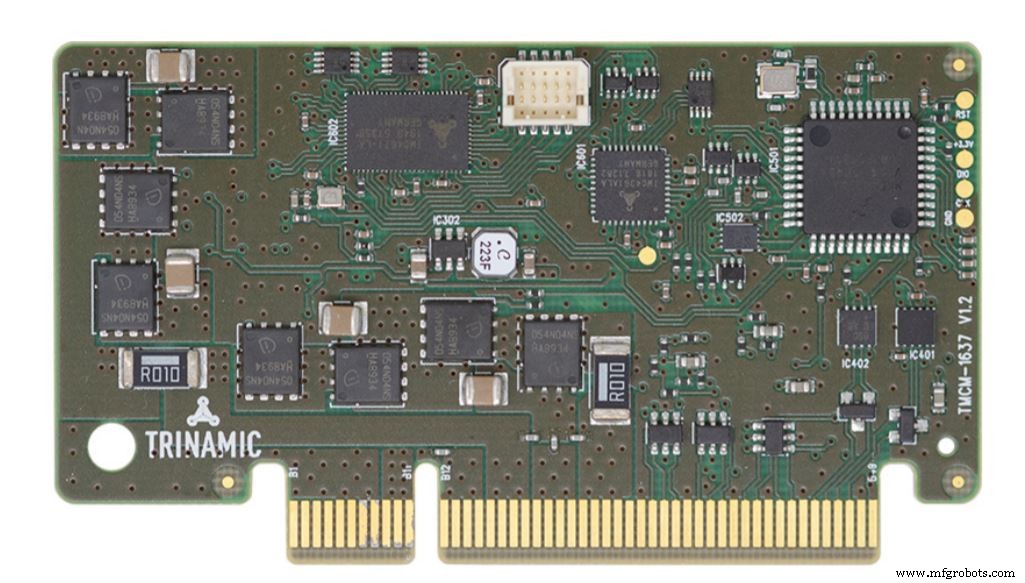
A popular DC‑motor controller is Trinamic’s TMCM‑1637 (5 A RMS) and TMCM‑1638 (7 A RMS) modules. These slot‑type units feature field‑oriented controllers, Hall sensors, and ABN encoders, supporting single‑phase DC, two‑phase bipolar stepper, and three‑phase brushless DC (BLDC) motors. Figure 2 shows their layout.
IGBTs
Insulated‑gate bipolar transistors (IGBTs) are a breakthrough in power‑switching electronics, enabling high‑frequency operation that is essential for modern motor drives. Recent IGBTs offer a superior balance of speed and stability, even under extreme automotive conditions.
STMicroelectronics’ 1,200‑V IGBT S series is optimized for low‑frequency operation (up to 8 kHz) and features a low Vce(sat). Built on third‑generation trench‑gate, field‑stop technology, it delivers robust performance.
GaN and SiC
WBG materials—GaN and SiC—are gradually supplanting silicon in motor‑control power stages. Their advantages include:
- Lower conduction and switching losses
- Higher switching frequencies (up to 10× faster)
- Higher operating temperatures (> 150 °C)
- Higher breakdown voltages
- Improved reliability in harsh environments
GaN HEMTs exhibit higher electron mobility, leading to faster rise times, lower RDS(on), and reduced gate capacitance. These traits enable up to 10× higher switching frequencies than silicon, cutting losses and heat generation.
Lower power dissipation means fewer cooling fans are required, enabling fan‑less designs that are especially valuable in lightweight applications like drones.
SiC MOSFETs offer significant efficiency gains and smaller heat‑sink sizes compared to traditional silicon devices. Their negligible reverse‑recovery losses and very low RDS(on) per unit area allow operation at high switching frequencies while keeping the thermal budget manageable.
Industrial drives must manage high dV/dt during turn‑on/turn‑off. SiC MOSFETs can produce dV/dt several times higher than IGBTs; thus, careful design—often targeting 5–10 V/ns—prevents voltage spikes that could damage motor insulation.
A STMicroelectronics comparison of a 1.2‑kV SiC MOSFET versus a silicon IGBT shows markedly lower energy loss for both turn‑on and turn‑off under a 5 V/ns stress. Figure 3 illustrates the results.
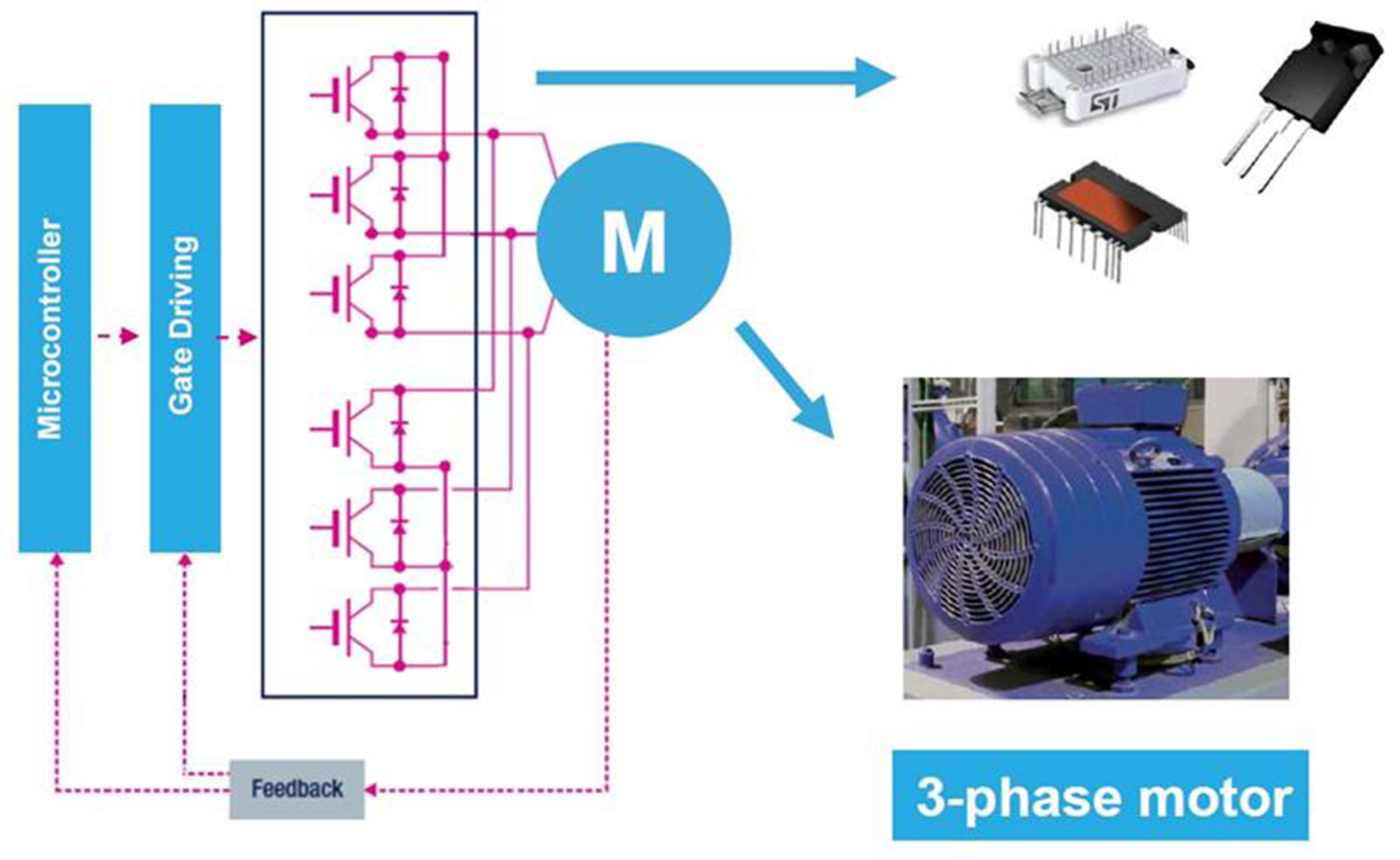
Figure 3: Two‑level, three‑phase inverter‑based drive (Source: STMicroelectronics)
SiC devices enable designers to select the optimum switching frequency for a given motor, delivering performance, size, and reliability benefits across automotive and industrial automation sectors.
Infineon’s CoolSiC MOSFETs with .XT interconnect technology, housed in a 1,200‑V D²PAK‑7 SMD package, enable passive cooling in power‑dense motor drives. This supports maintenance‑free, fan‑less inverters for robotics and automation. Figure 4 demonstrates conduction‑loss reduction across all operating modes.
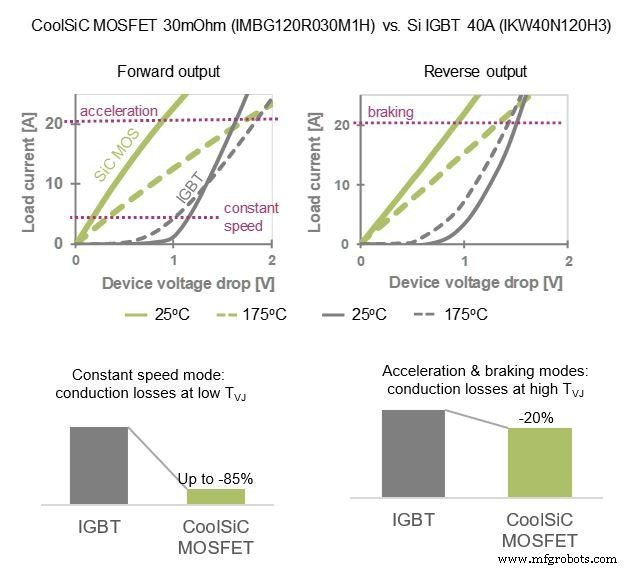
Figure 4: Conduction loss reduction in all operating modes (Source: Infineon Technologies)
Microcontrollers
Motor‑control solutions blend hardware—IGBTs, SiC/GaN MOSFETs, power diodes—and sophisticated software that manages them. Modern MCUs deliver the computing power required for real‑time control, diagnostics, and predictive maintenance.
NXP’s MPC57xx family (Power Architecture) supports automotive and industrial powertrain applications, offering AEC‑Q100 quality, on‑chip encryption, and ISO 26262/IEC 61508 functional safety. It provides Ethernet (FEC), dual‑channel FlexRay, and multiple serial interfaces.
Renesas’s RA6T1 (Cortex‑M4) runs at 120 MHz and can control two BLDC motors simultaneously. Integrated with TensorFlow Lite Micro, it adds intelligent failure detection for sensorless motor systems, enabling predictive maintenance.
As motor requirements diversify, the market supplies a spectrum of IGBTs, WBG semiconductors, and MCUs. Future hardware will need to offload real‑time tasks from the processor, while expanding diagnostics, AI, and functional‑safety capabilities.
> This article was originally published on our sister site, Power Electronics News.
Related Contents:
- Smoothing EV powertrain performance with a field‑oriented control algorithm
- Reference design simplifies industrial robotic motor control
- Software eases BLDC motor driver design
- Key factors in designing a drone’s electronic speed control
For more Embedded, subscribe to Embedded’s weekly email newsletter.
Embedded
- Advanced Motor Control Circuits: Latching, Stop, and Time‑Delay Techniques
- Designing Polyphase AC Motors: Fundamentals and Practical Startup Techniques
- Control Unit Explained: Components & Design in CPUs
- Renesas Launches Ultra‑Compact 8.2‑mm Creepage Photocouplers to Shrink Industrial Automation and Solar Inverter Designs
- Integrated Drivers Simplify High‑Power Stepper Motor Design
- Infineon’s IMC300 SoC Integrates ARM Cortex‑M0 MCU for Flexible Motor Control
- ADI Launches ADM2867E: Integrated Isolated RS‑485 Transceiver with DC/DC Converter for Space‑Saving Applications
- ADI AD74412R/AD74413R: 4‑Channel, Software‑Configurable I/O for Modern Building Automation
- Trinamic & Maxim Integrated Release Reference Design to Speed End‑of‑Arm Tooling Development in Industrial Robotics
- Mastering Electric Control Panel Design: Key Principles & Best Practices