



Trinamic & Maxim Integrated Release Reference Design to Speed End‑of‑Arm Tooling Development in Industrial Robotics
A new reference design is set to accelerate the development of end‑of‑arm tooling (EoAT) for industrial robotics, combining a single‑axis servo controller/driver with integrated motion control. Trinamic, now part of Maxim Integrated, showcased this solution at APEC, emphasizing its impact on rapid prototyping and deployment in automation environments.
The TMCM‑1617‑GRIP‑REF is an open‑source reference board that merges a field‑oriented controller (FOC) and three communication ports into a single compact module. It integrates Maxim Integrated’s MAX22000 industrial‑grade IC, MAX22515 IO‑Link transceiver, configurable high‑precision analog I/O, and a MAX14906 four‑channel digital I/O for setting the drive’s operating mode.
Maxim Integrated highlighted the TMCM‑1321 servo controller/driver as a streamlined solution for two‑phase bipolar stepper motors. By incorporating a magnetic encoder and digital inputs for optical encoders, the module delivers closed‑loop control, reduces power loss, and optimizes speed and synchronization.
Open‑Source Platform
“The TMCM‑1617‑GRIP‑REF consolidates multiple circuits that traditionally occupy separate boards, thereby simplifying wiring and configuration at the end of a robotic arm,” explained Jeff DeAngelis, Vice President of Industrial Communications at Maxim Integrated. “Its 24‑gram, lightweight footprint and dual‑wire power‑and‑data interface streamline deployment while the TMCL‑IDE software ecosystem offers versatile development capabilities.”
As Jonas Proeger, Director of Business Management at Trinamic, noted, the board’s block diagram (Figure 1) includes a load cell for force sensing, proximity sensors, and supports EtherCAT, IO‑Link, and RS‑485 communication. The RS‑485 port operates at 100 Mbps, providing a familiar high‑speed option for legacy systems.
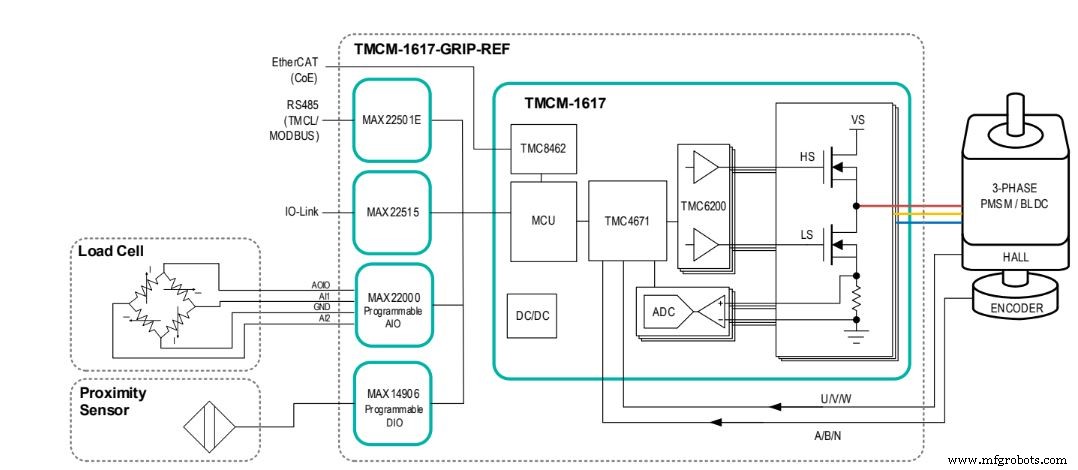
Figure 1: Block diagram of TMCM‑1617‑GRIP‑REF (Source: Maxim Integrated)
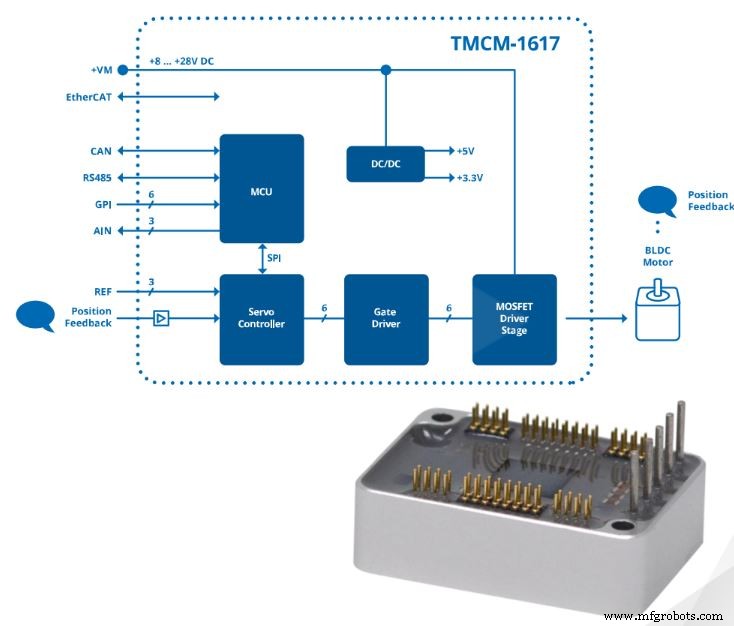
Figure 2: TMCM‑1617 – Smallest Servo Controller (Source: Maxim Integrated)
Stephan Kubisch, Director of Product Definition at Trinamic, emphasized the importance of on‑board supply rails that support external peripherals without requiring additional power sources. He added, “Precision current control directly translates into higher overall system efficiency.”
Combining cutting‑edge bus architectures with integrated diagnostics, Maxim Integrated asserts that this reference design will boost factory productivity and enable edge‑side artificial intelligence. The MAX22515’s robust protection—reverse‑voltage, short‑circuit, hot‑plug, and ±1.2 kV/500 Ω surge protection—ensures reliable operation in harsh industrial settings.
Looking ahead, the complexity of motor and motion control demands smart, decentralized solutions that make real‑time decisions at the edge and feed data to the cloud.
Servo Controller/Driver TMCM‑1321
The TMCM‑1321 is a single‑axis module for 2‑phase bipolar stepper motors, featuring a magnetic encoder, digital inputs, and closed‑loop logic to optimize performance. Its small form factor and 256× microstepping capability allow noise‑free operation, while selectable ramp profiles—including linear, Trinamic SixPoint™, and S‑shaped ramps—enable rapid transfer times.
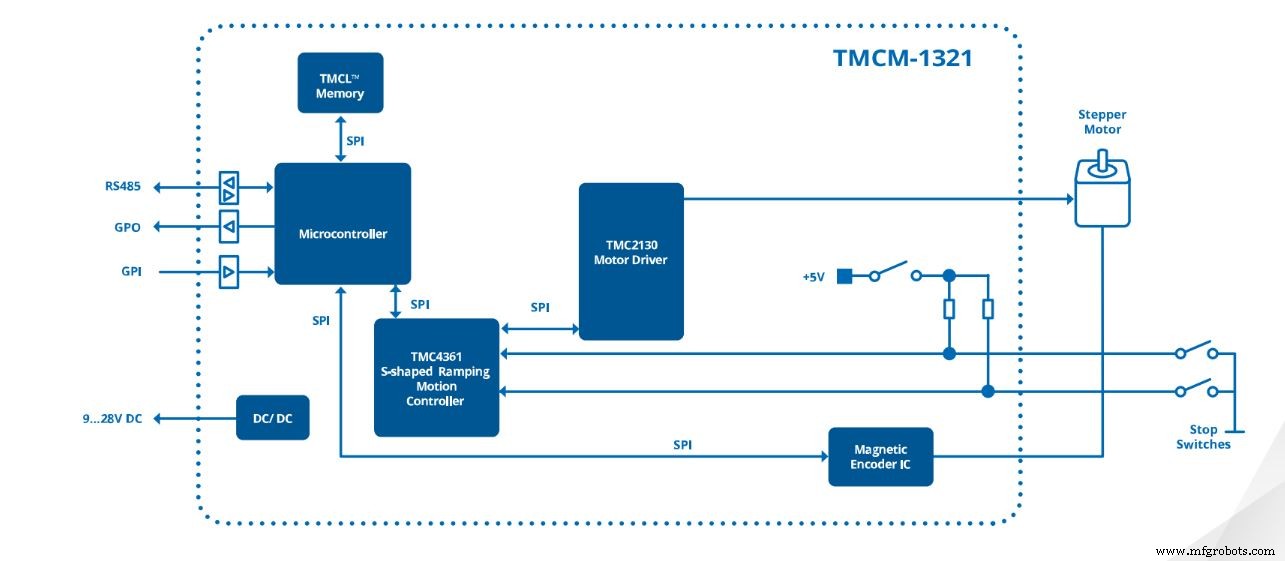
Figure 3: Block diagram of TMCM‑1321 (Source: Maxim Integrated)
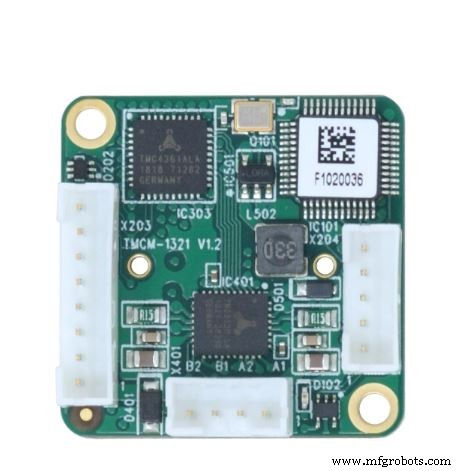
Figure 4: TMCM‑1321 Board (Source: Maxim Integrated)
The module supports up to 0.7 A RMS coil current and 24 V DC supply voltage, with three digital inputs usable as end‑switch, home‑switch, or general‑purpose signals.
Motor control drives underpin many industrial applications, delivering high accuracy that reduces costs and enhances efficiency. The TMCM‑1321’s precise rotor positioning across varied loads exemplifies this capability.
>> This article was originally published on our sister site, Power Electronics News.
Related Contents:
- Designing motor controls for robotic systems
- Making robots with Ada, Part 2 – Driving the motors
- Solving deterministic multi‑axis motor control design challenges
- Software eases BLDC motor driver design
- Dev kits offer platforms for digital‑power, motor‑control designs
- Designing a fast reacting feedback system for miniaturized motor driven designs
For more Embedded, subscribe to Embedded’s weekly email newsletter.
Embedded
- Advanced Motor Control Circuits: Latching, Stop, and Time‑Delay Techniques
- Designing Polyphase AC Motors: Fundamentals and Practical Startup Techniques
- Control Unit Explained: Components & Design in CPUs
- STMicroelectronics Unveils ST-MC-SUITE: One-Stop Digital Platform for STM32/STM8 Motor‑Control Design
- Renesas Launches RX72T Microcontrollers for Advanced Servo Control in Industrial Robots
- Integrated Drivers Simplify High‑Power Stepper Motor Design
- Infineon’s IMC300 SoC Integrates ARM Cortex‑M0 MCU for Flexible Motor Control
- Lattice & Etron Unveil Compact, Low‑Power Memory Controller for Edge AI Workloads
- How Wide‑Bandgap Semiconductors Revolutionize Motor Control Design
- Linux Foundation & IBM Back OpenEEW: A Low‑Cost IoT Solution for Earthquake Early Warning