



Linux Foundation & IBM Back OpenEEW: A Low‑Cost IoT Solution for Earthquake Early Warning
The Linux Foundation has announced its partnership with IBM to back Grillo’s OpenEEW project, a unified framework designed to streamline the adoption of earthquake‑early‑warning (EEW) systems. The initiative bundles Grillo’s end‑to‑end EEW solutions, which integrate seismic detection, real‑time analysis, and community alerts. OpenEEW was conceived by Grillo with backing from IBM, USAID, the Clinton Foundation, and Arrow Electronics.
An EEW system delivers real‑time alerts ahead of shaking, yet only a handful of institutions have ventured to build such solutions due to the steep expenses of conventional seismometers, specialized telecom infrastructure, and bespoke software.
Grillo’s strategy leverages an Internet‑of‑Things (IoT) architecture, harmonizing hardware, firmware, and expertise to cut costs. Since 2017, the Grillo team has deployed IoT‑based EEW networks across Mexico and Chile, broadcasting public alerts through Twitter, a dedicated mobile app, and physical alarm units.
“The speed depends on the distance of the earthquake to the user,” said Andres Meira, CEO at Grillo. “Once a sensor detects an earthquake, it is processed in milliseconds and the alert sent to nearby users. If a user is hundreds of kilometers away from the earthquake, they may get one minute or more/less to prepare before they feel shaking. If the earthquake is very close, they may only get a few seconds. Either way, this can be useful, for example, in schools where kids can get beneath a table.”
Earthquake DetectionAn earthquake is the sudden release of energy in the Earth’s crust, typically at a focus (hypocentre), that generates ground vibrations. The intensity of these oscillations determines the potential damage, especially to structures that do not meet seismic‑resistance standards.
While the precise timing of an earthquake remains unpredictable, technology can provide actionable lead time to the public. Numerous countries already deploy EEW systems that deliver alerts to smartphones, aiming to mitigate casualties and structural damage.
An EEW platform estimates the anticipated intensity and arrival time by analysing real‑time data from seismographs positioned near the epicenter. The system’s goal is to reduce damage by triggering automated countermeasures—slowing trains, shutting elevators—and by giving individuals minutes to take protective action in schools, workplaces, and homes.
Rapid urban growth and reliance on sophisticated telecom and transport networks underscore the need for a population‑wide early‑warning capability. Deploying an EEW system is pivotal in transforming the unknown, chaotic nature of earthquakes into predictable, manageable events, thereby enhancing public safety.
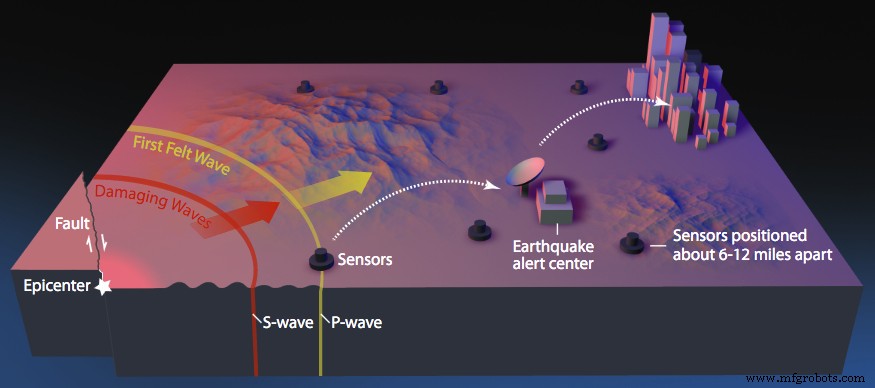
 Figure 1: Operation of the ShakeAlert system used in Taiwan [Source USGS]
Early warning can be effective because data travels almost instantly through digital networks, while seismic waves propagate at 1–7 km/s (P, S, and surface waves). Consequently, the warning can arrive seconds to minutes before the shaking reaches densely populated areas.
An earthquake generates several wave types—P (primary), S (secondary), and surface (Rayleigh and Love)—that radiate from the epicenter. The faster, lower‑amplitude P wave reaches nearby sensors first, triggering early alerts that enable protective actions before the slower, more destructive S and surface waves arrive.
The ability to properly send the warning before the seismic event requires some important technical solutions:
- a network of sensors to have more data to analyze;
- a robust and efficient data processing zone;
- computer algorithms to quickly estimate the location, time, and map of the event.
Linux Foundation and Grillo
Earthquakes disproportionately affect developing nations where building codes and infrastructure are weaker. While EEW alerts exist in places like Mexico, Japan, South Korea, and Taiwan, almost three billion people remain unaffordable. OpenEEW seeks to lower the cost of EEW, speed global rollout, and ultimately save lives.
OpenEEW’s architecture fuses three core IoT elements: (1) sensor hardware and firmware that capture and transmit ground motion in milliseconds; (2) real‑time sensing stacks deployable on anything from Kubernetes clusters to single‑board computers; and (3) user‑facing apps that deliver alerts to smartphones, wearables, or custom hardware. The open‑source ecosystem fuels progress across sensor design, detection algorithms, and notification delivery.
“With OpenEEW you can either fabricate your own sensors from our schematics or purchase a pre‑assembled unit,” says CEO Andres Meira. “Our sensors employ a modern MEMS accelerometer with noise characteristics far below those found in smartphones, yielding high‑quality data that is streamed to the cloud or a private server. The firmware ensures reliable, continuous operation, and the sensors have been running unbroken in remote areas of Mexico and Chile since 2017.”
The firmware continuously calibrates to remove sensor offsets and applies basic filtering. In the cloud—or, in future firmware releases, at the edge—our detection engine uses algorithms such as Short‑Term/Long‑Term Average (STA/LTA) and cross‑correlation across multiple sensors to eliminate false positives.
Built on an ESP32 microcontroller, the sensor can read the accelerometer and stream data while performing ancillary functions. Arrow is currently engineering a new edge‑computation, low‑power, cellular‑enabled sensor that will broaden deployment options in areas lacking wired connectivity or mains power.
The next development phase involves integrating machine‑learning models to refine detection, potentially using single‑sensor streams. All raw data collected since 2017 is publicly available to support research.
Leveraging microcontrollers, next‑generation MEMS accelerometers, and cloud computing, OpenEEW offers a cost‑effective solution that was previously limited to a handful of high‑budget deployments. By open‑source, the software can run on diverse platforms—from a local Raspberry Pi to a laptop—providing low‑latency alternatives to distant cloud services.
The alert distribution layer is adaptable. In the OpenEEW GitHub repository, we provide a sample app, but users can also route notifications to Twitter feeds, PA systems, or building management interfaces. We remain agnostic about the last‑mile delivery method.
OpenEEW sensors incorporate a high‑performance MEMS accelerometer, Ethernet or Wi‑Fi connectivity, a loud buzzer, and three NeoPixel LEDs for visual alerts.
Figure 2: OpenEEW sensor PCB design
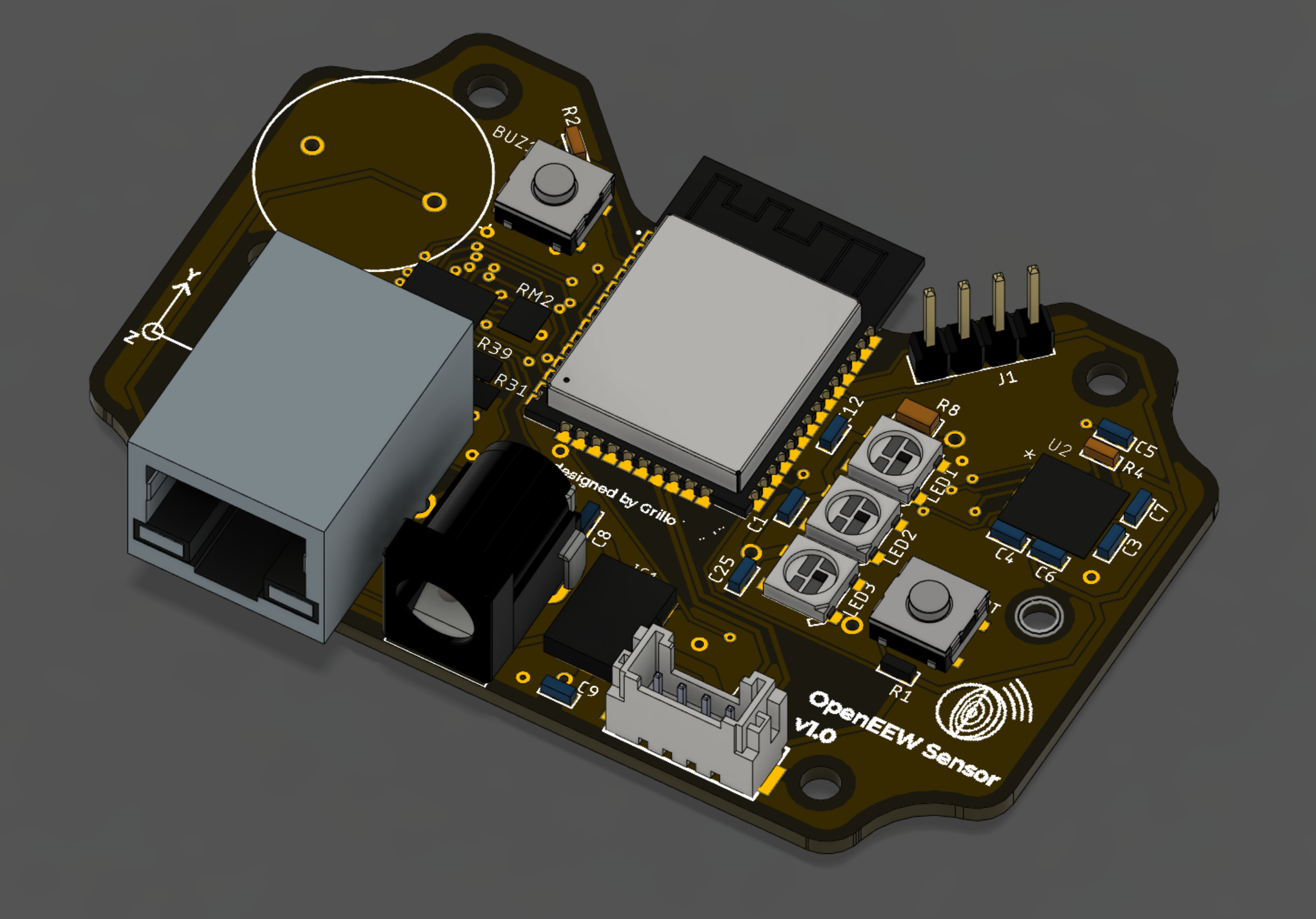
 Figure 2: OpenEEW sensor PCB design
Proper installation is essential for data fidelity. A typical setup, illustrated in Figure 3, places the sensor close to the router to maintain a strong signal‑to‑noise ratio for packet transmission.
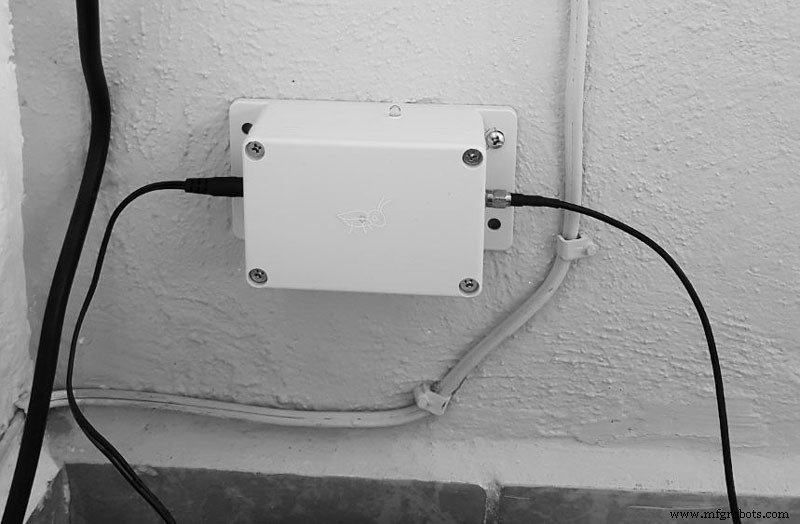
 Figure 3: OpenEEW system installation
OpenEEW was created with funding from USAID, the Clinton Foundation, and Arrow Electronics, and embodies core IoT technologies.
IBM, which originally collaborated with Grillo through the Clinton Global Initiative (CGI) Action Network, announced that it will integrate OpenEEW into the Linux Foundation’s Call for Code program—an initiative that unites data, AI, and blockchain to enhance disaster response.
IBM has also developed a dashboard to visualise sensor data and deployed six Grillo sensors in Puerto Rico for field trials. With OpenEEW, IBM hopes to spur EEW adoption in seismic hotspots such as Nepal, New Zealand, and Ecuador, where communities can contribute to hardware refinement and citizen‑oriented alert methods.
>> This article was originally published on our sister site, EE Times Europe.
Embedded
- Common Pitfalls in New Systems: How to Avoid Early Failures
- Connectivity by Design: Unlocking Unified Data for Digital Twins and Real‑Time Decision‑Making
- VE-VIDES Initiative Unveils Trustworthy Design & Verification Framework for IoT Security
- XANDAR Accelerates Code Generation for Safety‑Critical Multi‑Core Systems
- Skyworks Introduces Integrated 5‑GHz FEM for Wi‑Fi 6 Applications
- Lattice & Etron Unveil Compact, Low‑Power Memory Controller for Edge AI Workloads
- BlueNRG‑Tile Reference Design Enables Real‑Time Proximity Detection for Contact Tracing
- Trinamic & Maxim Integrated Release Reference Design to Speed End‑of‑Arm Tooling Development in Industrial Robotics
- Designing & Optimizing RTD Temperature Sensing Systems – Expert Guide
- LoRa Edge Platform Streamlines IoT Design and Cuts BOM Costs