



XANDAR Accelerates Code Generation for Safety‑Critical Multi‑Core Systems
The next generation of networked embedded systems demands rapid prototyping and high performance while never compromising trustworthiness or safety. Yet, deploying safety‑critical embedded software remains hampered by complex toolchains and intricate engineering processes. The rise of autonomous systems that combine machine learning and artificial intelligence with fail‑operational requirements only heightens the challenge of verification and validation.
To tackle these obstacles, the three‑year EU Horizon 2020 project XANDAR is delivering a fully integrated software toolchain—from requirements capture through code integration on target hardware—complete with verification and validation. The goal is to enable rapid prototyping of interoperable, autonomous embedded systems without sacrificing safety or security.
Building on a model‑based system architecture, XANDAR introduces novel automatic model synthesis and software parallelisation techniques that meet stringent non‑functional requirements. This work lays the groundwork for a new real‑time, safety‑ and security‑by‑construction paradigm, known as X‑by‑Construction (XbC).
The Multi‑Core Challenge in Safety‑Critical Environments
Parallel processing has made multi‑core architectures ubiquitous across application domains. However, programming these systems—especially synchronising threads and avoiding race conditions—remains difficult. Parallel compilers, domain‑specific languages, and evolving developer experience have eased the burden, but in safety‑critical domains such as automotive and aerospace, verification and proof of error‑free operation remain paramount, clashing with the added complexity of multi‑core programming.

Model‑based design can bridge this gap by allowing developers to abstract away low‑level details while still modelling, simulating, and generating code for embedded functions. This higher‑level approach has driven adoption in aerospace, automotive, and process industries, yielding faster development cycles and lower costs.
Despite its strengths, model‑based design is often confined to early system specification and architecture exploration; the final software for safety‑critical systems is still frequently hand‑coded. Projects such as ARGO have introduced WCET‑aware code generation, and model‑based systems engineering has been applied to electric/electronic architectures by layering abstraction and viewpoints. These advances, however, still require manual cross‑domain integration and suffer from error‑prone import/export workflows.
Current research typically augments architectural models with simple finite‑state machine descriptions and generates executable specifications for simulation‑based verification. Yet a truly holistic environment—covering distributed networked architecture, integrated behavioural modelling, cross‑layer simulation, verification, and code generation—has not yet been realised.
XANDAR aims to fill this void. Its code generator will uphold XbC guarantees, preserving all non‑functional properties from the input model. Innovations include platform‑agnostic code generation, monitoring runnables for critical services, and non‑deterministic accelerators tailored to AI and ML workloads.
Achieving this requires automated decision algorithms, formal checks, and optimisations that balance real‑time performance, energy efficiency, non‑functional guarantees, and runtime flexibility. High‑quality code generators that co‑optimise across these dimensions will demand specialised, cutting‑edge solutions.
XANDAR Consortium Partners
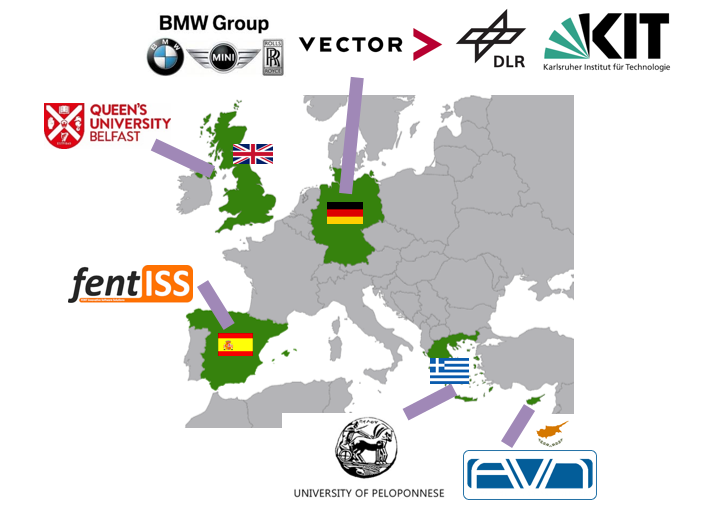
The XANDAR programme runs until December 2023 and is funded with €5 million under Horizon 2020. The consortium—led by Professor Jürgen Becker of the Karlsruhe Institute of Technology—brings together industry and academia:
- Karlsruhe Institute of Technology (Germany)
- University of Peloponnese (Greece)
- German Aerospace Center
- AVN Innovative Technology Solutions Ltd (Cyprus)
- Vector Informatik GmbH (Germany)
- Queen’s University Belfast (Northern Ireland)
- BMW Group (Germany)
- fentISS (Spain)
Vector, one of the eight partners, contributes its embedded software expertise and its high‑performance development environments PREEvision and the TA Tool Suite.
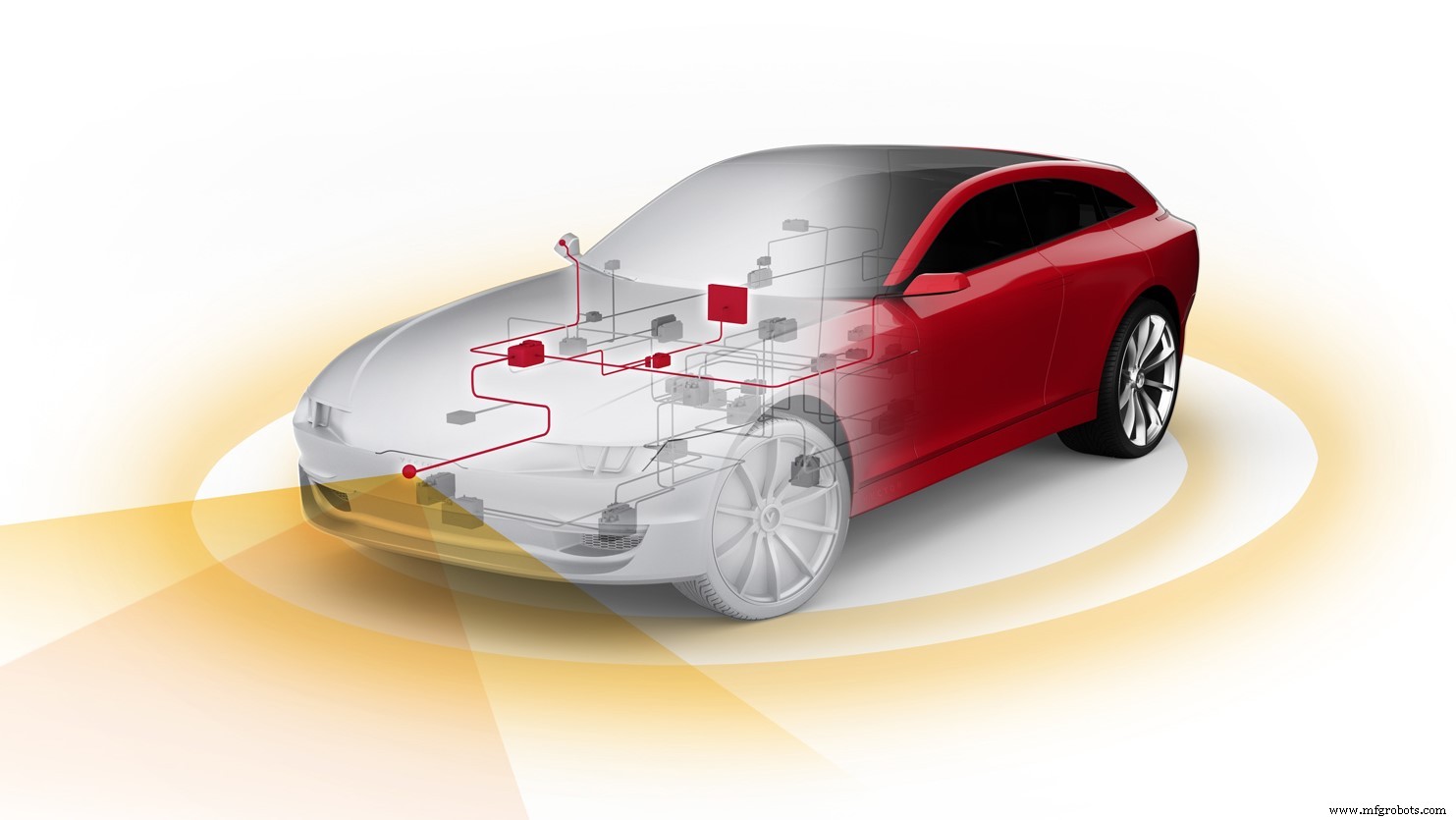
PREEvision enables collaborative, model‑based specification of connected embedded systems with clear semantics that span all system levels. The TA Tool Suite supports specification, simulation, and validation of the timing behaviour of complex real‑time systems. Together, they form the foundation for X‑by‑Construction design in XANDAR.
Embedded
- Connectivity by Design: Unlocking Unified Data for Digital Twins and Real‑Time Decision‑Making
- Building a Non‑Blocking MQTT Client for Reactive Embedded Systems
- VE-VIDES Initiative Unveils Trustworthy Design & Verification Framework for IoT Security
- Designing & Optimizing RTD Temperature Sensing Systems – Expert Guide
- SAFe-VX: Kontron & SYSGO’s Unified Safety-Critical Railway Computing Platform
- Linux Foundation & IBM Back OpenEEW: A Low‑Cost IoT Solution for Earthquake Early Warning
- Designing Energy‑Efficient, Always‑On Voice Command Systems
- Design Engineering for Energy‑Efficient Power Plant Generation Systems
- Benefits of Embedded Technologies in Modular Design
- Optimizing Illumination Design for Robotic Surgery Vision Systems